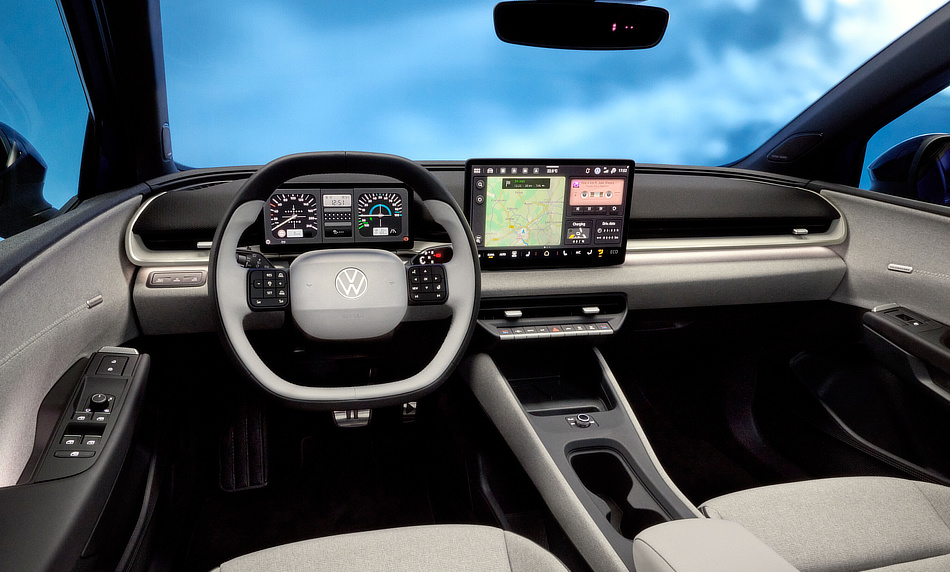
Volkswagen is hyping the ID Polo’s interior design like it’s the second coming, and the ever-obedient European motoring media are lapping it up as if a revolution is underway. VW is billing the ID Polo as the first sub-€25,000 EV, a claim treated as a technological miracle by journalists who never question the script.
Reality check: the sub-€25,000 EV already exists—just not in Europe. It exists in China, for example, you can buy a fully loaded Xpeng G6 SUV for about $24,000, roughly €20,000. Meanwhile, the ID Polo is a small city car with a limited range, maybe 200 miles if conditions are perfect and optimism is high.
Volkswagen clearly doesn’t want European buyers noticing this, so it’s been drip-feeding press releases about the ID Polo to manage expectations. The latest one celebrates the “return” of physical buttons, as if this is some bold act of innovation rather than a quiet admission of failure.
Apparently, European drivers want physical buttons… so they can text while driving. Make it make sense. I could analyse the new button layout, but buttons are buttons—they press, they respond, end of story. The fact that VW is patting itself on the back for undoing its own touchscreen mistake says everything.
Here’s the real problem: the ID Polo will land at around €25,000, and that price is a damning indictment of European car manufacturing. It shows just how far behind Europe has fallen in competing with Chinese automakers.
The current Polo is already a gutless, scratchy plastic box built entirely around cost-cutting, and there’s no reason to believe the ID Polo EV will be any different—just heavier, more expensive, and wrapped in marketing spin.
But the media will sell a different fantasy, painting Volkswagen as forward-thinking and ahead of the curve. In reality, VW isn’t leading anything—it’s desperately trying to catch up.