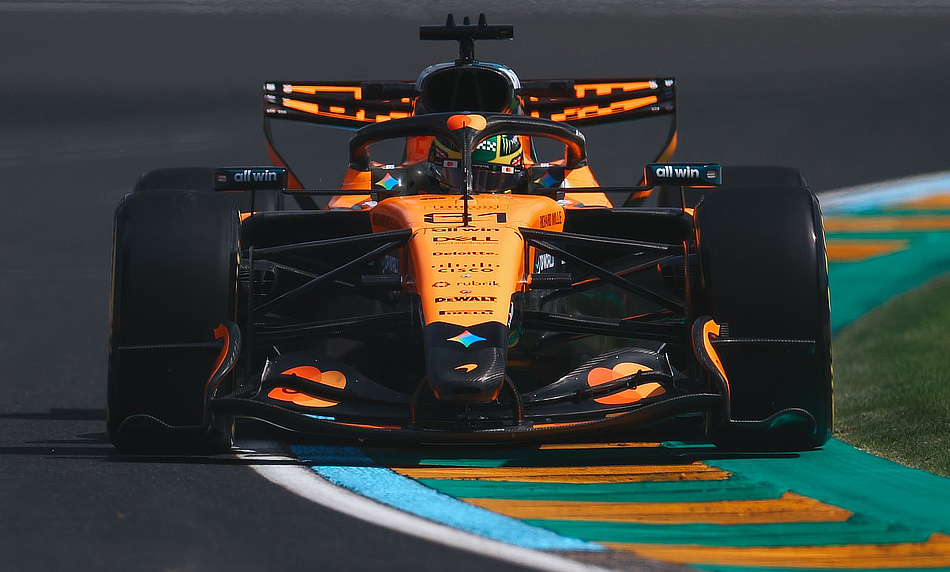
After spending much of pre-season testing under the radar, McLaren finally revealed their true pace promise in second practice in the season opening race of the 2026 Formula One championship. However, practice sessions often, in and of themselves, are difficult to draw conclusions. Saturday’s third practice will reveal the pecking order and of course qualifying is where it really counts.
Thus far, we don’t know the fuel loads or wing settings, qualifying is always a compromise between outright speed and long duration pace. And that’s what practice sessions are about, it’s deciding what wing levels to set, fuel loads, tyre pressure, brake settings/balance, engine and gearbox setting, suspension settings etc.
The information gathered on Friday will, to some degree, inform teams and drivers what settings to take into qualifying and ultimately the race. And we don’t know how the race is going to pan out, which team has the most reliable engine, or which team is better at managing tyre degradation over a Grand Prix.
For now Oscar Piastri is the fastest after the conclusion of Friday practice, he holds a 2-tenth advantage over Mercedes of Kimi Antonelli who holds a near 1-tenth advantage of his team mate George Russell. The Ferrari of Lewis Hamilton isn.t to far behind and he holds a slender advantage over teammate Charles Leclerc in 5tth position.
Teams Grapple with New Engine Era
Pre-season running delivered an intriguing but inconclusive picture as teams continued to learn how to maximise performance from Formula 1’s new engine systems. While outright pace remained difficult to judge, long-run data suggested that Mercedes could hold an early advantage.
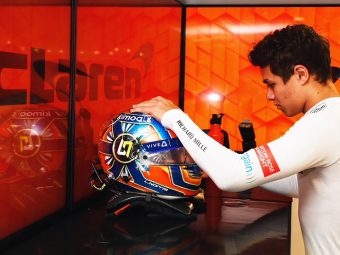
Reigning world champion Lando Norris ended the day seventh fastest for McLaren, though his programme was compromised by a gearbox problem in the opening session. The setback limited his early running and prevented the team from showing its full potential on the timing sheets.
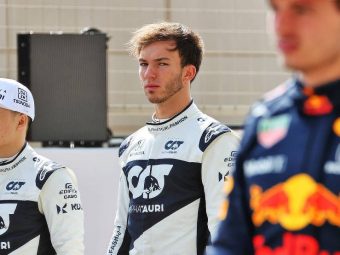
One of the day’s biggest surprises came from 18-year-old British rookie Arvid Lindblad, who produced an impressive lap to finish ahead of Norris in the Racing Bulls. The teenager’s performance added to the growing interest around his arrival in Formula 1.
Meanwhile, Max Verstappen’s true pace remained hidden. The Dutch driver encountered problems during his soft-tyre runs and also ran off the track at the high-speed Turn 10 while completing a longer stint, leaving his competitive position unclear.
Across the paddock, teams admitted they were still trying to understand how best to deploy energy with this season’s new power units. The hybrid systems now produce roughly a 50-50 split between internal combustion and electrical power, making energy management a critical factor in overall performance.
Despite the uncertainty, Mercedes produced highly competitive race-distance runs that caught the attention of rivals and observers alike. But as I always say, points and prizes are awarded after the Grand Prix, not in practice. Expect Sunday’s race to be chaotic at first, before the true pecking order is revealed.
2026 Australian GP: First Practice 2
1 Oscar Piastri McLaren 1:19.729 – 26 laps
2 Kimi Antonelli Mercedes 1:19.943 – 31 laps
3 George Russell Mercedes 1:20.049 – 28 laps
4 Lewis Hamilton Ferrari 1:20.050 – 32 laps
5 Charles Leclerc Ferrari 1:20.291 – 30 laps
6 Max Verstappen Red Bull 1:20.366 – 13 laps
7 Lando Norris McLaren 1:20.794 – 29 laps
8 Arvid Lindblad Racing Bulls 1:20.922 – 30 laps
9 Isack Hadjar Red Bull 1:20.941 – 28 laps
10 Esteban Ocon Haas 1:21.179 – 29 laps
11 Oliver Bearman Haas 1:21.326 – 31 laps
12 Nico Hulkenberg Audi 1:21.351 – 34 laps
13 Liam Lawson Racing Bulls 1:21.358 – 29 laps
14 Gabriel Bortoleto Audi 1:21.668 – 28 laps
15 Alex Albon Williams 1:21.847 – 32 laps
16 Pierre Gasly Alpine 1:22.167 – 16 laps
17 Carlos Sainz Williams 1:22.253 – 10 laps
18 Franco Colapinto Alpine 1:22.619 – 27 laps
19 Valtteri Bottas Cadillac 1:23.660 – 28 laps
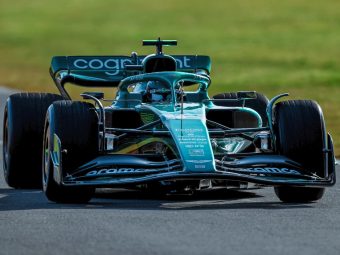
20 Fernando Alonso Aston Martin 1:24.939 – 18 laps
21 Lance Stroll Aston Martin 1:25.816 – 13 laps
22 Sergio Perez Cadillac no time – 2 laps