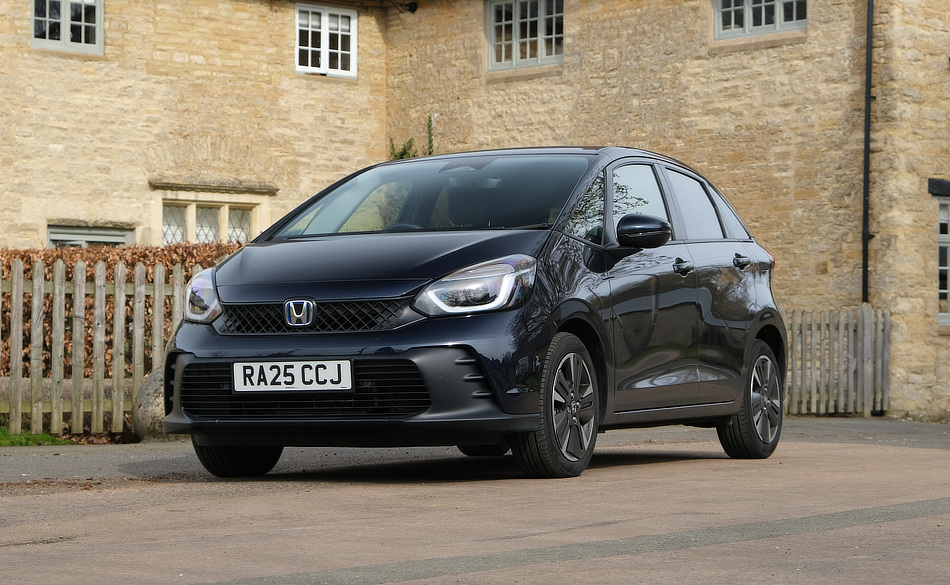
The Honda Jazz arrived in 2001—and that’s the history lesson over with. In the car world, and in my opinion… newer is always better. Four generations later, the Honda Jazz continues to evolutionary journey. But is newer truly the better option?
The Exterior
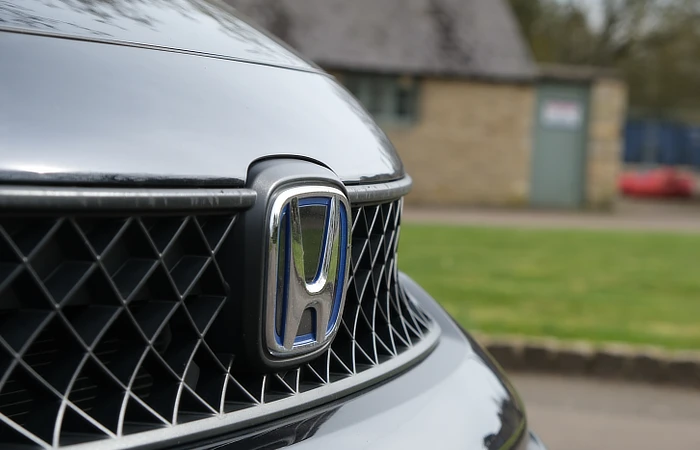
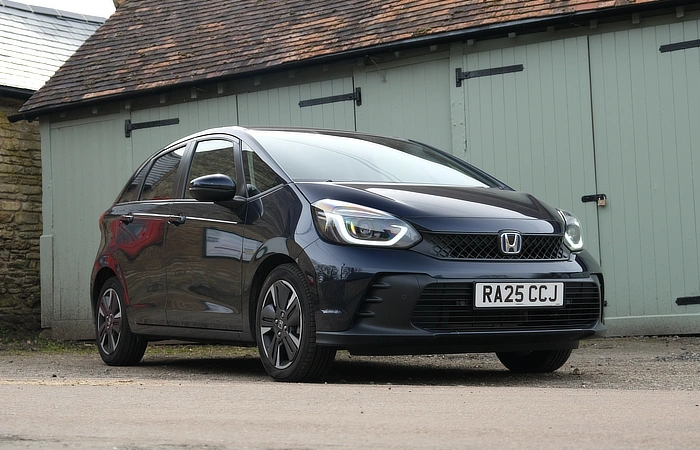
It’s a very understated design, even more so in darker colours, while lighter shades help lift the look and give it a clearer presence. That said, no matter the colour, it’s conservatively styled—as if it were designed by committee meetings and focus groups rather than by a bold, instinctive design-led vision.
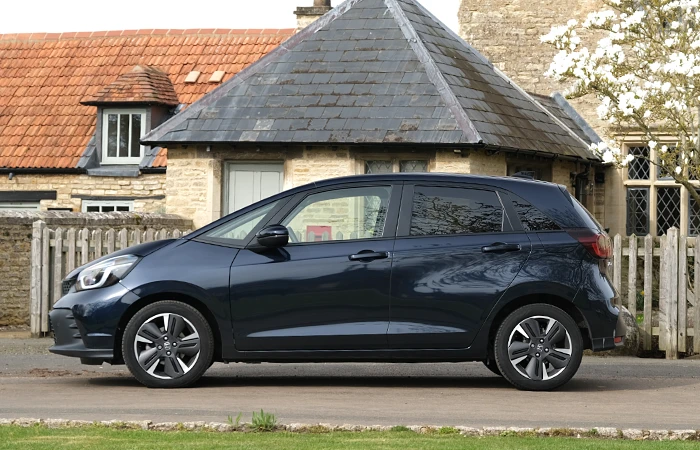
Design by committee does have its advantages: no-nonsense practicality. In the UK, pricing for the Honda Jazz starts at £28,000 and rises to £30,555 across four trim levels.
The Interior
Simple, well laid out, and well built—the first thing you notice is how airy the cabin feels, thanks to the large, sloping windscreen and expansive windows stretching from the belt-line to the roof. Visibility all round is excellent.
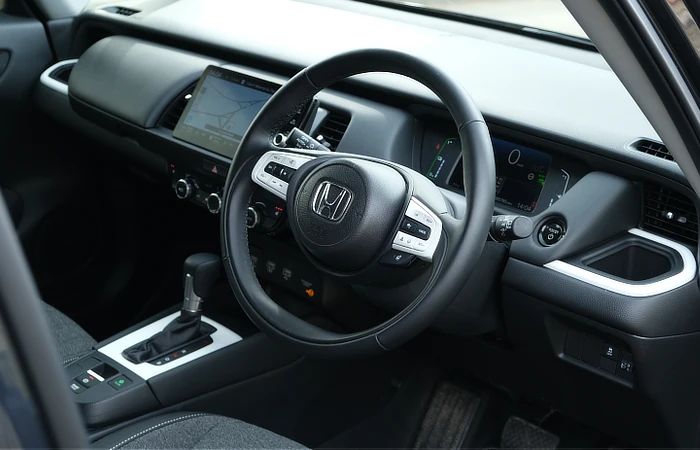
As for perceived quality, the cabin is dominated by utilitarian materials. Soft-touch surfaces are sparse and mainly reserved for the centre armrest and the door panel’s elbow rest.
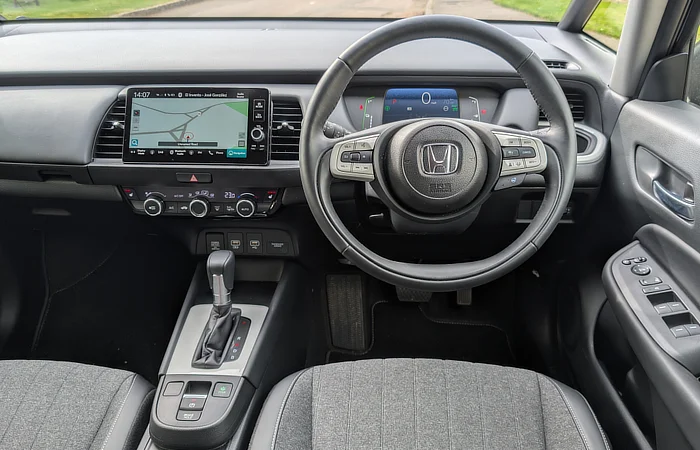
I don’t pay too much attention to storage space, it isn’t a deal-breaker for me, but I did notice that the door bin is shallow—wide enough for a sunglasses case, but not much more.
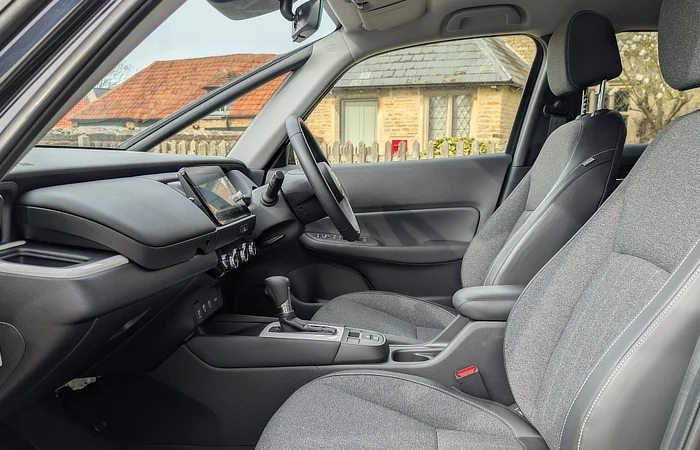
The cloth seats are of good quality, arguably better than what you’d find in a Volkswagen. Passenger space is also impressive; despite the car’s compact size, it feels very roomy inside.
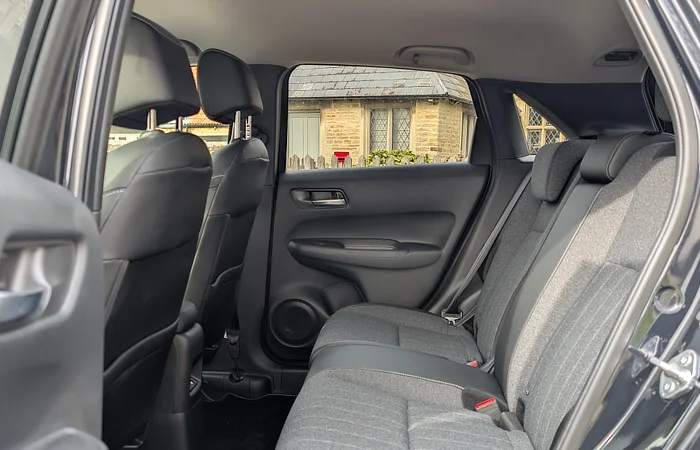
Both front and rear passengers benefit from generous knee and legroom, and the rear seats can comfortably accommodate six-footers. However, this does come at the expense of boot space, which is only wide enough for about five shopping bags placed side by side.
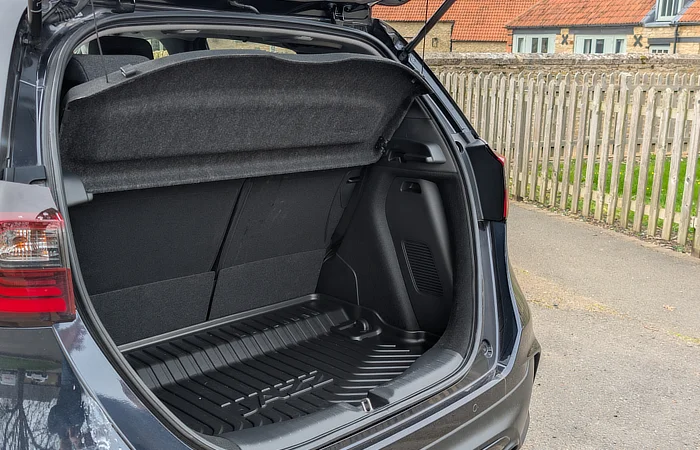
That said, the Jazz features Honda’s “Magic Seats,” allowing the rear bench to lift up and create additional vertical storage space. The rear seats also fold flat in a split configuration, expanding the boot capacity from 304-litres to 1,205 litres with the seats folded flat.
The Infotainment System
There isn’t much to write home about here. Honda’s native 9-inch infotainment system may not be visually exciting, but it’s straightforward and easy to use and includes wireless Apple CarPlay and Android Auto as standard.
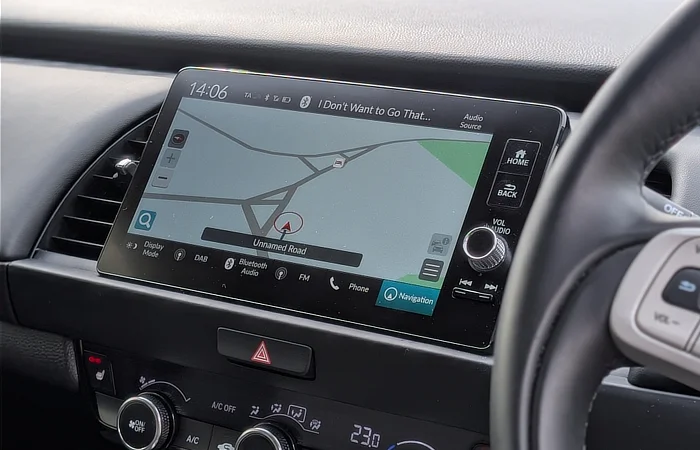
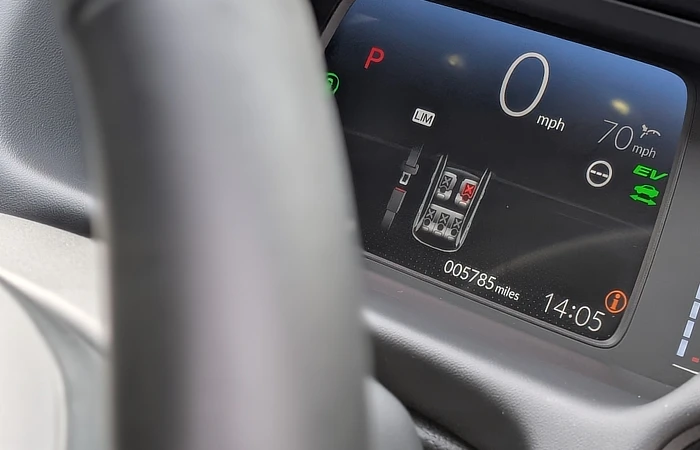
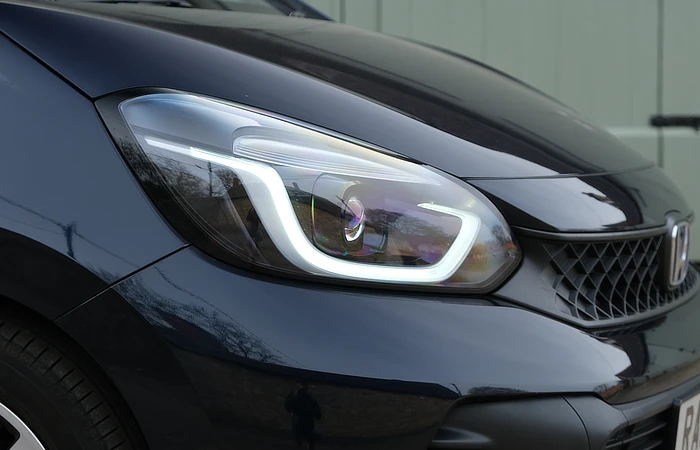
Standard features include a 7-inch digital driver’s display, two USB-A ports, parking sensors, a rear-view camera, LED headlights and taillights, drive modes, and adaptive cruise control.
You also get electrically folding and heated door mirrors—a feature that’s often an optional extra on premium-brand cars.
Overall, the standard equipment is generous. From the Advance model upwards, heated seats and rear privacy glass are included as standard.
The Drive
Under the bonnet is a 1.5-litre four-cylinder engine supported by two electric motors. Power is sent to the front wheels via an electronically controlled CVT. Combined output stands at 122 bhp and 254 Nm (187 lb-ft) of torque.
It isn’t particularly quick off the line—0–62 mph takes 9.4 seconds, which is acceptable, though somehow it feels slower in practice. There are the usual drive modes, but I left it in standard mode; Eco mode simply dulls the response and tests your patience.
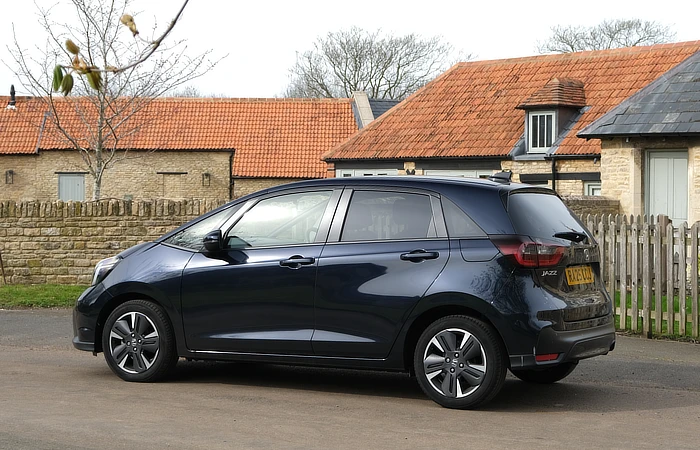
As for ride and handling, it becomes clear very quickly that the Jazz isn’t built for fun—it’s built for efficiency. The modest 16-inch tyres (15-inch on the entry-level model) make that obvious. This isn’t a car for those heroic driving moments.
What it does do well is comfort. At motorway speeds, it delivers a composed, almost Germanic sense of control. The steering feels reassuring, and the car tracks straight without requiring constant correction. At motorway speeds wind and tyre noise bearable, much more so than similar rivals from the Volkswagen Group.
One thing to note: the lane-keeping and steering assist work well on motorways but can feel intrusive on city roads—so it’s worth switching them off for day-to-day errand runs.
The Efficiency
This is where Honda’s engineering really shines. Not only is reliability a given, but fuel economy is a real strength. The Jazz can easily achieve around 60 mpg on those day-day errand runs and about 58 mpg on the long haul motorway journeys.
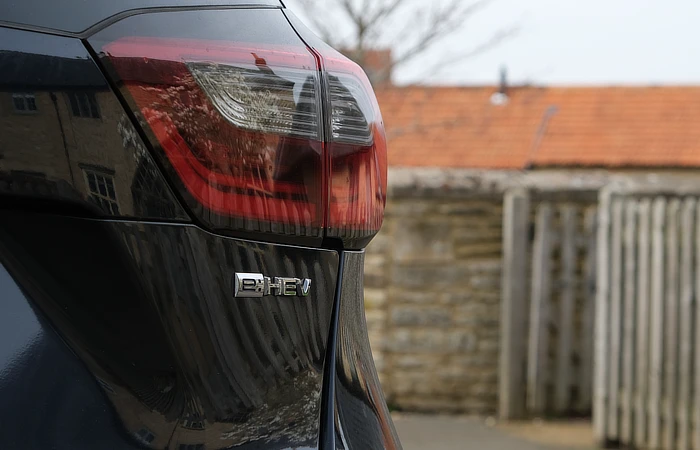
The hybrid system includes a small 1.06 kWh battery, providing roughly 1.5 miles of electric-only range, typically used at low speeds.
There’s also a B-mode, similar to one-pedal driving in EVs. Through coasting and braking, the battery is constantly recharged, so you’re never short on power.
As with most hybrids, the transition between petrol and electric power is seamless—you simply get in, select drive, and go.
Epilogue
It may not be exciting to look at or to drive. The Jazz’s primary mission is practicality and efficiency, perhaps at the expense of bold design or driving flair. For some buyers, that trade-off is more than worthwhile.
But the landscape is changing. Chinese manufacturers are producing highly competitive cars that offer more for slightly less money—and that evolving situation can’t be ignored forever.
However, brand reputation still carries weight, and Honda’s engineering pedigree remains second to none. If you want an unbreakable car, reliable, practical and efficient car the Honda Jazz ticks a lot of boxes.
But if you want to save money and get more? That’s the real question.