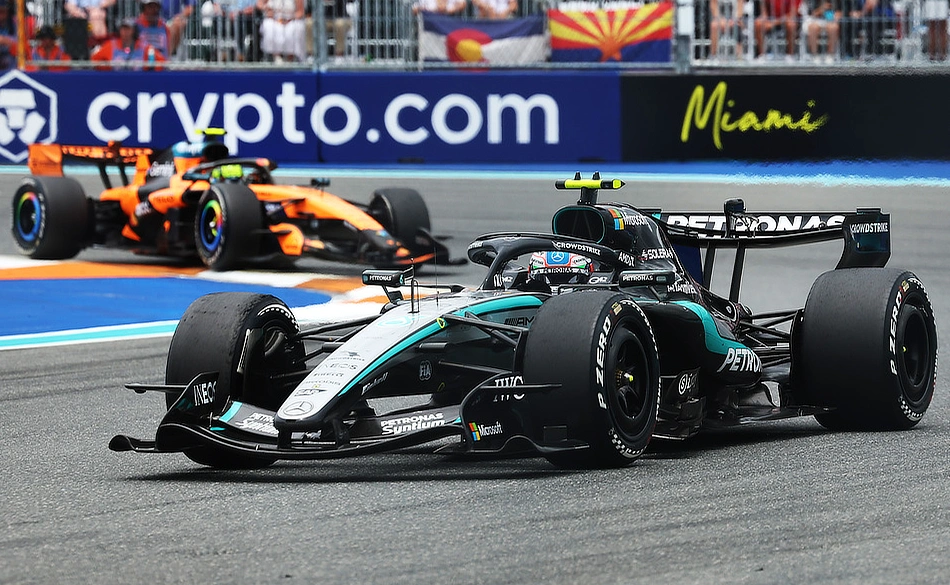

The FIA has lowered the maximum harvestable energy for qualifying at the Canadian Grand Prix in Montreal to 6.0 MJ, the lowest figure of the season, as part of its ongoing refinement of current power unit regulations.
The intention behind the adjustment is to promote more genuinely “flat-out” qualifying laps by reducing the extent to which drivers must manage energy recovery.
In doing so, the FIA seeks to lessen the reliance on techniques such as lift-and-coast, while restoring a slightly greater emphasis on internal combustion performance during qualifying runs.
The revised 6.0 MJ limit applies to both qualifying and Sprint Qualifying sessions, down from 7.0 MJ in Australia and 8.0 MJ in Miami.
The FIA’s recent regulatory update, introduced between the Japan and Miami rounds, enabled these limits to be tailored to individual circuits based on their energy recovery characteristics.
For race conditions, however, higher allowances remain in place: 8.0 MJ for both the Sprint and Grand Prix, and 8.5 MJ when Overtake Mode is engaged.
Despite the reduction, the Circuit Gilles Villeneuve remains well suited to energy recovery, with its heavy braking zones—most notably into the hairpin and Turn 1—ensuring that much of the permitted energy can still be harvested efficiently during a representative qualifying lap.