Silverstone’s 2026 British Grand Prix weekend has begun under the usual Sprint format constraints, meaning just a single Free Practice session on Friday before attention immediately shifts to Sprint Qualifying. The compressed schedule always adds a layer of unpredictability, and while it can feel confusing from the outside, it’s all part of the entertainment spectacle modern Formula 1 demands.
Free Practice at a venue like Silverstone is rarely about headline lap times alone. It is typically a crucial systems check—installation laps, aero validation, and reliability running as teams prepare for the high-speed punishment the circuit delivers. With its sweeping corners and relentless lateral loads, Silverstone places heavy stress on the chassis, tyres, and drivers alike.
One of the key technical talking points this weekend is energy management. The layout and high-speed nature of the circuit make energy recovery and deployment a limiting factor, influencing both qualifying simulations and race pace expectations. Mercedes are widely tipped to hold a strong advantage in this area, while Ferrari are expected to struggle more with consistency over a lap.
The Reality
As ever in FP1, fuel loads and engine modes made meaningful interpretation of outright pace difficult. Still, the session unfolded with relatively few interruptions—although Oscar Piastri briefly disrupted his run after spinning off into the run off area at Chapel, bringing a short-lived scare before rejoining without major consequence.
There was also a brief moment of attention for Max Verstappen, who picked up a yellow flag infringement but avoided further investigation.
Early on, Mercedes looked competitive, with Lewis Hamilton briefly setting the benchmark 45 minutes into the hour-long session. However, as qualifying simulations intensified toward the end, the order began to shift.
Kimi Antonelli ultimately impressed by topping the timing screens for a spell, going nearly half a second clear of teammate George Russell, underlining Mercedes’ strong single-lap potential.
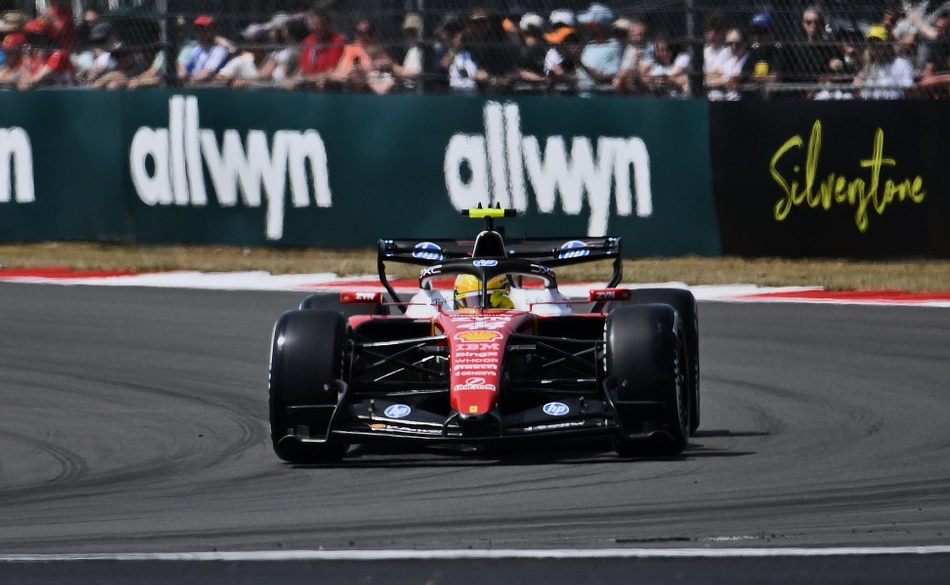
Yet in a twist that added intrigue heading into Sprint Qualifying, it was Hamilton who finished the session fastest overall. The seven-time world champion set a best time of 1:12.260, edging Antonelli by around two-tenths, with Charles Leclerc completing the top three.
With only one practice session in the books, teams now head into Sprint Qualifying with plenty of data—but still a fair amount of uncertainty, as Silverstone’s high-speed demands continue to expose even the smallest performance gaps.