The collapse of the latest U.S.-Canada trade talks is not merely another dispute over tariffs. It is a warning about what happens when economic policy becomes an instrument of political intimidation.
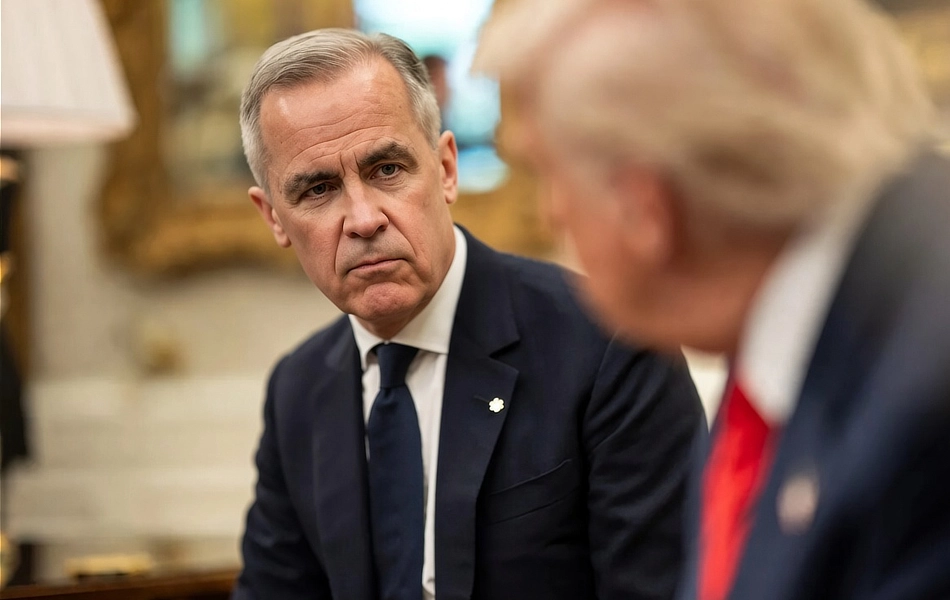
On Aug. 22, the United States imposed new 50 percent tariffs on roughly $20 billion of Canadian goods, including plywood, liquor, electrical equipment and hockey gear. Prime Minister Mark Carney responded by suspending negotiations and promising retaliation, dollar for dollar.
The rhetoric from Washington and Ottawa is familiar. Each government blames the other for the breakdown. U.S. Trade Representative Jamieson Greer says Canada made last-minute demands that destroyed a carefully negotiated framework. Carney says Washington abruptly altered its terms and made an agreement impossible.
But beneath the diplomatic accusations lies a more consequential reality: two deeply integrated economies are being pushed toward confrontation by political calculations that have little to do with the interests of ordinary workers.
The United States and Canada exchanged nearly $900 billion in goods and services last year. Factories, farms, energy networks and supply chains cross the border every day. A tariff imposed in Washington does not simply punish a Canadian exporter. It reverberates through American manufacturers, retailers and consumers who depend on Canadian inputs.
The proposed agreement might have reduced tariffs on Canadian automobiles, steel, aluminum and lumber. It also would have opened negotiations over the future of the North American trade framework. Instead, the negotiations collapsed into threats.
The consequences could be severe. Canadian economist Trevor Tombe estimates that nearly 90,000 Canadian jobs could disappear if the tariffs remain. Machinery, electronics, plastics, furniture, wood, paper and chemical industries are particularly exposed.
Yet Canada’s most important resource exports—oil, potash and critical minerals—were excluded from the latest duties. Canada remains America’s largest foreign supplier of crude oil, sending more than four million barrels a day southward.
This is the peculiar logic of modern economic nationalism. Governments proclaim sovereignty while remaining bound together by vast networks of trade and production. They threaten economic warfare against neighbors whose prosperity is inseparable from their own.
Workers on both sides of the border will ultimately pay much of the price. The tariffs may be announced in government offices, but their costs appear in factory closures, higher prices, lost contracts and shrinking paychecks.
The trade war is therefore not simply a quarrel between Washington and Ottawa. It is a struggle over who will absorb the costs of political brinkmanship—and whether governments will recognize, before the damage becomes irreversible, that economic interdependence cannot be dismantled without consequences for those who have the least power to resist them.