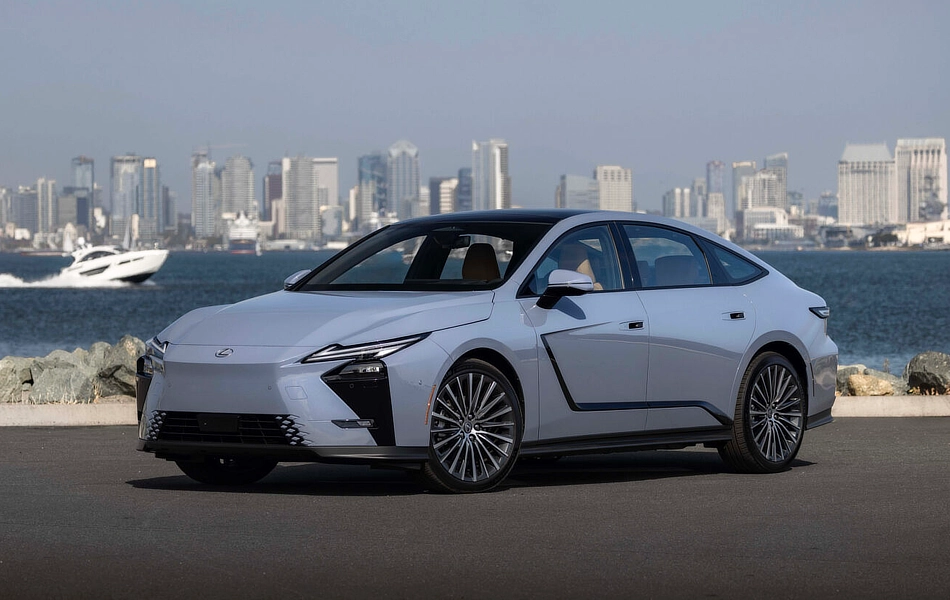
Toyota is preparing to build its next-generation battery-electric vehicle (BEV) in China before launching production elsewhere, signalling a significant shift in the Japanese automaker’s manufacturing and development strategy.
The Lexus-badged model is scheduled to enter production at Toyota’s Shanghai plant in autumn 2027. Initial output is expected to be around 1,000 vehicles per month, before increasing to tens of thousands of units annually from 2028.
The decision reflects China’s dominant position in the global BEV market. China accounted for approximately 60% of worldwide BEV sales in 2025, while domestic electric-vehicle demand continues to grow despite a broader decline in car sales. Toyota already offers electric models in China and is increasingly adapting its product strategy to local consumer preferences.
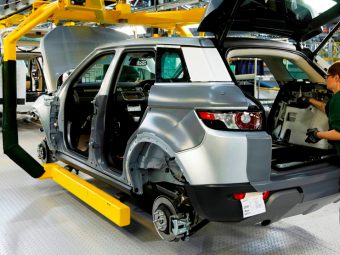
The new Lexus will also feature gigacasting, a manufacturing process that combines multiple aluminium body sections into larger components. The technology can reduce component weight, simplify assembly and improve vehicle rigidity, while potentially increasing driving range.
Toyota’s approach mirrors a broader trend among Japanese manufacturers. Honda, Nissan and Mazda are also increasingly using China as a development and production base for electric vehicles, taking advantage of lower component costs and significantly shorter development cycles.
For Toyota, producing the Lexus model in China could provide access to a mature battery supply chain while reducing manufacturing and development costs. The relatively limited initial production run also allows the company to test the strategy before committing to larger volumes.
The move highlights China’s growing importance not only as an electric-vehicle market but also as a global manufacturing and technology hub. However, high US tariffs on Chinese-built BEVs continue to restrict the potential for exports to America.