BYD is preparing to manufacture heavy-duty electric trucks in Europe as the Chinese automotive giant accelerates its strategy to establish a deeper industrial footprint on the continent and reduce its exposure to potential trade barriers.
Speaking at the IAA Transportation trade fair in Hanover, BYD executive vice president and head of international business Stella Li said the company plans to launch its first heavy-duty truck in Europe next year, with local production ultimately covering the vehicles it sells in the region.
“For the long term, we will produce everything we sell in Europe here locally,” Li said, signalling an ambition to move beyond exporting Chinese-built vehicles and establish BYD as a more integrated European manufacturer.
The strategy could become increasingly important as European truck manufacturers call for the European Union to impose tariffs on Chinese electric trucks.
Local production would allow BYD to reduce its exposure to such measures while shortening supply chains and strengthening its position with European fleet operators.
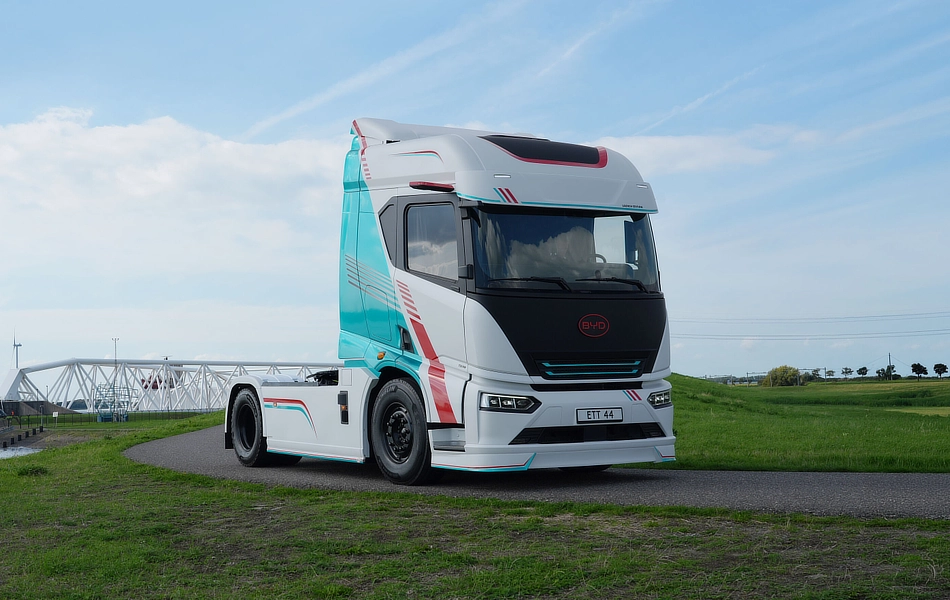
BYD unveiled its new ETT 44 heavy-duty truck at the Hanover show, where Chinese manufacturers are seeking to expand their presence in a highly competitive European commercial-vehicle market.
Li also outlined a broader ecosystem strategy. BYD aims to offer fleet customers more than vehicles, including financing, solar-powered charging infrastructure, workshop networks and mobile roadside assistance.
Such services could help the company compete for large commercial fleets by providing an integrated operating package.
The expansion comes as BYD builds its European passenger-car manufacturing base. A new factory in Szeged, Hungary, is scheduled to begin mass production next year.
The company’s localisation drive reflects a broader shift among Chinese automakers as geopolitical tensions and trade restrictions reshape the European vehicle market.
“We become a European company,” Li said, capturing BYD’s ambition to make local manufacturing central to its long-term European strategy.