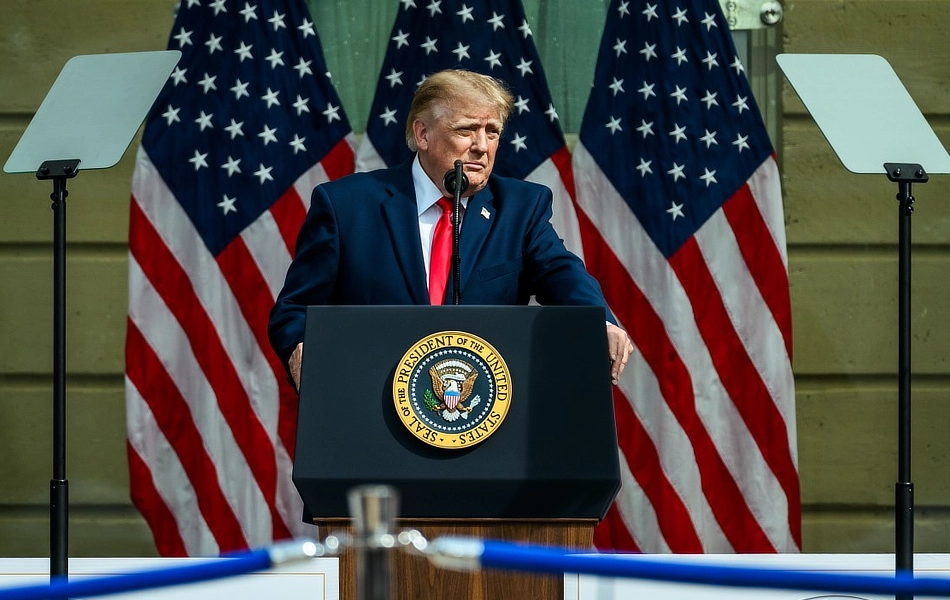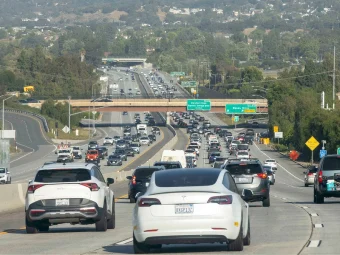
The missiles may be falling on Iran, but the bill is arriving in America.
Donald Trump’s illegal war with Iran is no longer some distant geopolitical drama to be watched on television. Its consequences are moving through the arteries of the American economy — into fuel tanks, tractor engines, freight depots, heating systems and grocery-store checkout lines.
Diesel has climbed above $6 a gallon nationally. Industry reports that record diesel prices have become an increasingly serious economic problem, with the fuel essential to transportation, agriculture and construction.
The numbers are not merely numbers.
For a trucking company, diesel is payroll in another form. For a farmer, it is the fuel that brings a crop out of the ground and into the grain elevator. For a construction company, it powers the machinery that moves earth and pours foundations. For a family heating an oil-fired home, it is the difference between a warm house and an impossible bill.
This is the hidden economy of war.
Bombs do not remain in the sky. They descend into the price of food, freight, construction and heating. And this time the economic shock is colliding with a fuel system that already has little room for error.
The conflict has disrupted energy infrastructure across the Middle East. Saudi Arabia’s East-West pipeline was temporarily shut after attacks, while fighting involving Saudi Arabia and Iran-aligned Houthi forces has intensified around the Red Sea. Reuters reported on Thursday that the widening conflict was creating new threats to global oil supplies.
The United States is therefore dealing with a dangerous combination: geopolitical disruption, constrained global diesel supplies and inventories that were already under pressure.
The Energy Information Administration expects U.S. distillate inventories — which include diesel and heating oil — to fall below 100 million barrels and remain below the five-year range through the end of 2026.
That is what makes the present moment so dangerous.
There is little comfort in being told that the market can absorb a shock when the market has already been stripped of much of its cushion.
The American trucker does not care which missile struck which installation. He sees the invoice.
The farmer does not have the luxury of postponing harvest until diesel becomes affordable. The crop is ready. The machinery must run. The grain must move.
And the family heating an oil-fired home cannot negotiate with winter. This is how the costs of war disappear into ordinary life.
There is no line on a supermarket receipt reading: Cost of Middle Eastern war.
Instead, there is a slightly higher price for milk. A larger delivery surcharge. More expensive building materials. A bigger heating bill. A farmer paying thousands more to harvest the same field.
Responsibility becomes invisible.
The Trump administration can describe the conflict in the language of national security, military necessity and strategic interests. Those arguments can be debated. But the economic consequences are measurable.
Reuters reported Friday that diesel prices above $6 a gallon are becoming a major concern for Trump as the 2026 midterm elections approach.
The irony is brutal.
A president who promised to put American interests first now confronts an energy shock in which ordinary Americans are paying for instability thousands of miles away.
Trump did not create every weakness in the global fuel market. The diesel crisis has multiple causes. Russia’s war with Ukraine has damaged refining capacity and disrupted exports, while global inventories have been falling. The EIA has warned that distillate inventories are likely to remain unusually low.
But war with Iran has added another enormous pressure point. And wars have a tendency to create consequences nobody can fully control.
Saudi Arabia has attempted to compensate for disrupted exports by moving more crude through alternative routes. Reuters reported Friday that Saudi Aramco plans to increase Gulf exports using ship-to-ship transfers through Oman, helping restore some supply.
That may ease some pressure. But it does not erase the underlying danger.
Every additional mile an oil tanker must travel, every dangerous waterway it must cross and every piece of infrastructure that has to be rerouted adds cost and uncertainty.
Oil markets respond not only to barrels lost but to barrels placed at risk. And the consequences extend far beyond crude oil. Diesel is the bloodstream of the physical economy.
A smartphone can be delivered without gasoline. A farmer cannot harvest corn without fuel. A warehouse cannot move millions of pounds of goods without trucks. A construction site cannot operate excavators, loaders and generators without diesel.
The American economy can become less dependent on petroleum over decades. It cannot become independent of diesel overnight.
That is why a diesel spike is different from an expensive tank of gasoline. The pain propagates. The trucker pays more.
The shipping company raises its surcharge. The manufacturer pays more to receive components. The retailer pays more to move finished goods. The consumer pays more at the register.
Nobody necessarily decides to raise prices because they want to profit from war. They raise them because the costs have already arrived.
And then comes heating season.
Diesel and heating oil are part of the same broad distillate market. When supplies tighten, households and commercial users can find themselves competing for fuel with trucks, farms and industry.
The timing could hardly be worse. The United States is entering autumn with distillate inventories expected to remain unusually low.
A refinery outage that might once have been an inconvenience can become a regional crisis when inventories are thin.
A storm can become more than a storm. A pipeline attack can become more than a pipeline attack. A military escalation thousands of miles away can become a bill on the kitchen table.
And there is another cost that cannot be measured at the pump.
The United Nations fact-finding mission on Iran has concluded there are reasonable grounds to believe U.S. strikes on a school and sports facility in Iran constituted war crimes. Reuters reports that more than 150 people were killed in the school strike, including 120 children, according to the UN findings.
Those findings concern alleged violations of international law and are part of an investigation whose conclusions can be challenged through the relevant legal and diplomatic processes. They are nevertheless a devastating reminder that the human cost of war cannot be reduced to oil futures and diesel prices.
War arrives twice. First, in the destruction inflicted on those beneath the bombs.
Then, in the economic consequences carried by people who may be thousands of miles from the battlefield. The first cost is paid in blood. The second is paid in bills.
And the second cost can persist long after the television cameras have moved on.
Trump has said he hopes the conflict is nearing an end. Yet reports indicate that fighting and instability continue to threaten regional energy supplies.
That is the contradiction at the heart of this moment. Politicians can announce that victory is approaching. Markets do not care about speeches.
Farmers care about fuel. Truckers care about fuel. Families facing winter care about fuel. And when the price of that fuel climbs, they cannot simply declare the crisis over.
The question, therefore, is not merely whether diesel reaches $7.
The deeper question is what happens when a nation that depends on cheap, reliable energy discovers that war has made both more difficult to obtain.
The missiles went east. The invoice came west. And Americans who never chose the battlefield are being asked to pay for it.