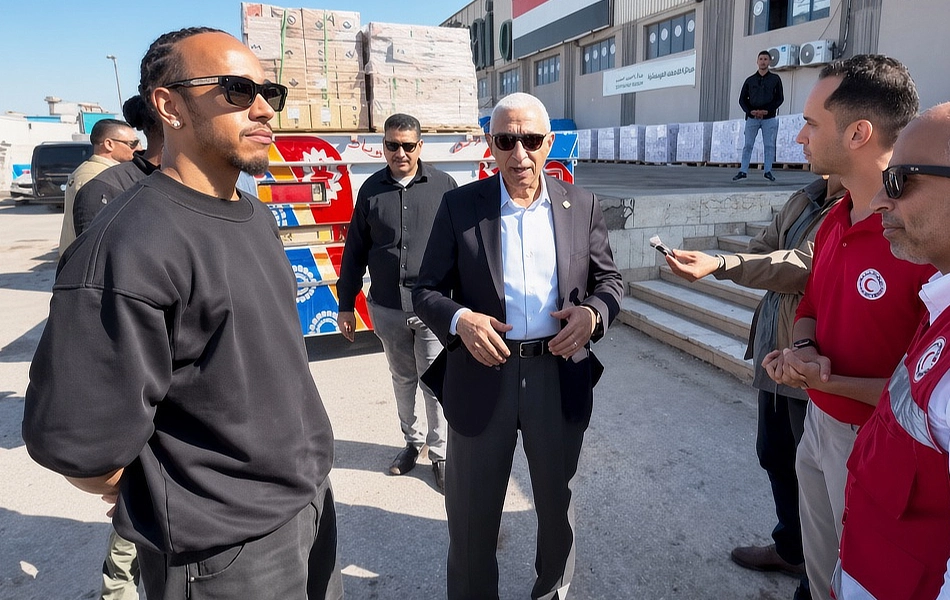

Lewis Hamilton is visiting the Rafah border crossing in Egypt to witness ongoing efforts to deliver humanitarian aid to Palestinians. The crossing is the sole border crossing between Egypt and the Gaza Strip, making it Gaza’s only gateway to the outside world that does not directly border Israel.
Israel launched its war on Gaza following the October 7, 2023, attacks, claiming its objective was to target Hamas, which is designated a terrorist organisation by Israel and much of the Western media. History will record Hamas as a resistance movement fighting against nearly 80 years of oppression imposed on the Palestinian people.
But this is no ordinary war; it is a genocide. Around 50 per cent of Gaza’s population are children, meaning that, according to the figures cited, approximately half of the 75,000 recorded deaths are children. And these are only the recorded fatalities.
The actual death toll is believed to be significantly higher, with some estimates suggesting that at least 500,000 people have been killed out of a population of approximately 2.5 million.
Israel has brutally restricted humanitarian aid from entering Gaza while continuing its bombardment of the population, leaving much of the territory devastated. According to the United Nations an estimated 223,000 tonnes of explosives have been dropped across the Gaza Strip, equivalent to approximately 13 times the explosive yield of the Hiroshima atomic bomb.
Yet, amid the ruins and rubble, life persists.
Lewis Hamilton’s visit to the Rafah crossing has a simple purpose: to shine a spotlight on the plight of the Palestinian people and put pressure on Israel, if not shame it, into finally allowing humanitarian aid to reach those who desperately need it.
On his Instagram account, Hamilton released the following statement:
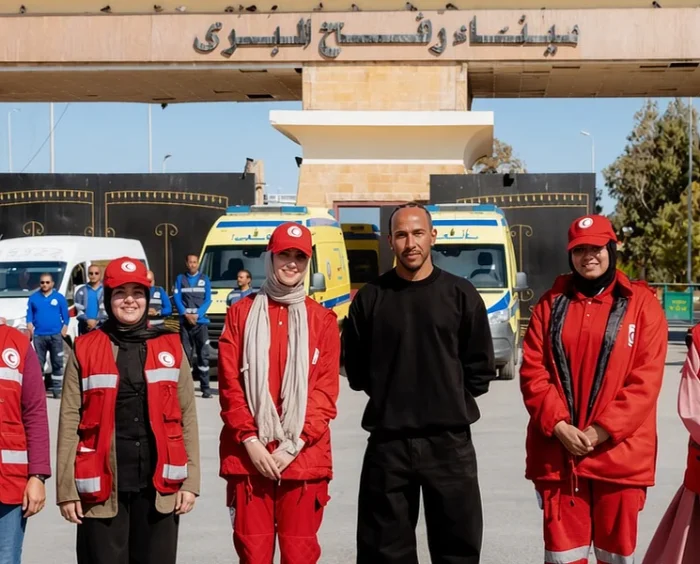
“The past three years of Israel’s genocide in Gaza is appalling. It’s an injustice for people to being denied their freedom, their safety and their dignity. No human being should be treated as though their life matters less.”
“I saw walls stretching for miles, built to keep them in. Standing there, outside what felt like an open-air prison, all I could think about was getting in to help.”
“At Rafah border, I saw food trucks lined up ready to go, but they’re regularly not allowed in or face major delays. The first driver in line that I spoke to had already been waiting over 12 hours.”
“At the nearby logistics centre, I saw the hard work of the aid workers, but I also saw what gets rejected for crazy reasons. Sleeping bags, first aid kits, medical equipment, wheelchairs, even footballs for kids.”
“Israel needs to fulfil its obligations under the ceasefire and let the aid trucks in. No excuse.”
“I know so many people feel that same helplessness. That same need to do something rather than just watch. I don’t want us to get used to their suffering. I don’t want us to look away.”