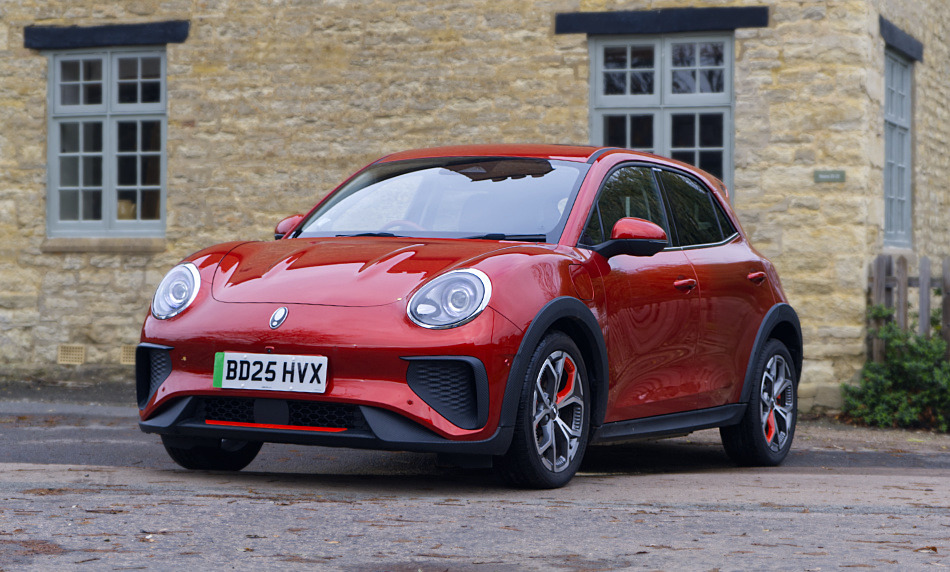
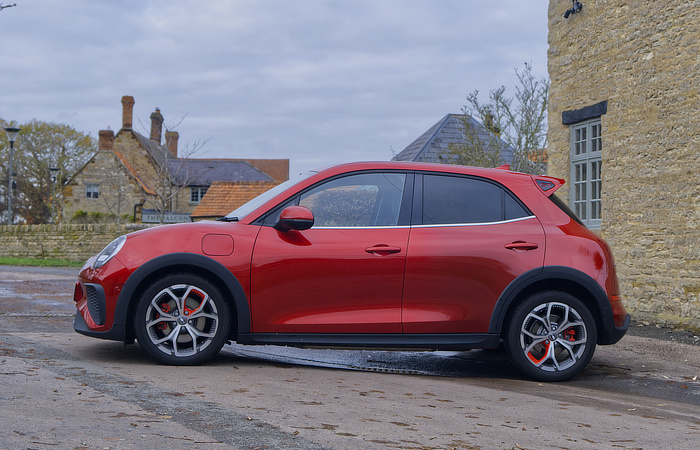
Great Wall Motors has gone heavily into electrification—well, not completely, but almost. Among its electrified lineup sits the fully electric Ora 3, formerly known as the Funky Cat. It’s a small hatchback that is actually the size of a compact SUV, but clever styling makes it look like a hatch.
Small EVs often mean small battery packs, and in an ideal world, if you’re going electric, you want the biggest battery your budget can stretch to. The Ora 3 went on sale in 2020 and received a mid-life facelift for 2025.
So, is the Ora 03 a range-anxious city dweller best suited to short trips, or can it truly go the distance?
The Exterior
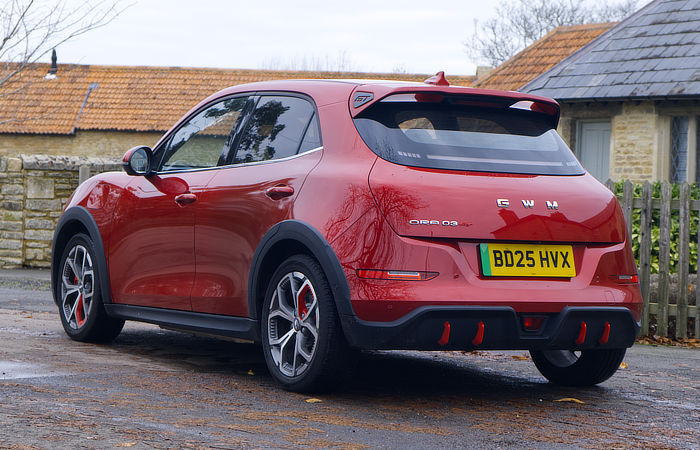
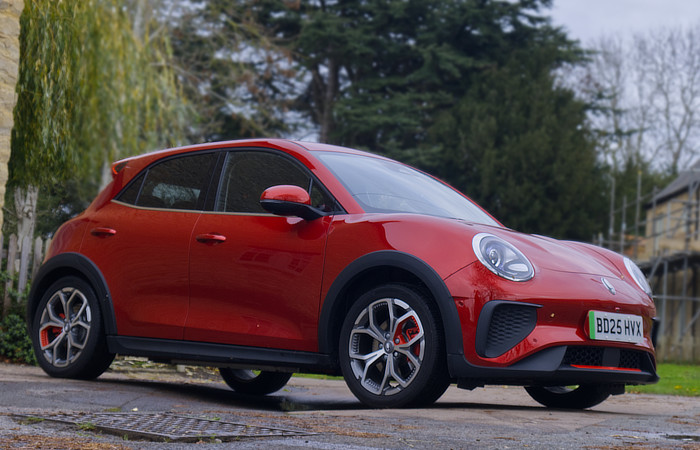
The GWM Ora 3 styling has a bit of everything—something familiar, yet different. Modern retro, the designer is a former Porsche design stylist. It’s very well made on the outside, with shutlines so tight that if the ancient Egyptians stumbled into a temporal vortex and arrived in 2025, they’d probably ask, “How did they do that?”
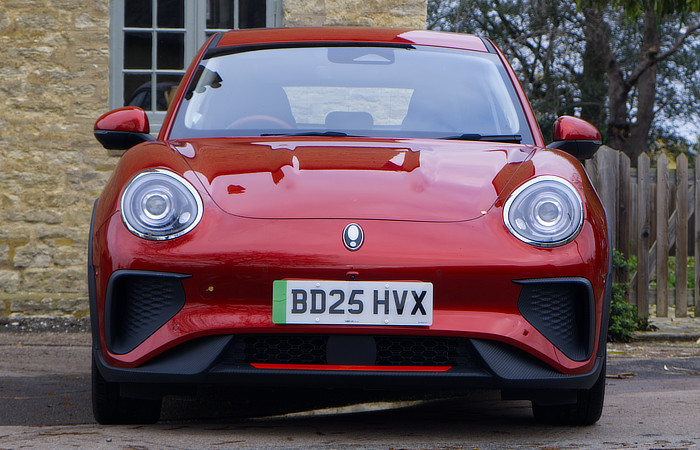
It’s bigger, wider, and taller than the styling suggests. In fact, it’s slightly larger than a Nissan Juke, so the Ora 03 is closer to a compact SUV in terms of size.
In the UK, the Ora 3 is available in three trims—Pure, Pro, and GT. Prices start at £24,995 for the entry-level Pure, rise to £28,995 for the Pro, and £32,995 for the GT.
The Pure and Pro are offered in five colour options, while the GT gets four.
The Interior
The first thing that hits you when you step into the cabin is how premium it feels. I was expecting interior quality bordering on depressingly Dacia-like, but the overall finish is unexpectedly high.
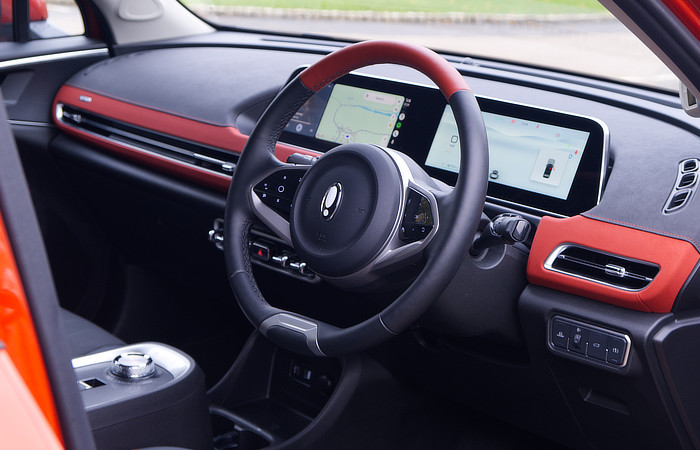
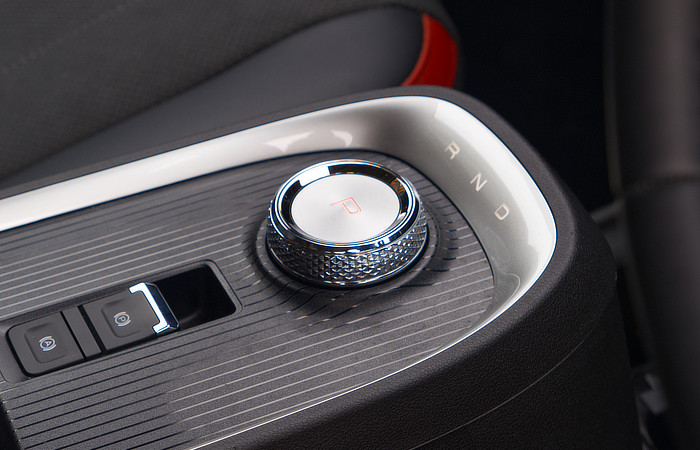
The fit and finish are solid throughout the cabin, with more soft-touch surfaces than expected, and the limited switchgear feels well-damped and reassuring. The chrome toggle switches are a nice retro touch, clearly taking inspiration from somewhere over the rainbow.
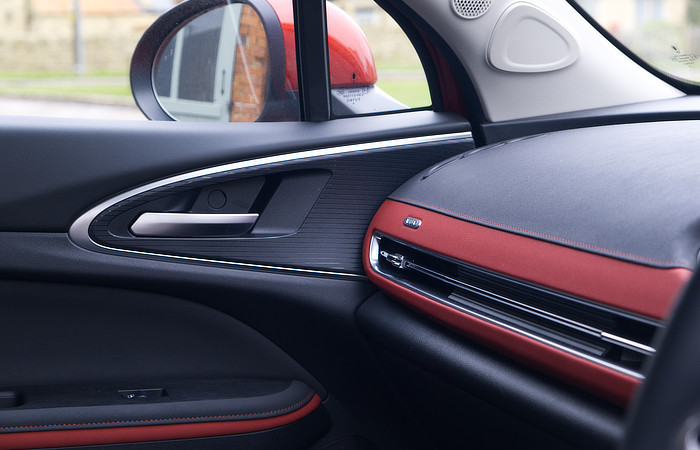
Front cabin space is generous. One thing I’ve noticed with the latest wave of Chinese brands is the focus on genuinely comfortable seats.
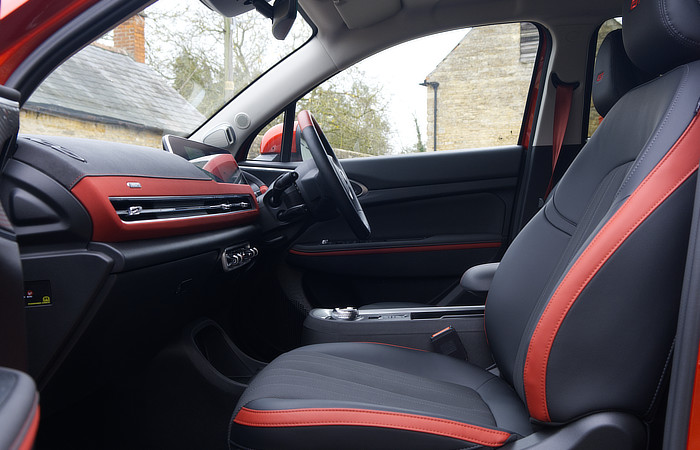
The Ora 3’s seats aren’t ergonomically perfect, but they offer better comfort than many premium manufacturers who sell seats on the premise of “ergonomics” while delivering arse aching stiffness.
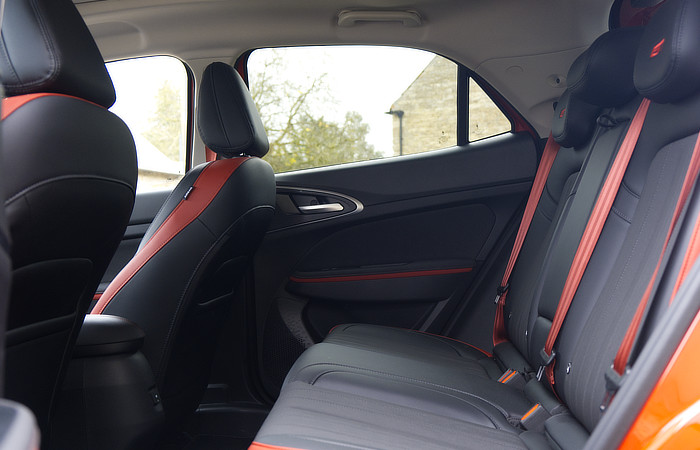
The benefit is simple: long journeys feel less arduous. Rear passenger space is adequate. I’m just under six feet tall and found I had just enough knee and headroom.
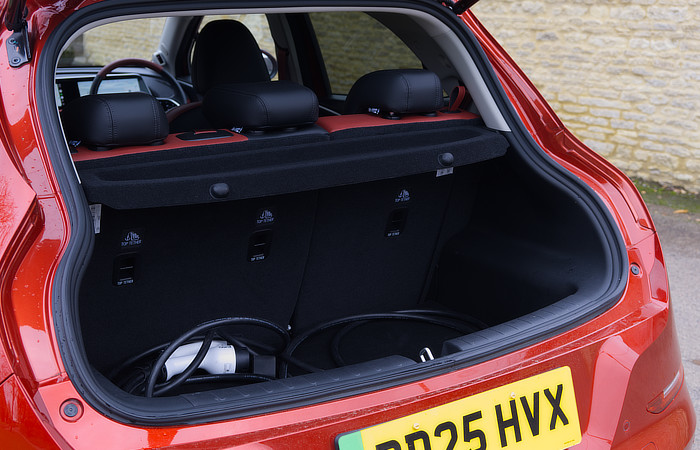
Boot space, however, is shallow. You’ll get about four full supermarket bags lined up in a row with little room left over. The 288 litres of boot storage is moderately acceptable, and if required extra space the rear seats fold down to expand the capacity.
The Infotainment System
The widescreen infotainment system is neatly integrated into the dashboard. Although it looks like one seamless unit, it actually incorporates two 10.25-inch screens.
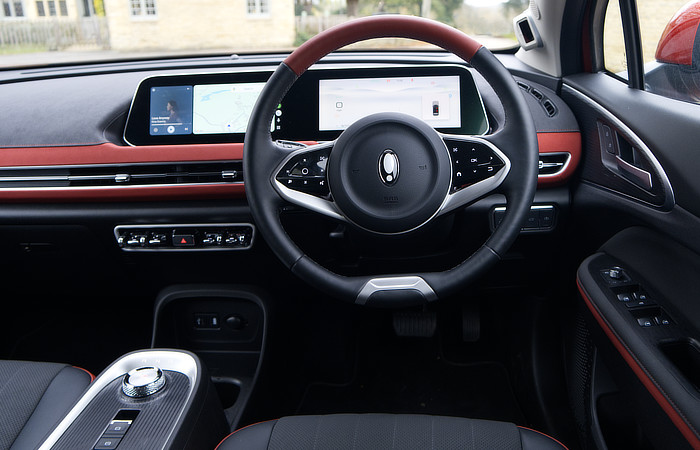
It’s fairly simple to use and graphically well presented. As with any infotainment system, there’s a learning curve, and some icons and on-screen text may appear small for some users.
But overall, the minimalist graphics look good, and the user experience isn’t plagued with a path to constant misery because the menu system is fairly intuitive to access.
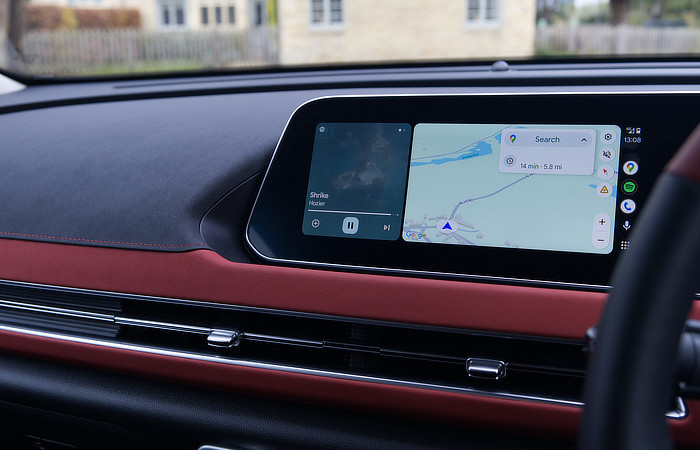
Most users will likely switch to Android Auto or Apple CarPlay, both of which come as standard. As for equipment, the entry-level Pure trim is impressive, offering keyless entry, a 360-degree camera, electric seats, parking sensors, a rear camera, and intelligent cruise control.
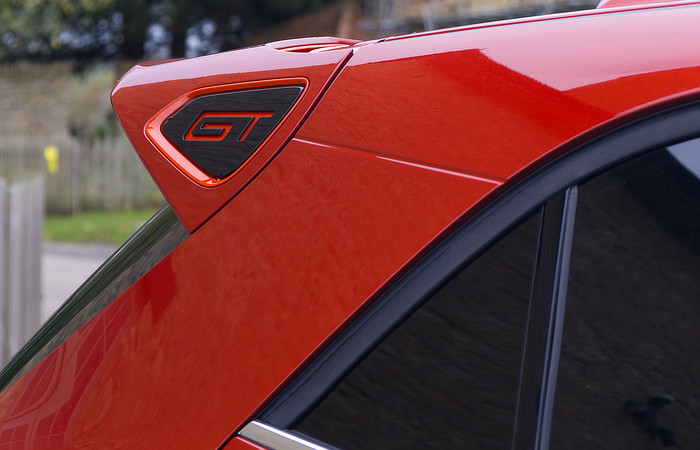
The Pro and GT trims add features such as a powered tailgate, auto-folding mirrors, and rear privacy glass. The GT goes further still with a heat pump, GT-specific exterior styling and interior trim, a panoramic sunroof, and ventilated seats with massage function — all for under £30,000.
The Drive
The Ora 3 range now comes standard with a front-mounted motor producing 168 bhp and 220 Nm of torque. All trim levels across the range use a lithium iron phosphate (LFP) battery.
The performance-oriented GT variant features more aggressive styling. Oddly, despite the sporty design, power output remains unchanged. The Pro and GT get the larger 63 kWh battery; the entry-level Pure makes do with a 48 kWh pack.
As for the drive, it’s actually decent. Steering is good, it flows nicely along B-roads, and it’s stiffly sprung but nicely damped and soaks up Britain’s inconsistent roads without rattling your spine. And that means it’s comfortable on long motorway journeys, and when time allows you can chuck it around and have some fun — but push too hard and the body roll quickly reminds you to back off.
Features such as Lane assist is well implemented, but can feel intrusive at times. Modern systems can now track twisty B-roads, and the Ora 3 gently guides the steering rather than yanking it away. You can switch it off—but you’ll need to do that every time you start the car. The safety beeps and bongs are perhaps quietly more intrusive.
You might think 168 bhp isn’t much these days, but this is an EV—instant torque makes it feel far more responsive than a 1.5-litre three-cylinder turbo petrol. It feels closer to a small V-block than a three-pot.
The Ora 3 offers driver modes. Eco was my preferred setting. It’s quick enough in any mode, and yes, it does have a Sport mode that even has launch control that gives a sense of urgency, but if I am being honest, it’s more theatre than genuine performance.
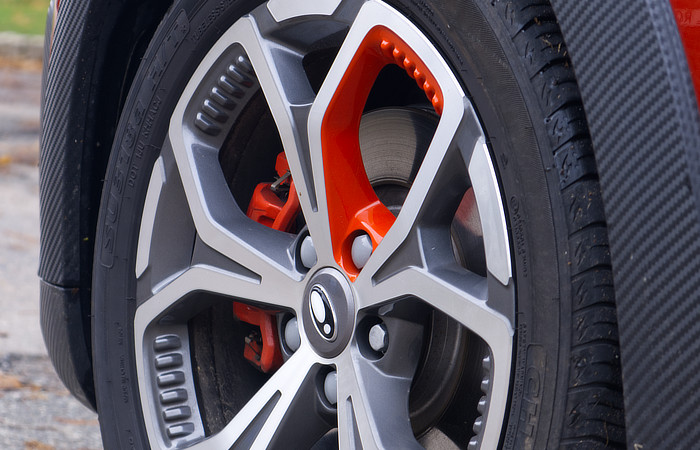
Efficiency is respectable: the Ora 3 GT will comfortably manage around 225 miles on a single charge and accepts DC rapid charging from 15–80% in 48 minutes. Home charging at 6.6 kW is supported. Overall, it offers a very liveable real-world range
One issue I did notice is braking in slow traffic. The Ora 3 has regen braking, which is used 95 percent of the time. However, when you apply the physical brakes to stop, the car subtly pitches forward before settling back. It’s minor, but low-speed braking refinement could be improved.
Epilogue
The GWM Ora 3 is much better than I expected. I thought it would feel like a tin can on wheels with minimal refinement—but instead, it feels almost premium at a reasonable price.
So here’s a hypothetical question: would you choose the Ora GT or a VW Polo GTI? From my experience, the Polo GTI handles better, but the ride is compromised, and it’s miserable to spend long periods in it. VW quality has declined—the Polo is basically the tin can I thought the Ora would be.
The next comparison is the VW ID.3. It starts at £35k with entry-level models riding on 18-inch steel wheels. The performance ID.3 GTX starts at £48k. Sure, it has better performance and more range, but it lacks VW’s once-solid refinement—and anyone with common sense would steer clear.
So why am I picking on the VW brand? It isn’t personal — rather, it highlights that VW has long been the benchmark for sophisticated European engineering. But in the electric age, VW can no longer rely on its past reputation. VW has long promised a sub-£25K EV, yet the Ora 3 has already achieved what VW has not: it’s cheaper, better built, with superior technology and more features.
And while it can’t match VW in pure driving dynamics, the Ora 3 isn’t as far behind as you might think — in fact, it’s closer than you realise.