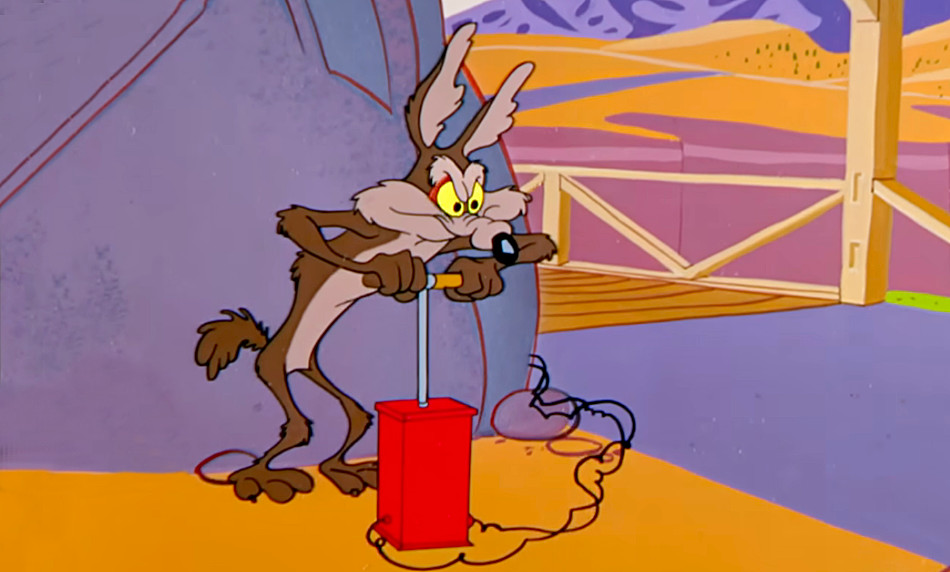
Like the cartoon character Wile E. Coyote chasing the Road Runner, Renault faces a similarly unending task in its efforts to crack the Indian market. The most obvious strategy would be to build viable, high-quality cars at affordable prices for a country with a lower per-capita income than Western Europe.
But making genuinely good cars has never been Renault’s way. Relentless cost-cutting on every component is, and even the average Indian buyer has caught on to this approach and rejected the brand. Yet, like Wile E. Coyote, Renault continues to conjure up new schemes to sell—sell—more, more, more.
Renault can’t help itself. In Western Europe, it has largely won over the media not through brilliantly made cars but through buying the media, luring gullible journalists media executives with lucrative advertising revenue. Social media and YouTube influencers, meanwhile, aren’t influencing anyone—they’re being influenced by the Renault funded propoganda money.
Despite targeted and expertly executed marketing campaigns, Renault can’t put the genie of its miserly cost-cutting back into the rancid bottle it came from. Still, nothing will stop Renault from selling more mediocrity, so long as there’s a profit to be made.
Renault: Clueless In Calcutta
Renault is planning a major revival of its Indian business by reintroducing the Duster SUV, banking on the model’s strong brand recognition to regain market share. Under new CEO Francois Provost, the French automaker is shifting away from entry-level cars to focus on more premium, competitively priced vehicles aimed at India’s growing middle class.
The comeback begins on January 26 with the unveiling of a new, regulation-compliant Duster, followed by a larger SUV similar to the Dacia Bigster and an electric vehicle. Renault also plans to source components from India for exports and leverage its wholly owned factory in southern India, which has capacity for 500,000 vehicles annually.
After seeing its India market share fall below 1%, Renault hopes the Duster—available with a hybrid powertrain for the first time in India—will be a make-or-break model, with production expected to reach up to 140,000 units a year.
The strategy is part of a wider push to reduce reliance on Europe, tap into high-growth markets, and benefit from India’s booming SUV and premium car demand, which is projected to drive total market sales to 6 million vehicles by 2030.