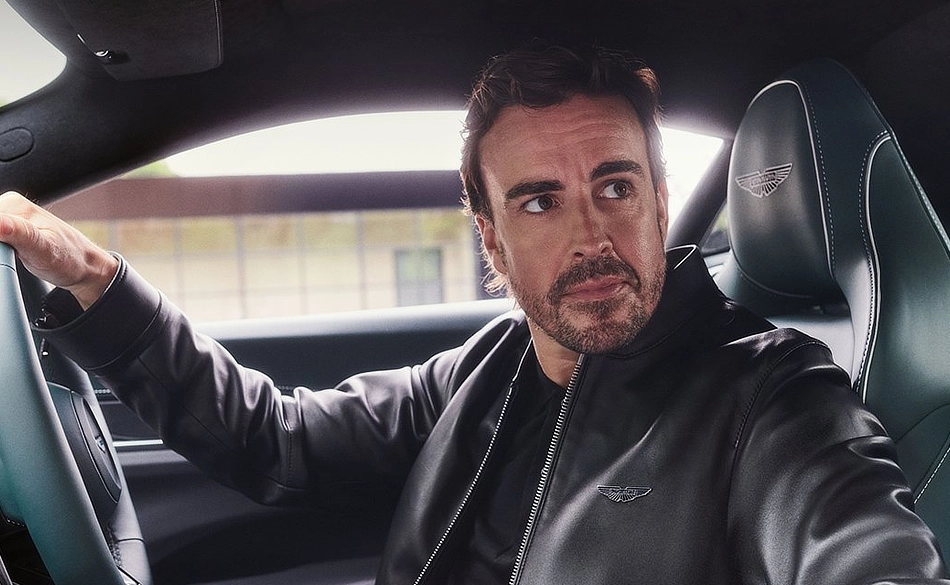

OK, we made the headline up. Whether it counts as clickbait—or even lands as tongue-in-cheek—is debatable. But it does point to a serious question: how long does Fernando Alonso keep going like this?
Because, at some stage, persistence stops looking like resilience and starts looking like defiance of reality.
Alonso’s commitment to Formula One remains extraordinary. Well into his forties, he is still extracting performance at a level most drivers can’t match in their prime. But that only sharpens the contradiction. Year after year, he finds himself strapped into machinery that simply isn’t capable of delivering on his ambitions.
When Adrian Newey arrived at Aston Martin F1 Team, the expectation was clear: this was the final piece of the puzzle. A technical mastermind joining an ambitious team, paired with a relentless driver—on paper, it looked like a trajectory towards the front.
Instead, 2026 has exposed just how fragile that vision was.
The AMR26 is not so much a competitive car as it is a rolling development platform—an intriguing concept that has yet to translate into consistent performance. Race weekends have become less about results and more about data gathering, correlation work, and incremental fixes. That’s not where a team with Aston Martin’s investment and intent expected to be.
The much-hyped partnership with Honda has, so far, failed to ignite. Early optimism has given way to familiar technical friction. The car arrived late, overweight, and plagued by reliability concerns. Chief among them are persistent vibration issues—symptoms of deeper integration problems between chassis and power unit.
And with that has come the inevitable finger-pointing.
Honda’s position is that the root cause sits within the chassis. Newey’s stance has leaned heavily in the opposite direction. Publicly, both sides have called for collaboration; privately, the dynamic appears far less aligned. It’s not the kind of unified technical front that successful title campaigns are built on.
There has also been a subtle but notable shift in Newey’s role. While not formally displaced, he appears to have retreated from the spotlight of team leadership. In truth, that may be a correction rather than a setback. Newey’s genius has always lived at the drawing board, not in the political and managerial theatre of running a modern F1 operation.
Formula One cars are no longer the product of singular brilliance alone—they are the outcome of tightly integrated, highly coordinated engineering groups. That is where Aston Martin must now prove itself.
The uncomfortable reality is that there is no quick fix. The AMR26’s issues are systemic, not superficial. This is a season of recovery, not redemption. The real target has already shifted to 2027, when the lessons of this year—painful as they may be—could finally be converted into performance.
Which brings us back to Alonso.
At 44, he has nothing left to prove. And yet, he stays. Still chasing the possibility—however distant—of one final victory, one final title push. It is a gamble on time, on progress, and on a team that has yet to justify that level of faith.
But perhaps Alonso sees something others don’t. Or perhaps he simply refuses to accept that the window has closed.
Either way, his decision to continue may tell us less about Aston Martin’s present—and more about his belief in what it could become.
During a recent media interview, Alonso elaborated on the speculation surrounding his retirement.
“I don’t know – I think this year you have to wait a bit longer because the progression and development of the cars is going to be incredible. Making a decision in April or May could be right or wrong by September, depending on how the evolutions go. The longer you can wait, the better.”
“That would be my intention – to wait until September to decide. But we’ll see. I need to see how I feel, how motivated I am, how much the travel, the events, the marketing and everything outside the track weighs on me.”