What we are seeing with Honda Motor () is not simply a “bad year” or a temporary miscalculation in product strategy. It is a revealing moment in the deeper structural instability in the automobile sector as it shifts from internal combustion to electric vehicles.
Honda has reported its first annual loss in nearly 70 years, driven by more than $9 billion in EV restructuring costs. But the important question is not the size of the loss — it is what produced it. We are looking at a classic case of a large, mature corporation being forced into a rapid and expensive transition by competitive pressures it does not fully control: state-supported industrial policy in China, shifting consumer demand, and the overextension of capital into long-term speculative EV commitments.
The result is predictable: over accumulation followed by painful correction. Honda, like many legacy automakers, made enormous fixed investments into EV capacity and future projections of demand.
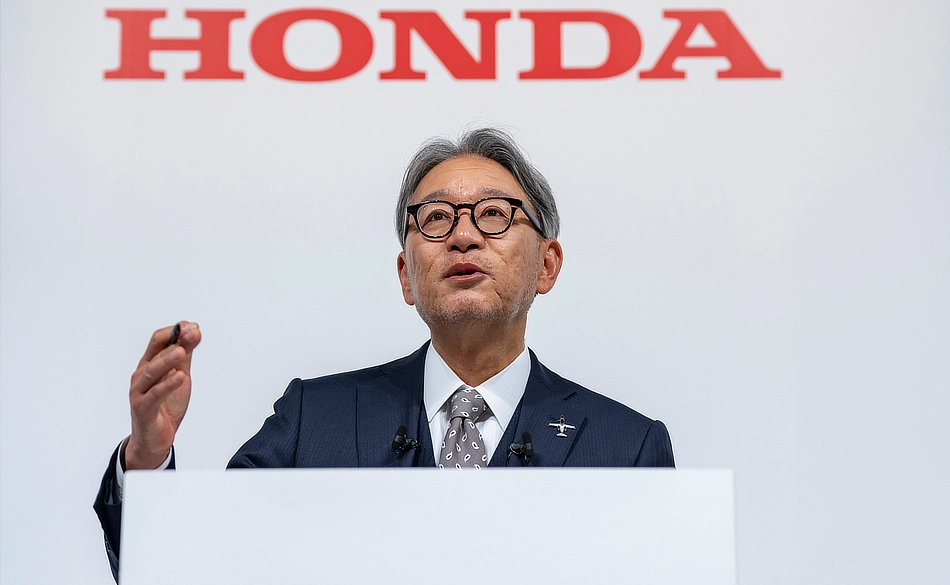
Now we see the political economy of the response. The company abandons long-term EV targets, suspends major investment projects in Toshihiro Mibe – Honda CEO, and turns back toward its most profitable division: motorcycles. In other words, capital retreats to where the rate of return is still stable enough to sustain shareholder payouts.
And that is the key contradiction. Even as executives speak the language of “transformation” and “transition,” the firm is structurally dependent on old profit centers to subsidize new, uncertain ones. The celebrated EV future collides with the reality of uneven development, global competition, and declining margins.
Honda’s situation is not an exception. The EV transition is not a smooth technological upgrade — it is a turbulent restructuring driven by competition, state power, and financial discipline, with all the instability that entails.