The promise of India’s electric future, once wrapped in the language of autonomy and industrial self-determination, is now being quietly rewritten in the language of dependency.
Tata Motors, long positioned as a symbol of national manufacturing ambition, has turned to China’s Chery for the underlying architecture of its delayed Avinya electric vehicle programme. On the surface, it is a pragmatic arrangement: a stopgap solution to salvage timelines, preserve market position, and inject technical maturity into an EV rollout that has stalled under the weight of its own ambition.
But beneath that pragmatism lies a more familiar story of the global economy in its current phase — one in which technological sovereignty is increasingly illusory for those outside the narrow band of industrial power that controls the most advanced electric vehicle platforms.
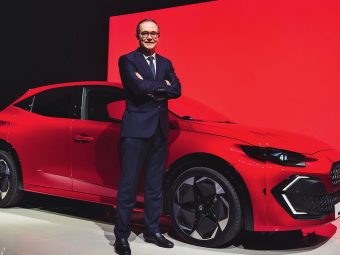
The Avinya, once envisioned as a flagship of indigenous innovation and a bold step into the premium EV segment, will now be assembled in India from kits shipped from China, built on architecture developed elsewhere, shaped by supply chains and design philosophies that originate far beyond its domestic market. Even as it is marketed as a premium Indian product, its structural DNA is imported.
This is not merely a business decision. It is a reflection of the hierarchy that now defines the global transition to electric mobility. China, having invested relentlessly in scale, battery technology, and integrated manufacturing ecosystems, has become the unavoidable source of EV competence. Others, including India, are left to negotiate access — not as equals, but as clients.
The political irony is difficult to ignore. While formal investment from China remains constrained by geopolitical suspicion, its industrial systems are entering through contractual corridors, joint ventures, and licensing agreements. The result is a carefully managed contradiction: economic reliance without political recognition.
Tata, like many of its global counterparts, insists this is temporary — a bridge toward future in-house capability. Yet bridges, once built, have a way of becoming permanent infrastructure.
What is unfolding is not simply the story of one vehicle programme, but of a wider recalibration of power in the electric age: who designs it, who builds it, and who must, in the end, adapt to architectures already decided elsewhere.