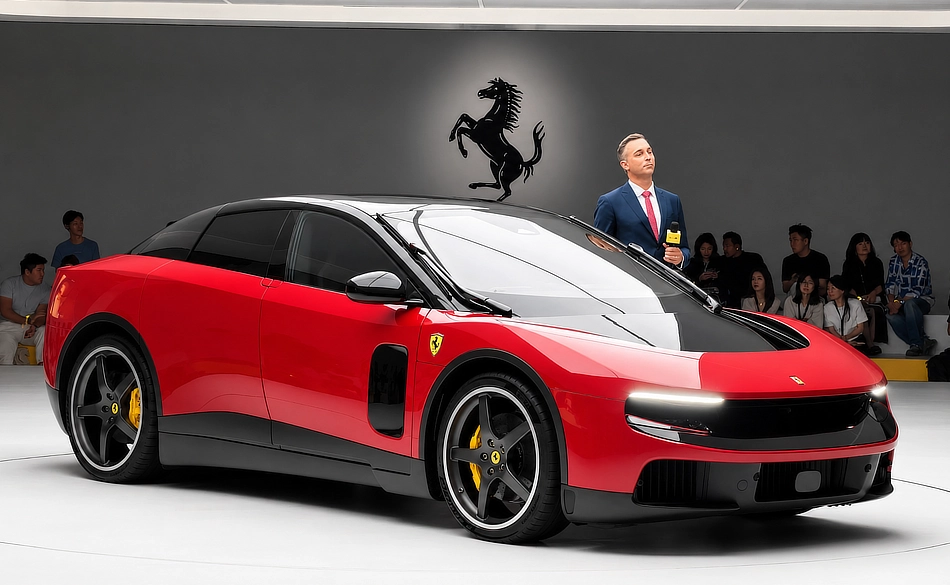
Ferrari has launched controversial Luce EV in China, which sounds less like a car and more like a bottled water you’d find in a boutique hotel minibar and feel vaguely judged for drinking.
It costs about £460,000 to £500,000-ish, depending on which currency reality you’re currently subscribed to, and China gets a grand total of 88 cars. Which is not a production run. That’s a dinner party guest list.
And here’s the thing: it’s already sold out.
Now before you assume this thing is a thunderous electric super-saloon that will rearrange your internal organs on command—no. It won’t. Because Ferrari, in their infinite wisdom, have not built a four-door missile.
They’ve built a five-seat grand tourer, which is car-speak for: “We wanted something for the people who think a Purosangue is a bit too shouty.”
Meanwhile, in the same market, the Chinese are building things like the BYD Yangwang U9, which will do 0–100 km/h faster than you can say “where’s the V8 gone?”, and the GAC Aion Hyper SSR, which basically treats physics as a polite suggestion.
There’s also the Denza Z9 GT, which looks at Ferrari’s output and says: “Nice effort. Anyway…” But none of that really matters here.
Because Ferrari buyers in China aren’t cross-shopping spreadsheets. They’re not sitting there thinking, “Ah yes, 0–100 times per yuan spent.” They’re buying something that says: I have arrived, and I do not need to justify it to you.
And that, really, is the point. The Luce isn’t competing with Chinese EVs on performance. It’s competing with yachts, watches, and the concept of subtlety—and frankly, subtlety lost years ago.
Ferrari will tell you it’s not a “loyalty test.” Of course they will. And I’m not saying it is.
But if buying a £500,000 electric sofa on wheels doesn’t move you up the Ferrari waiting list… well, it’s the most expensive queue ticket in history.
And somewhere in China, 88 very patient people are now waiting for delivery of what is essentially four million yuan’s worth of saying: don’t ask questions.