Volkswagen workers are confronting a new wave of uncertainty as management prepares to impose sweeping cost cuts on one of Germany’s most important industrial employers.
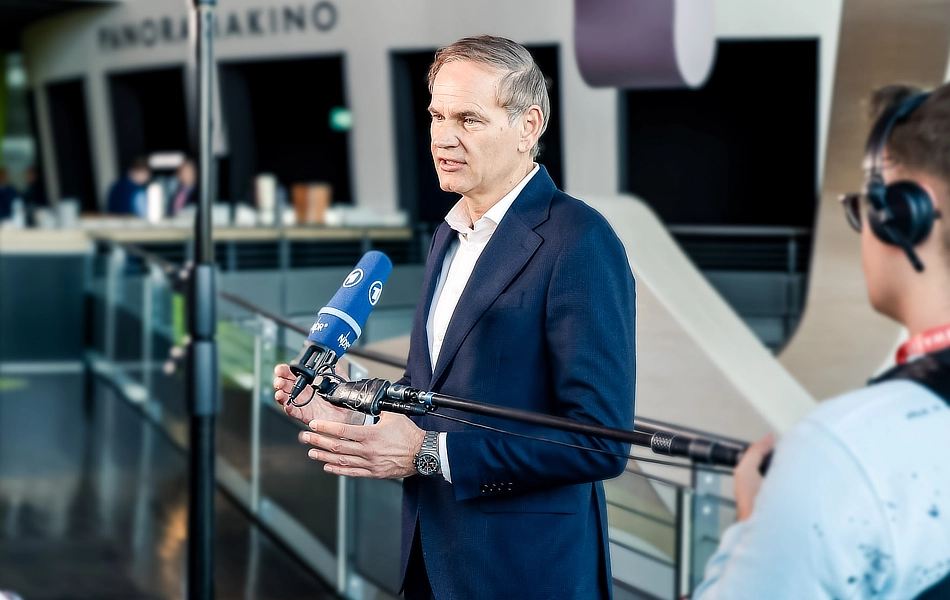
CEO Oliver Blume has warned employees that Volkswagen’s position is “more than critical,” pointing to a 3.8 percent operating margin that he says is inadequate to finance new technologies, products and factories. Management wants to make the company “simpler and leaner,” cutting costs, capacity and complexity as weak demand and intensifying competition from Chinese automakers squeeze the group.
For workers, however, the language of efficiency has become a threat to their livelihoods.
Volkswagen’s works council says management’s communication has become its greatest grievance, ranking above fears about jobs, plant closures and the future of German factories. Labor representatives accuse executives of creating anxiety without providing clear details about the restructuring.
Reports that Volkswagen could eliminate as many as 100,000 jobs have intensified those fears. The company also says it must remove more than 500,000 vehicles of annual European production capacity. While management insists that no individual plant has yet been selected for closure, workers have little reason to assume that the restructuring will spare them.
Daniela Cavallo, head of Volkswagen’s works council, has demanded concrete proposals. Christiane Benner, deputy chair of the supervisory board and head of the IG Metall union, has called the prospect of another 50,000 job cuts a “hard provocation.” She has also rejected plant closures and questioned management’s ambition of achieving an operating return on sales of roughly 9 percent.
The confrontation exposes a deeper struggle over who will bear the cost of Volkswagen’s transformation. Management points to Chinese competition, excess capacity and an unsustainable cost structure. Labor leaders argue that workers should not be forced to pay for strategic failures or unrealistic corporate targets.
The dispute now moves beyond the factory floor. Blume faces crucial meetings with employees this week and a supervisory-board battle in September.
For thousands of workers and their families, the issue is not simply corporate efficiency. It is whether Germany’s industrial heartland will continue to provide secure, skilled employment—or whether restructuring will make workers absorb the price of Volkswagen’s global struggle for survival.