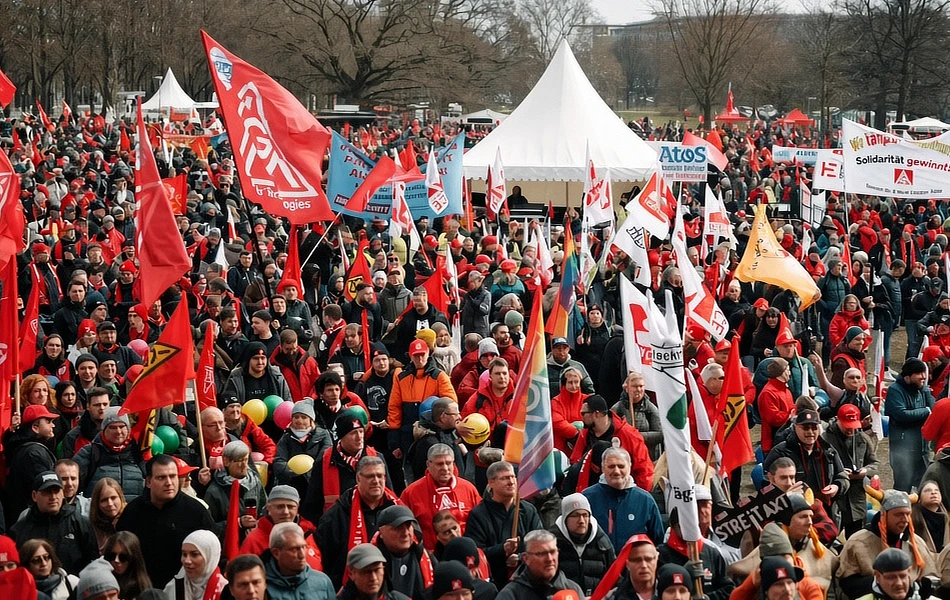
Volkswagen’s workers are being told that the company faces a competitiveness problem. That is certainly true—but the important question is: competitive for whom, and at whose expense?
The company is considering potentially tens of thousands of job cuts while workers worry about factories, pensions, early retirement and severance. Management, meanwhile, speaks the language of efficiency, utilisation and cost reduction.
This is the familiar logic of corporate capitalism. When profitability comes under pressure, the corporation does not first ask how to preserve the livelihoods of the people who produce its wealth. It asks how to restore returns on capital.
Volkswagen’s workers therefore face a fundamental contradiction. They need secure employment and functioning communities. The owners and executives must demonstrate improved profitability and competitiveness. Those objectives can overlap—but when they do not, workers typically possess far less power.
The deeper problem extends beyond Volkswagen. European manufacturers are confronting Chinese competition, technological transformation and enormous investment requirements.
Yet the costs of adapting to these changes are increasingly being presented as a problem for labour: fewer workers, fewer factories and greater pressure to produce more with less.
That raises the question that corporate restructuring tends to avoid: who owns the productive capacity, and who gets to decide what happens to it?
A factory is not merely a line on a balance sheet. It represents decades of accumulated skills, public infrastructure and workers’ lives.
Closing it may make the accounts look better. It does not necessarily make society better.