The current strain in China–European Union economic relations should be understood not as an isolated dispute over tariffs, subsidies, or electric vehicles, but as part of a broader structural transition in the global economy.
What we are witnessing is the fragmentation of an integrated trading system that, for several decades, was premised on the assumption of steadily deepening interdependence under rules ostensibly governed by multilateral institutions.
The commentary attributed to Chinese sources reflects a growing belief in Beijing that Europe is increasingly willing to deploy trade instruments—anti-subsidy investigations, regulatory screening mechanisms, and industrial policy tools—in ways that blur the line between legitimate governance and strategic economic containment.
From the European perspective, these measures are often justified as necessary responses to domestic political pressure, deindustrialisation concerns, and the need to ensure resilience in critical supply chains.
Yet beneath these reciprocal narratives lies a more fundamental issue: the absence of a stable framework for managing technological competition and industrial policy divergence among major economic blocs.
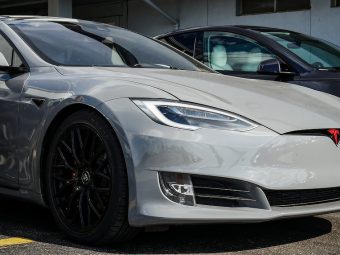
The electric vehicle sector is emblematic of this tension. China’s rapid scaling of green manufacturing capacity has generated efficiencies and cost advantages that European firms struggle to match in the short term.
Europe’s response, in turn, has increasingly shifted toward defensive trade measures and conditional market access.
Such dynamics risk becoming self-reinforcing. If each side interprets the other’s policies primarily through a security or coercion lens, the scope for negotiated adjustment narrows, and economic decoupling becomes more likely—not by design, but by cumulative mistrust.
It is also important to recognise that trade imbalances, while politically salient, are not inherently evidence of unfair practice. They often reflect differences in savings rates, industrial structure, and stages of technological development.
A durable solution requires macroeconomic coordination and investment alignment, not only tariff adjustments or investigative proceedings.
The reported continuation of China–Europe investment flows in sectors such as batteries and automotive manufacturing suggests that economic rationality has not been fully displaced by geopolitical tension.
Nonetheless, the increasing rhetoric on both sides indicates that political narratives are beginning to outpace institutional mechanisms for cooperation.
If Europe and China fail to establish clearer guardrails for competition—particularly in high-growth, strategically sensitive sectors—the result will not be a clean separation, but a more chaotic form of partial disengagement.
This would impose costs on both sides and weaken global progress on shared challenges, including climate transition and financial stability.
The central policy question, therefore, is not whether competition exists, but whether it can be governed.
Without deliberate efforts to rebuild a framework for managed interdependence, the risk is that tactical disputes will harden into structural division, to the detriment of the global economy as a whole.