Aion. Not a name most UK buyers will recognise—yet.
Launched in 2017 as the EV arm of Chinese automotive giant GAC, Aion is now entering the UK market with serious intent. For context, think “China’s Volvo”—but without the Scandinavian heritage.
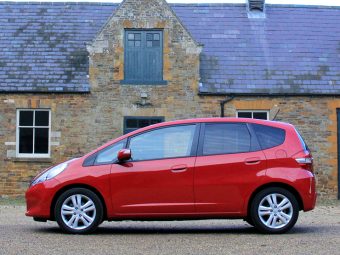
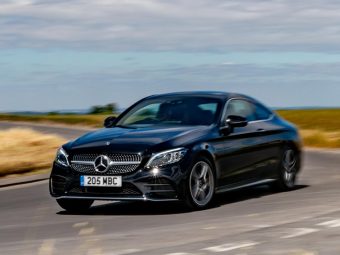
GAC itself is no newcomer. It’s a 78 year old state-owned automotive manufacturer, the fifth-largest carmaker in China, producing over two million vehicles annually and maintaining long-standing partnerships with Toyota and Honda.
While legacy manufacturers debate the future, China has quietly accelerated. Its factories are newer, faster, and state-of-the-art—facilities Europe can only dream of—purpose-built for electrification.The result? Cars like this—the Aion V.
Design: Clean, Confident, Contemporary
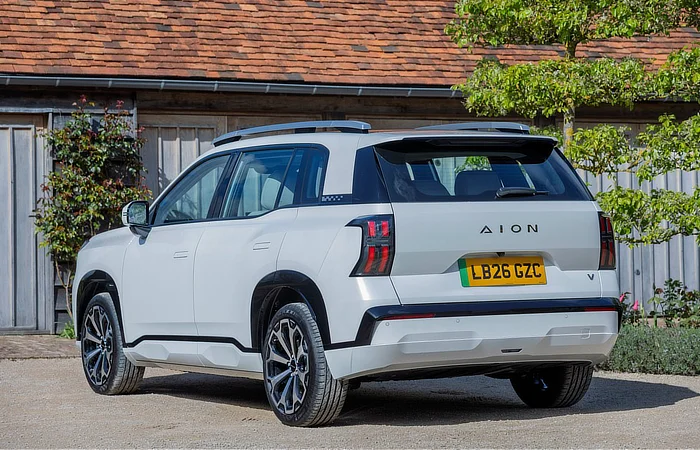
Aion describes the V’s design as “distinctive and striking.” In reality, it’s something arguably more important: well-proportioned.
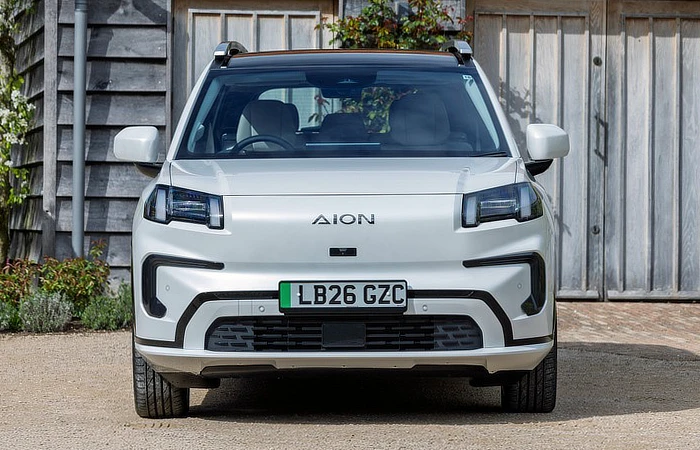
There’s a visual balance from front to rear that gives the car a composed, confident stance. It doesn’t try too hard—and that works in its favour.
Design input comes from studios in Guangzhou, Shanghai, and Milan, with the European centre playing a key role in shaping the car’s aesthetics.
UK buyers will get a single, fully loaded trim. A £1,495 premium pack adds a 6.6-litre CoolHot Box, massage front seats, and heated and ventilated leather upholstery.

Standard equipment is extensive and puts many premium brands to shame. The car is available in six metallic paint colours, four of which are £675 optional extras, while the holographic silver option is only available with the upgraded Premium Pack.
The Aion V rides on 19-inch alloy wheels as standard and includes more driver-assistance and safety technology than most buyers will need.
Prices start at £36,450 when pre-orders open on April 23, 2026.
Interior: Benchmark-Setting Quality
Step inside, and the Aion V makes its strongest statement.
The cabin feels genuinely premium. Build quality is very high, with soft-touch materials throughout and an absence of cheap plastics.

Quilted, perforated high quality leatherette seats, heated and ventilated, that feel as good as full grain leather, contrast stitching, and tight panel fitment all contribute to an upscale feel.

Aion UK say they are targeting the likes of Skoda, Kia and Hyundai, however put simply: if this were a BMW interior, it would be winning awards.
In fact, the Aion V doesn’t just compete—it challenges and in terms of perceived quality, and arguably surpasses some current BMW offerings. At this price point, that’s significant.
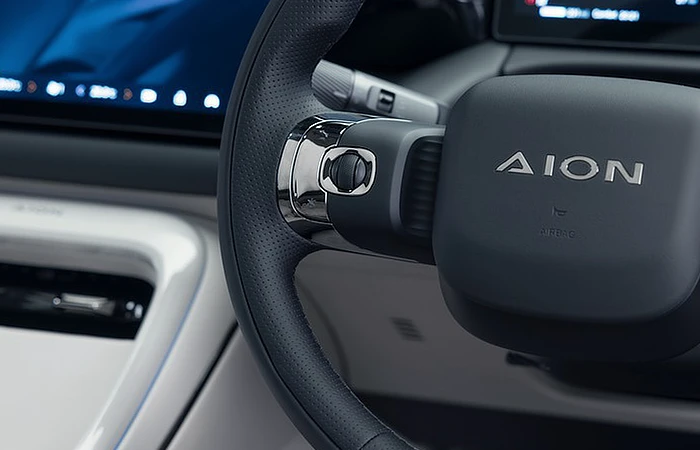
The interior feels light and airy, and double-glazed windows are standard. The Aion UK team also emphasised that the panoramic glass roof comes with a sunblind—not revolutionary by any means, but a thoughtful and practical touch.
Interior comfort is another highlight. Space up front is generous while rear passengers enjoy near lounge-like legroom. Wide-opening 90-degree doors make access effortless—especially useful for child seats.
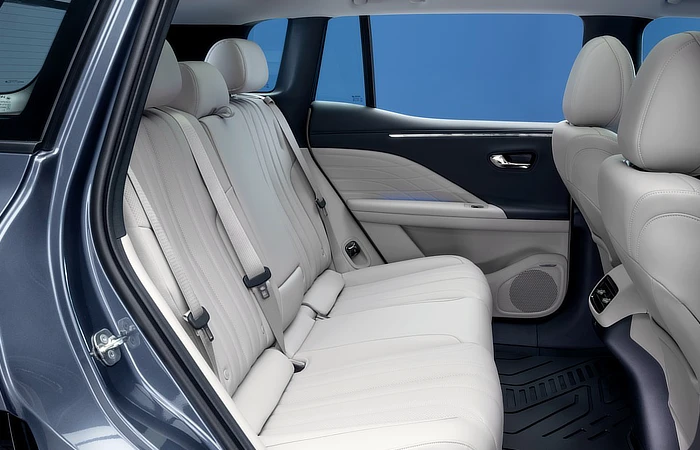
The rear seats can also recline, and if the need arises, the front passenger seat can be reclined flat for the ultimate lounge experience—although I’d be more inclined to just pay for a hotel.
Practicality is well judged, too. A three-tier boot offers up to 472 litres, expanding to 1,638 litres with the seats folded flat. Thoughtful touches—like a fold-out rear tray integrated into the front passenger seat back—add a premium, almost executive feel, although it’s only available with the Premium Pack.
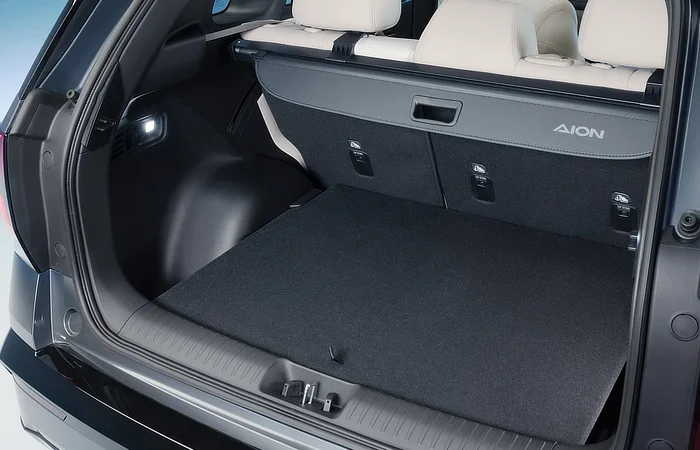
It isn’t a flimsy plastic tray either; the mechanism and overall engineering execution feel so solid they’d give a Mercedes S-Class something to worry about.
If you opt for the Premium Pack, which costs £1,495, it adds a 6.6-litre, three-mode CoolHot Box that can function as a fridge, freezer, or warming compartment for last minute takeaway indulgences. You also gain the option to choose French Cream or bold Bright Tan leather upholstery (both at an additional £195).
Infotainment: Fast And Functional
The 14.6-inch infotainment system is powered by a Qualcomm Snapdragon processor, and it shows. Performance is slick, responsive, and lag-free.
The interface is pleasingly presented, intuitive to use, with logical menus that are easy to navigate. However, like many modern systems, it leans heavily on touchscreen controls.
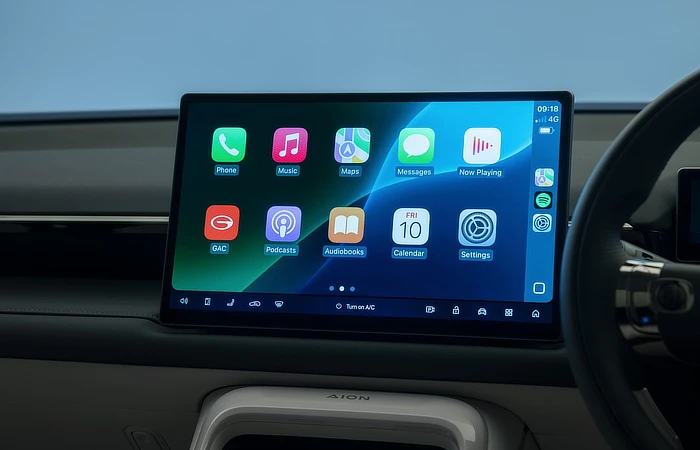
Adjusting mirrors or climate settings requires digging into menus—I didn’t find this in any way detrimental, possibly because I prefer this tech-driven solution to physical buttons.
Voice control is present but falls short of the accuracy offered by native Android Auto integration. However, you can switch from the native UI to Android Auto or Apple CarPlay, both of which are supported. You also get an ultra-fast wireless charging pad, the usual USB-C sockets.
Audiophiles will appreciate the nine-speaker, 360W ADiGO sound system, which delivers solid performance.
On the Road: Unexpectedly Polished
Can a Chinese SUV match European driving standards? In this case, yes. The Aion V’s suspension has been tuned for the UK market, and it clearly wasn’t influenced by motoring journalists who prefer everything to feel like it’s riding on rails. That, in this case, is a net positive.
The Aion V feels planted and composed, with a well-judged balance between comfort and control. Its multi-link suspension delivers a ride that’s smooth yet stable, particularly on uneven roads.
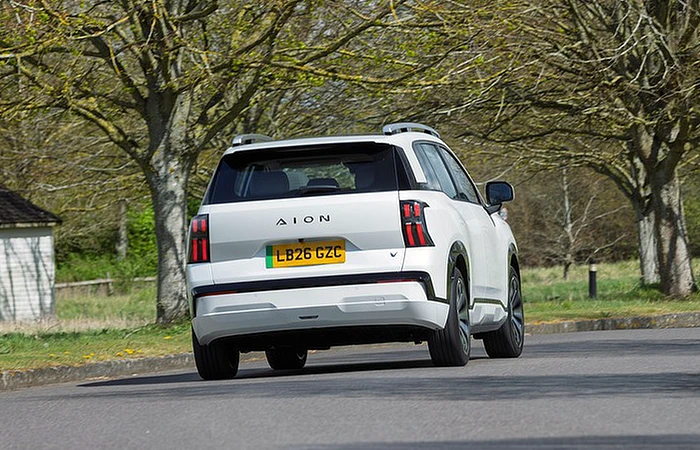
Through corners, it remains confident and perfectly capable of tackling country roads. There is a smoothness to the ride and handling that I wasn’t expecting. The same goes for motorway speeds, where the Aion V feels planted and secure. Steering feedback is consistent—more comfort-oriented than engaging, but never vague. It tells me what I need to know, and I’m fine with that.
Performance is brisk rather than thrilling. With 204 hp and 240 Nm of torque, you get the EV immediacy that a petrol or diesel car could never match. Drive modes—Sport, Comfort, and Eco—adjust throttle responsiveness and steering weight, though Comfort feels like the natural choice for everyday driving.

One issue worth noting is the lane assist system. On motorways, it can feel overtly intrusive, requiring minor corrections. Turning it off restores a more natural, planted driving feel—the kind you’d expect from premium German brands—highlighting the strength of the underlying chassis.
I do use lane assist when it’s well calibrated, but in this case the software behind the system needs a little more refinement and optimisation. A future software update should address it.
Efficiency and Charging
Aion claims a range of 317 miles, and when I got behind the wheel of the test car, the digital driver’s display confirmed the figure. However, your personal driving style, the topography, and the temperature will all affect overall range.
And I did push the Aion V a little harder than usual, yet it still returned a solid 3.39 miles/kWh—respectable for a vehicle of this size. Had I driven in a more relaxed, sedate manner, efficiency would likely have improved.
Fast charging is competitive, too. With 180kW DC capability, a 10–80% charge takes around 24 minutes. At home, an 11kW AC charger provides a full recharge in approximately 8.5 hours.
The 75.3kWh battery uses lithium iron phosphate (LFP) chemistry developed with CATL. This newer chemistry offers improved durability and allows more of the battery’s capacity to be used consistently over time.
In addition, the Aion V comes with a heat pump as standard, making it an efficient car overall. That said, as with any EV, more range is always welcome.
Verdict: A Serious Contender
The Aion V feels like a statement of intent.
It combines premium interior quality, strong efficiency, and composed road manners at a price that undercuts established European rivals. To match its level of refinement, you’d typically be looking at an Audi, BMW or Volvo—and even then, the Aion holds its own.

Add in an extensive ownership package—eight years of warranty, servicing, MOTs, and roadside assistance—and the value proposition becomes even stronger.
The conclusion is hard to ignore: Chinese manufacturers aren’t just catching up—they’re setting new benchmarks in exterior and interior refinement, as well as build quality. The Aion V demonstrates that Chinese manufacturers can produce a sophisticated chassis that closely matches the best Germany has to offer.
It isn’t perfect, nothing ever is in this world, but if the Aion V is anything to go by, the UK market is about to become very competitive indeed.