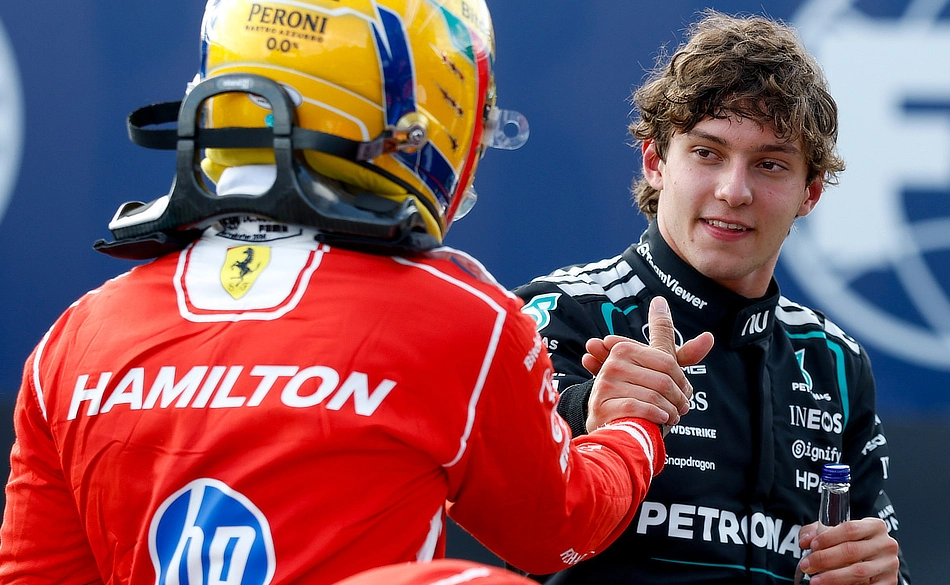

Energy deployment and battery management are defining the 2026 Formula One season, and Mercedes appear to have mastered both better than anyone else.
Formula One’s push towards greater sustainability has ushered in a sweeping technical overhaul for 2026.
The ground-effect era is over, and while there are numerous rule changes dominating the discussion, the most significant is the new 50/50 power split. The internal combustion engine (ICE) and electric motor now contribute equally to the car’s total power output, replacing the previous 80/20 split in favour of the combustion engine.
Here’s the key takeaway: the battery is limited to a maximum capacity of around 5kWh, with only 1.11kWh of usable energy available. For context, that’s only slightly more than the battery found in a Toyota Prius.
That gives the battery a usable range of roughly 1.5 miles. But this is Formula One—a high-speed, high-energy form of motorsport—and a fully charged battery is depleted almost as quickly as it is deployed. As a result, the teams that can recover energy and recharge the battery most efficiently hold a significant competitive advantage.
So Who Will Win the British Grand Prix?
If Sprint Qualifying and the Sprint race are anything to go by, the answer is straightforward: Kimi Antonelli.
The Mercedes has the highest top speed and arguably the strongest overall combination of aerodynamic efficiency and power unit performance.
Antonelli is producing the performances of a future world champion. Although he is still in the formative stages of his Formula One career, he has already demonstrated remarkable consistency. He has narrowly missed out on victory in recent races, but Silverstone is a driver’s circuit—fast, physically demanding, and packed with high-speed corners that reward confidence and precision.
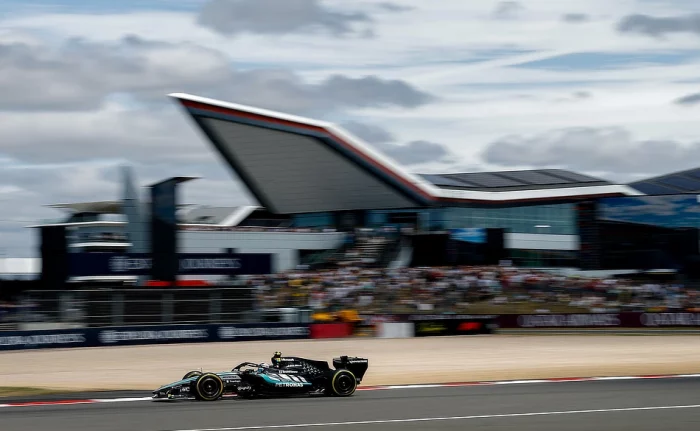
Ferrari appear to be just behind Mercedes, perhaps by two or three tenths of a second. In Formula One, however, being “just behind” can feel like being a light-year away. As the Sprint race demonstrated, Mercedes, in Antonelli’s hands, currently holds the advantage.
Over a full Grand Prix distance, though, the picture could change. Strategy, pit-stop execution, and tyre choices all have the potential to swing the race. Ferrari could capitalise if Mercedes make a mistake or misjudge the race strategy.
Tyre management may also prove decisive. Alongside efficient power unit and battery deployment, preserving the tyres over a race stint could determine the outcome.
Car setup is another crucial factor. Did Mercedes prioritise one-lap pace to secure track position, or did Ferrari compromise qualifying performance in favour of a race-oriented setup? A car optimised for race distance typically runs with softer suspension settings, which can sacrifice outright qualifying speed but improve tyre preservation over longer stints.
The Others
George Russell cannot be ruled out, but at the moment he is struggling to match the pace of his teammate in both qualifying and race conditions.
As for Red Bull and McLaren, both appear to lack the outright pace of Mercedes, despite possessing power units that may be stronger than Ferrari’s.
For now, Mercedes—and Antonelli in particular—remain the benchmark at Silverstone. Based on everything we have seen so far this weekend, they look extremely difficult to beat.
My prediction? Kimi Antonelli to win the British Grand Prix.