You really ought to think twice before buying any German-made, engineered, designed, and marketed electric vehicle.
Let’s be honest: German manufacturers didn’t exactly embrace the electric-car revolution willingly. Regulations pushed them into it, and rather than taking the time to properly develop a new generation of electric vehicles, the industry appears to have been in a race to get EVs onto the market as quickly as possible.
And that’s where the problem lies.
A German-made EV can end up looking less like a properly engineered product and more like an expensive beta test, dressed up with clever marketing to convince customers that they’re buying a glimpse of the future.
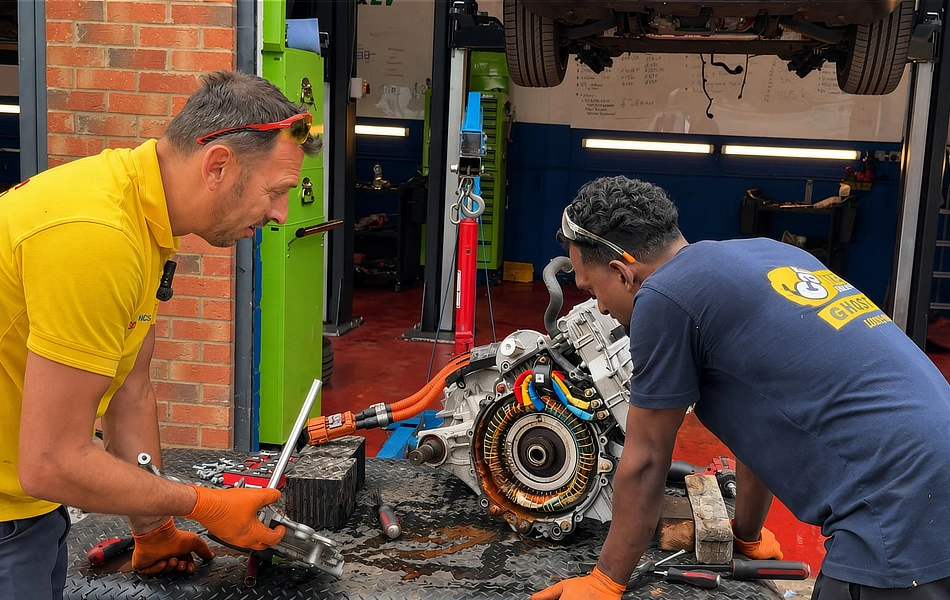
This Mercedes EV is a case in point.
YouTuber OSG & Mechanics bought an auctioned Mercedes EQC, only for its electric motor to fail at just 60,000 miles. That’s a pretty damning failure for a component that, in principle, should be exceptionally reliable. Electric motors have far fewer moving parts than internal-combustion engines and, when properly designed and manufactured, should be capable of extremely high mileages.
So the obvious question is: why did this motor fail?
Was it simply an unfortunate one-off? Or does the failure expose a fundamental weakness in the motor’s design, cooling system, materials, manufacturing tolerances, or engineering?
Because if a supposedly advanced premium EV can suffer a major motor failure at only 60,000 miles, customers deserve to know whether they’re looking at bad luck — or bad engineering.
And that’s the uncomfortable question Mercedes needs to answer.