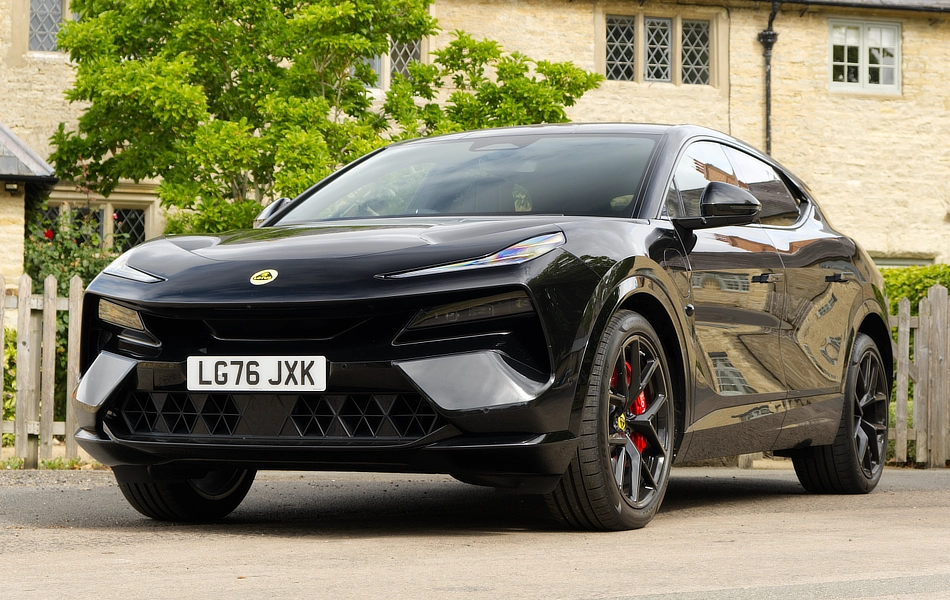
The Lotus story is ethereal: a history forged through engineering innovation, tested and proven on the race track.
It is my story, your story. It is a story of success, struggle, survival, redemption and renewal. Yet it endures, continues to evolve, and its latest story arc is the Lotus Eletre.

A 2.6-tonne, fully electric SUV, the Eletre signals a departure from the days when Lotus stuck rigidly to its philosophy of lightweight road cars.
For the purists, the Eletre is unapologetically everything a Lotus shouldn’t be.
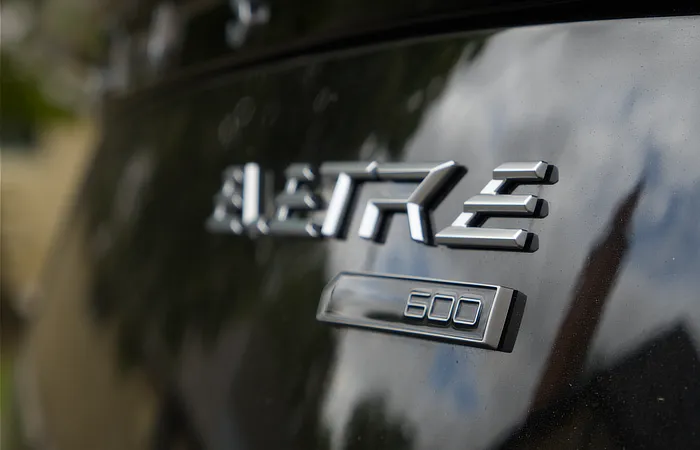
But the world has changed, and Lotus has changed with it, drawing on the very spirit of philosophical and engineering innovation that made the company what it is today.
The Exterior
Sophisticated, elegant-looking, exotic-sounding. The Eletre simply looks good, which is no small feat in the world of SUV design. There’s no need to launch into a lengthy thesis. You know. You know.
Available in six variants, prices for the Lotus Eletre currently start at £84,000 for the entry-level model and rise to £139,000 for the top-spec, full-send variant.
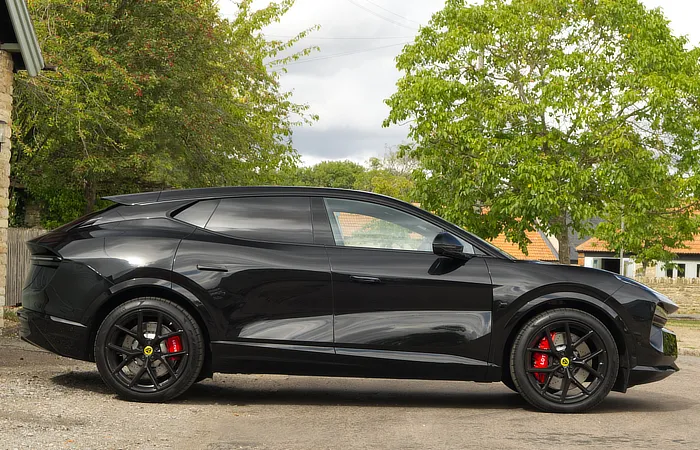
As standard, you get dual electric motors providing all-wheel drive, torque vectoring, two-chamber active suspension, continuous damping control and charging speeds of over 350 kW, all in the entry-level model, which rides on 20-inch alloy wheels.
The 600 GT SE on test rides on 22-inch alloy wheels, 6-piston Brembo brakes and includes the Intelligent Highway Assist Pack. Pricing starts at £94,990 before options, at the time of writing.
The Interior
Outstanding. Probably one of the best interior designs of any SUV currently available. Sophisticated elegance. Some might call it premium luxury.
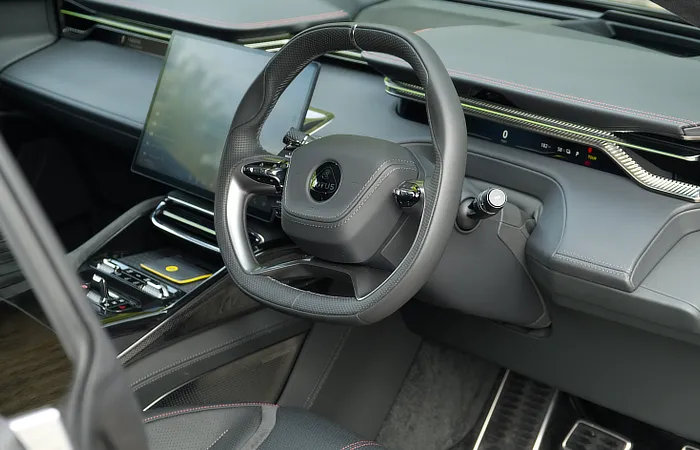
I’d put it closer to Bentley levels of luxury, with build quality, fit and finish to match.
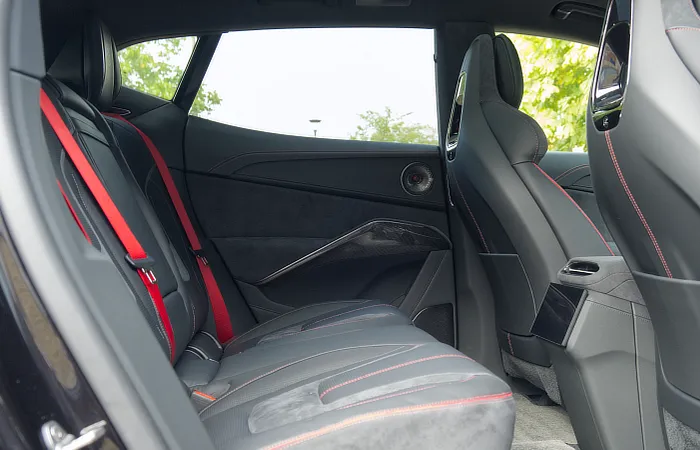
It’s a lovely place to spend time. The seats are comfortable, there’s plenty of space for both front and second-row occupants, and the boot is massive. There’s no frunk to speak of, just enough room for the charging cables.
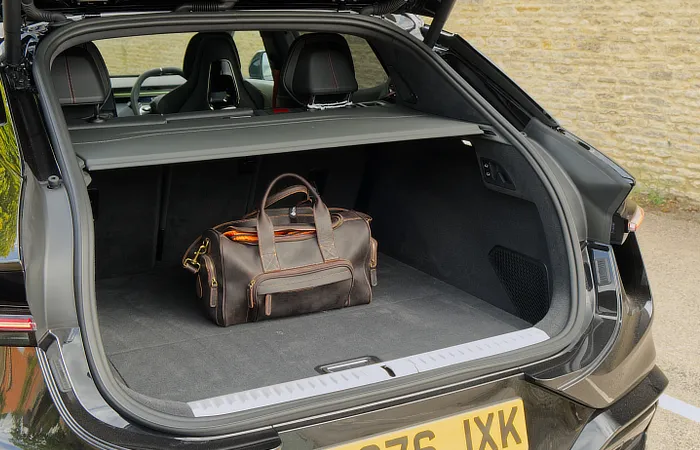
Even the entry-level model comes with an extensive equipment list, far too long to detail here, with each successive trim level adding incrementally more.
It has all the amenities you’d expect from a car at this level and price. You know how it works by now.
The Infotainment System
The fewer buttons, the better. I think the Eletre’s symbiotic minimalism works for me. The touchscreen is super-responsive, sharp and bright. At 15.6 inches, it doesn’t dominate the interior.
The menu system, usability, functionality and graphic design don’t take long to get used to. Google’s Android Automotive OS and Apple CarPlay are compatible, but the native system works just as well.

Voice control is good, well integrated and responsive when handling native commands such as heating and air conditioning.
The only physical buttons are the temperature controls, the volume dial and the steering-wheel-mounted controls. These include paddle shifters that operate the regenerative braking modes (left paddle) and drive modes (right paddle).
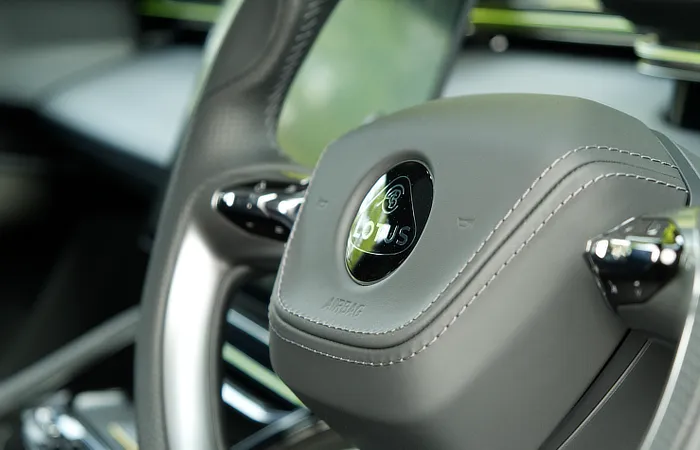
The driver gets a horizontal digital display providing all the information they could ever need. The passenger gets a separate, fixed screen that mirrors aspects of the driver’s display but is primarily used for media information and radio stations.
The standard KEF audio system is fantastic, and it gets better and louder as you move up the model range. Rear occupants also get a small digital display for controlling temperature settings and other functions.
Charging
The Lotus Eletre sets a high benchmark for electric SUV charging, thanks to its advanced 800-volt architecture.
For public charging, it supports ultra-fast DC charging at up to 350 kW, allowing its substantial 112 kWh battery to charge from 10% to 80% in as little as 20 minutes under optimal conditions.
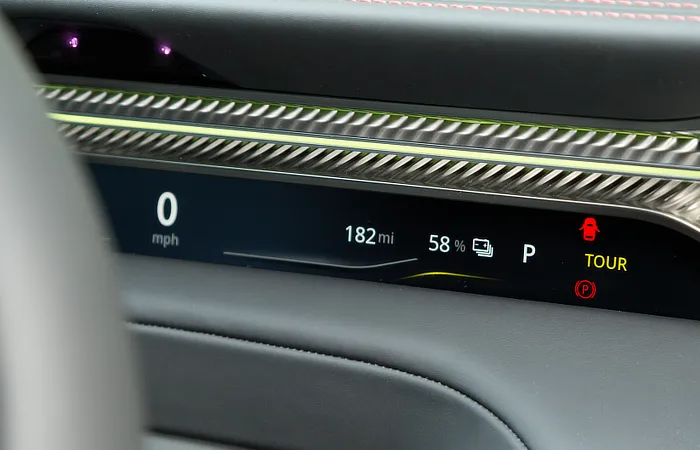
For home charging, the Eletre comes with a 22 kW AC onboard charger, capable of delivering a full 0% to 100% charge in under six hours when connected to a compatible three-phase supply.
However, using a standard single-phase 7 kW home wallbox extends the full charging time to approximately 17.5 hours.
The Drive
Phenomenal. Outstanding. I could leave it there.
This isn’t just about power, although the Eletre has plenty of it. It’s about how that power is controlled and delivered. The Eletre’s two electric motors generate 600 bhp and 710 Nm of torque.
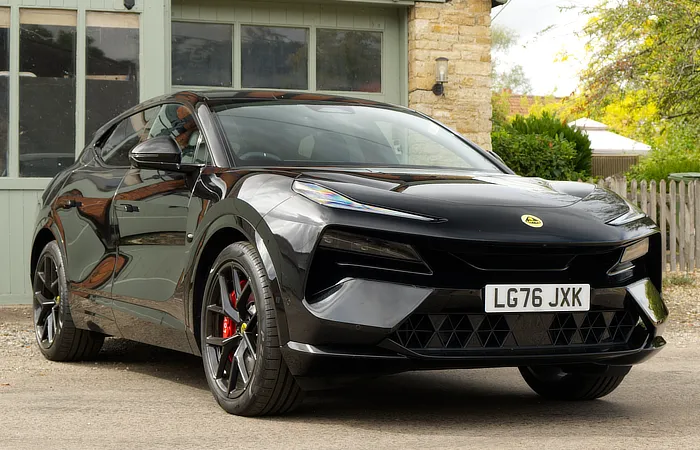
The dual-electric-motor powertrain is substantially better than a twin-turbo V8 or V10. It offers superior drivability and can deliver either effortless, linear-smooth acceleration or brutal, hypersonic straight-line speed.
Under full-send acceleration, the Eletre exhibits virtually no weight transfer from front to rear. The nose barely lifts, and there’s almost no rear-end squat.

The damping control and air suspension are governed by an array of sensors and computer-controlled actuators operating with millisecond precision. Everything works together to deliver a seamless, thrilling driving experience.
The Eletre’s ride strikes a balance between soft and firm, but the suspension is subtle enough to cope with the very worst that UK roads have to offer without feeling overbearing. In other words, it’s comfortable enough for everyday driving.
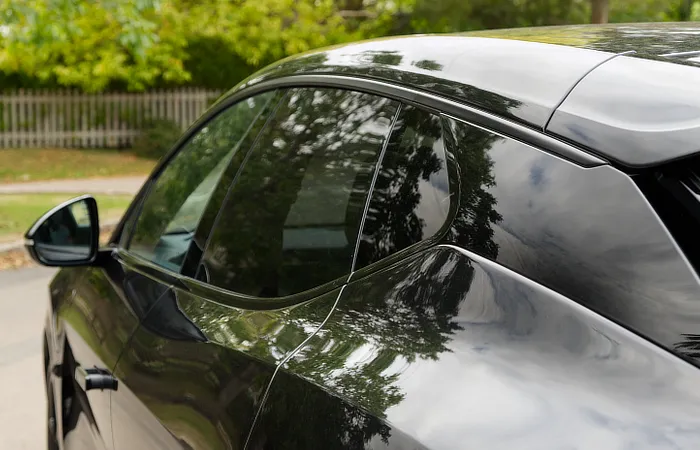
Yes, there are various drive modes, and they all work as intended. But the bottom line is that, whichever mode you choose, the thrill is never lost.
Even more remarkable are the handling and steering. The Eletre feels like a car half its size, and the electric steering provides tremendous feedback when tackling a series of bends.
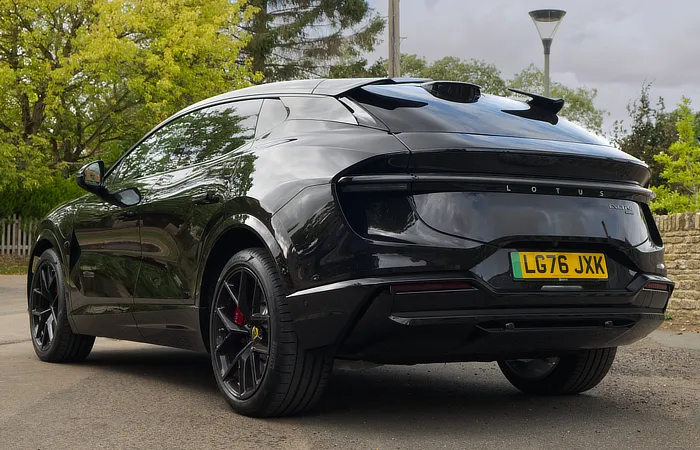
I thought the version on test had rear-wheel steering, but it didn’t. Yet it remains remarkably nimble through tight corners. Indeed, the steering feel is nicer than that of a current-generation Porsche 911. The Brembo brakes combined with brake-regen provide phenomenal stopping power.
And when you’re travelling on the motorway, the Eletre feels planted and composed. At speeds I can’t quite recall, its advanced aerodynamic design, working alongside the Pirelli P Zero tyres, channels airflow to help the car feel as though it’s glued to the road.
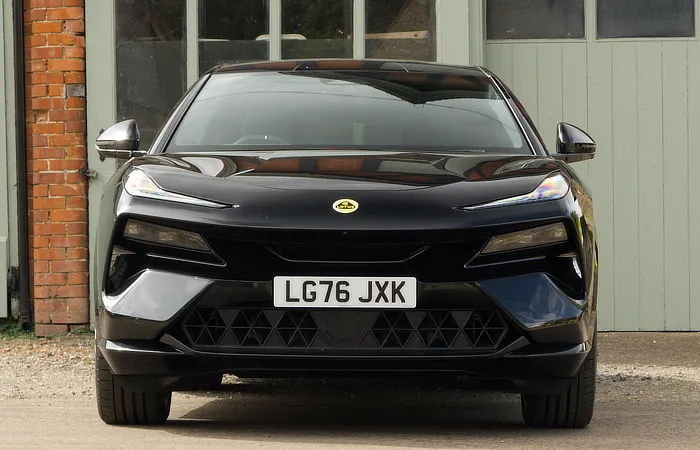
As for range? Around 280 miles if driven enthusiastically, and 300–310 miles under more normal driving conditions.
The Verdict
Exceptional. Thrilling. Near perfection.
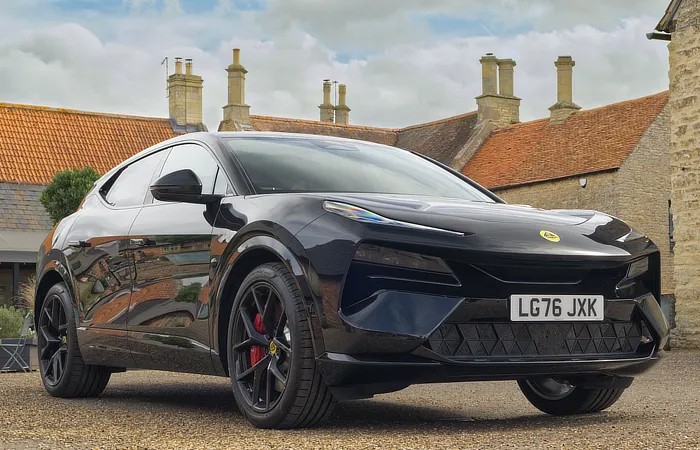
Somehow, Lotus has turned a digital tool into an analogue machine.