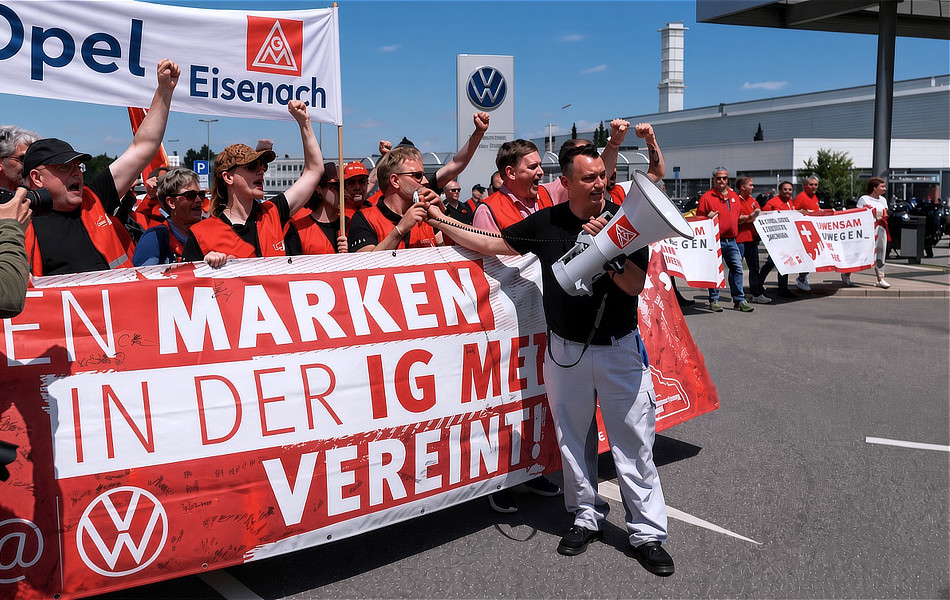
Volkswagen is preparing to destroy 50,000 jobs.
The word used by corporate executives is “transformation.” It is a bloodless word, designed to conceal what is being transformed and who will be sacrificed. Behind the corporate euphemisms are factories emptied of workers, families stripped of wages and communities condemned to economic decay.
Volkswagen says it has no choice. Chinese manufacturers produce cheaper cars. U.S. tariffs threaten profits. Sales in China have collapsed. Europe has half a million vehicles of excess production capacity.
So the workers will pay.
Four German plants—Emden, Zwickau, Hanover and Neckarsulm—are to lose vehicle production. The company will halve its model range. Management will be “leaner.” Decision-making will be “shorter.” The vocabulary belongs to an economic order in which human beings are reduced to costs on a balance sheet.
Volkswagen employs some 650,000 people. Its after-tax earnings fell 30 percent in the first half of the year. The crisis is real. But the solution exposes the deeper sickness.
For decades, corporations embraced globalisation, moved through international supply chains and pursued relentless expansion. Workers were told this system was inevitable. They were told prosperity would trickle down. Now, when the system produces ruthless competition and overcapacity, those same workers are told they must surrender their livelihoods to save it.
This is how industrial societies are dismantled—not in a single dramatic collapse, but through spreadsheets, restructuring plans and carefully crafted statements about competitiveness.
The factory floor becomes silent.
The skilled worker becomes redundant.
The town that depended on the factory begins to die.
And those who made the decisions remain safely removed from the wreckage.
Volkswagen calls this a path into the future.
For thousands of workers, it looks like the past returning: insecurity, dispossession and the destruction of the industrial world they were promised would endure.