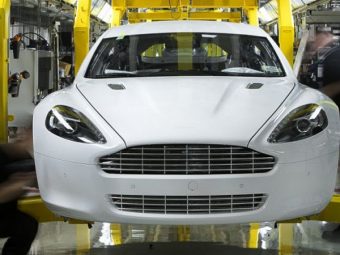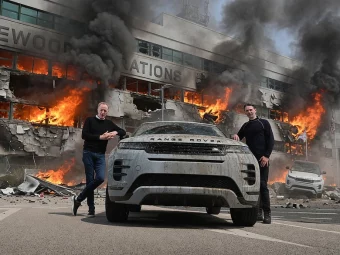
There is something deeply revealing about the direction in which America’s automotive industry is heading. As the traditional business of manufacturing cars becomes increasingly difficult, Ford and General Motors are looking towards a customer whose appetite appears almost inexhaustible: the American military establishment.
Ford has confirmed discussions with the Pentagon about supplying military vehicles and other defence products. It has also invested in Revolution Space, a US-based contractor developing advanced satellite systems.
General Motors, meanwhile, is reportedly considering manufacturing motors for military drones, with discussions involving defence contractors RTX and L3Harris. Canadian supplier Magna International has also been approached.
This is being presented as an opportunity for American manufacturing. It is, more accurately, an opportunity for corporate America to deepen its dependence on the permanent war economy.
The distinction matters.
For decades, the American industrial economy has been increasingly subordinated to the interests of financial markets, shareholders and corporate executives.
Manufacturing jobs have disappeared, communities have been hollowed out and the promise of economic prosperity has been replaced by precarious employment and declining living standards.
Now, as the automotive industry struggles with competition, electrification and weakening market conditions, the Pentagon is emerging as an attractive commercial lifeline.
There is an uncomfortable historical irony here. During the Second World War, Detroit’s industrial might was mobilised to defeat fascism. Today, that same manufacturing capacity is being courted to sustain an expanding military-industrial complex.
War is no longer simply a geopolitical catastrophe. It is an economic opportunity, a source of contracts, investment and corporate growth.
And when the machinery of capitalism begins to depend on the machinery of war, we should be asking who ultimately benefits, who pays the price and what happens when peace becomes bad for business.