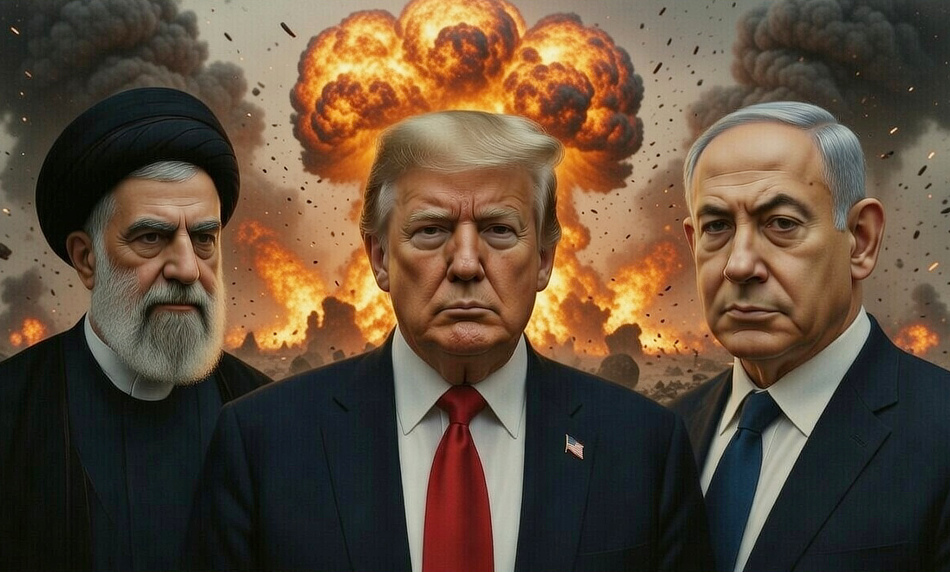
The coordinated and illegal bombing by the United States and Israel on Iran — and the murder of the country’s head of state, Ayatollah Ali Khamenei — did not merely redraw a geopolitical map. They exposed, with brutal clarity, the fragility of the global system that builds the modern automobile. Within hours, the Strait of Hormuz — that narrow, easily forgotten artery at the mouth of the Persian Gulf — began to seize. Tankers slowed. Containerships hesitated. Insurance markets tightened. And the machinery of global manufacturing felt the first tremor.
The automotive industry has long preferred to imagine itself as insulated from such moments. Steel arrives. Parts arrive. Energy flows. Vehicles roll off the line. But this confidence rests on a fiction: that the physical foundations of globalization are permanent and politically neutral. They are neither.
The Chokepoint Revealed
Roughly a fifth of the world’s traded oil passes through Hormuz. When that flow is threatened, the consequences do not remain confined to energy traders or naval planners. They move, quietly but inexorably, into stamping plants in Nagoya, battery facilities in Europe, and assembly lines in Sunderland and São Paulo.
Energy is the invisible bloodstream of automotive manufacturing. When its price rises sharply, the pain does not announce itself with a single shock. It seeps through every process — the smelters, the paint shops, the machining centres — until margins begin to bleed.
The modern vehicle, marketed as a triumph of engineering, is also a dense petrochemical object. Dashboards, wiring insulation, bumpers, seals — hundreds of kilograms of polymer shaped and hardened from oil-linked feedstocks. If crude climbs and stays elevated, the cost pressure will not be theoretical. It will arrive in procurement meetings, in supplier renegotiations, in the quiet postponement of investment plans.
The Myth of Insulation
Nor are electric vehicles spared the physics of this moment. The mythology of the EV transition often treats energy as something that happens only at the charging plug. In reality, lithium must be mined, nickel must be smelted, cobalt must be refined, and all of it must be moved across oceans by ships that burn fuel whose price is now rising.
Electrification changes the drivetrain. It does not repeal thermodynamics or geopolitics.
The immediate danger is logistical paralysis. Containerships already inside the Hormuz corridor are effectively caught in a narrowing funnel. Major carriers are suspending transits. Gulf ports — some of the most important redistribution hubs for vehicles and components — have begun to falter or halt. For an industry built on just-in-time precision, time itself is becoming unstable.
What follows is unlikely to be a sudden collapse. Modern supply chains rarely fail in dramatic fashion. They stretch. They reroute. They absorb cost. And then, weeks later, production schedules begin to slip. Inventories thin. Freight premiums rise. By the time the disruption is visible in showroom prices, the structural damage is already done.
The End of Frictionless Globalisation
The exposure is uneven but widespread. Japan and South Korea remain deeply dependent on Gulf energy flows. India’s manufacturing ambitions are tied to the same corridor. China — now both the world’s largest auto market and its most aggressive exporter — sits at the centre of the risk map. If Hormuz remains unstable into the spring, the pressure will not remain regional. It will globalise, just as the industry itself has globalised.
Inside procurement departments and executive offices, the response will be measured, procedural, managerial. Exposure mapping. Hedging reviews. Routing contingencies. These are necessary steps. But they do not confront the deeper reality now surfacing.
For three decades, the automotive industry — like much of global manufacturing — has pursued efficiency with near-religious conviction. Inventory was waste. Redundancy was weakness. Geography was something to be optimized by spreadsheet. The system worked, right up to the moment it encountered the oldest force in political economy: the willingness of states to weaponize the chokepoints that make global trade possible.
The Strait of Hormuz is not an abstraction. It is a narrow piece of water, 33 kilometres across at its tightest point, through which the industrial world has chosen to route an extraordinary share of its energy lifeblood. That choice is now being stress-tested in real time.
Whether this crisis burns out in days or hardens into a longer confrontation is almost secondary. The structural message has already been delivered. The age of frictionless globalisation — if it ever truly existed — is ending not with a single rupture, but with a series of tightening constraints.
For automotive manufacturers, the question is no longer whether geopolitics matters to the factory floor. It is how many more shocks the system can absorb before the economics of hyper-optimised global production begin, finally, to come apart.