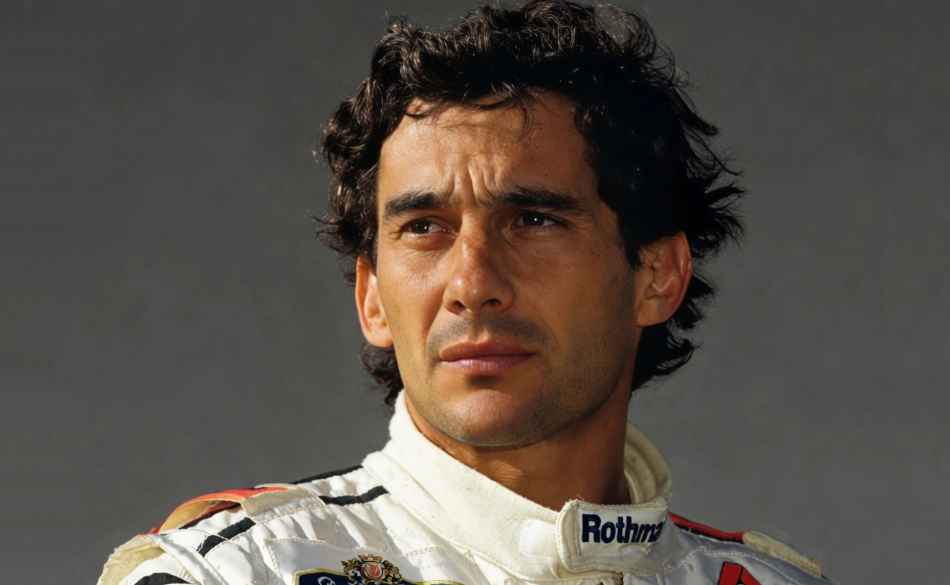


Ayrton Senna is frozen in time, his life preserved as it was—at 34 years old. Ayrton Senna will never grow old, but the memory of him does. As time passes, his legend grows to an almost mythical status, as indeed it has.
For me, his greatest season was 1993. Driving what was considered an uncompetitive McLaren, he managed to run rings around the superior Williams Renault in the early part of the season. But even Senna could not resist for long, as Alain Prost forged ahead and took full control of the championship.
The 1993 F1 season showed Senna at his very best, perhaps at the peak of his powers. His victory in the rain-soaked European Grand Prix was evidence of this. In the British media, Senna was portrayed as the villain, and I went along with that narrative.
However, Senna’s performance in 1993 made me realise how the media can shape stories—dividing and influencing audiences for its own purposes, sometimes even for nefarious ends. From then on I paid less attention to what was written.
I began to appreciate Senna more fully as a driver. Yes, he was ruthless on track, but away from it he was a hero to the Brazilian nation—a symbol of honour and hope. Yet the mystery surrounding his fatal crash endured for many years. Was it driver error, or mechanical failure?
Damon Hill, Ayrton Senna’s 1994 teammate, has theorised that Senna may simply have pushed too hard on that final lap at Imola, in a car known to be difficult to drive at the limit.
Low tyre pressure following a safety car period was also a contributing factor. However, the truth may never be known, as many believed Senna was not the type of driver to make such an error, having raced at Imola for over a decade.
This YouTube video presents Senna as he was in 1994—what would unexpectedly become his final season—featuring rare archive photographs. There are no words, only a music and image montage of a man who was more than just a Formula One driver.