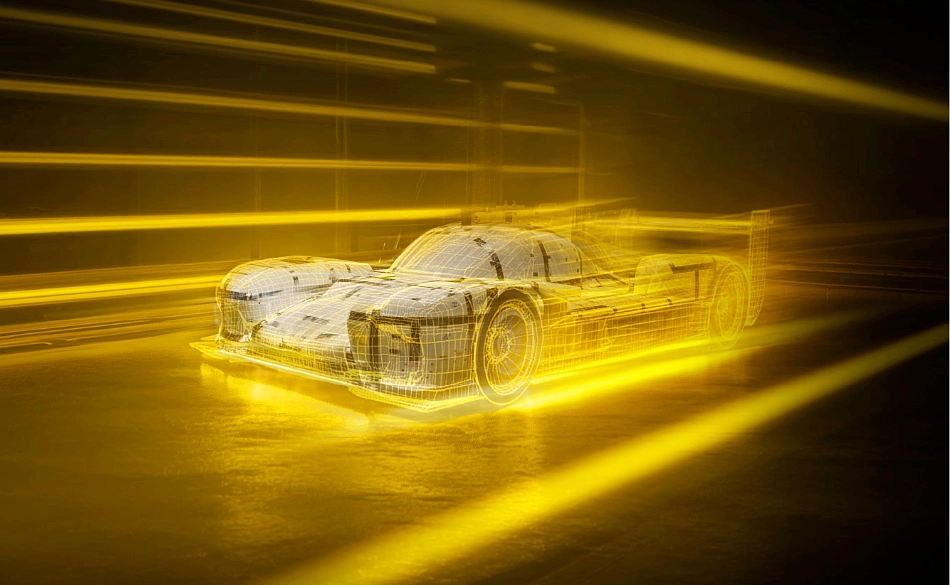
IBM and Dallara Group have launched a strategic collaboration aimed at redefining how high-performance vehicles are designed. By integrating artificial intelligence with emerging quantum computing technologies, the partnership seeks to dramatically improve the speed and accuracy of aerodynamic simulations—one of the most complex aspects of motorsport engineering.
AI-Powered Aerodynamic Design
Central to this initiative is the creation of physics-based AI foundation models trained on Dallara’s proprietary aerodynamic datasets. These datasets are not only extensive but also validated through real-world performance, making them highly reliable for training advanced models.
Early results indicate a major breakthrough: simulation times that once took several hours can now potentially be reduced to just minutes. This allows engineers to iterate rapidly, testing a wider range of design possibilities without the traditional computational bottlenecks.
Tackling Complex Engineering Challenges
Designing a competitive race car involves balancing multiple aerodynamic factors, including downforce, drag, stability, and responsiveness. These variables often interact in unpredictable ways, where even small geometric adjustments can lead to significant performance changes.
The AI models being developed aim to simplify this complexity by predicting aerodynamic behavior directly from vehicle geometry and engineering inputs. This capability enables faster decision-making and helps engineers identify optimal designs earlier in the development process.
The Role of Quantum Computing
While AI is already delivering measurable improvements, the collaboration also explores the longer-term potential of quantum computing. Quantum computing could enable more detailed and scalable simulations of physical systems that are currently too resource-intensive for classical computers.
IBM and Dallara are investigating hybrid quantum-classical approaches that could eventually complement existing simulation workflows, pushing the boundaries of what is computationally feasible.
Expanding Data and Real-World Integration
Looking ahead, the teams plan to enhance their models by incorporating real-world data from wind tunnel experiments and on-track testing. This will improve accuracy and ensure the models remain grounded in practical performance conditions.
Additionally, the models will be expanded to handle a broader range of racing scenarios, including overtaking maneuvers and varying track environments—factors that are critical in competitive racing.
Impact on Engineering and Motorsport
The collaboration reflects a broader transformation in engineering, where AI is used to accelerate workflows and uncover new design possibilities. By enabling faster exploration of aerodynamic configurations, engineers can reduce reliance on costly full-scale simulations and focus resources more effectively.
If successful, the technologies developed through this partnership could extend beyond motorsport into the wider automotive industry, influencing how vehicles are designed, tested, and optimised.