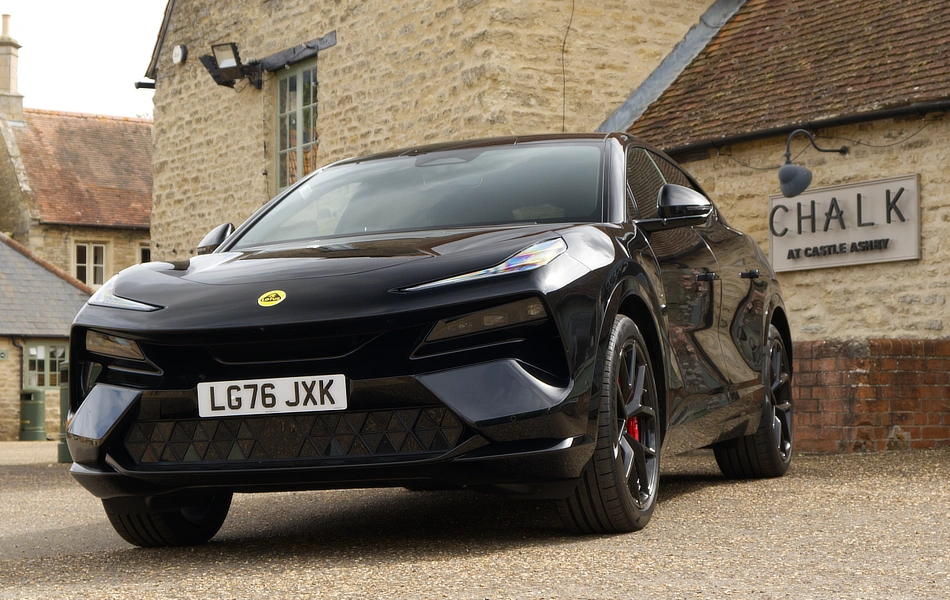
Lotus Technology has chosen to absorb the European Union’s additional tariff burden on Chinese-built electric vehicles rather than raise showroom prices, a decision that highlights the increasingly difficult economics facing premium EV manufacturers operating across the region.
The company maintained European pricing on September 11 despite the EU’s 18.8% countervailing duty on Geely imports. Combined with the bloc’s standard 10% passenger-car tariff, the effective border burden on affected vehicles can reach 28.8%.
For Lotus, the decision is a calculated trade-off. Passing the full cost to customers could undermine demand for the Eletre SUV and Emeya luxury sedan, which are manufactured in China and compete in a European market already dominated by established premium brands.
The financial pressure is significant. Lotus Technology delivered 3,904 vehicles in the first half of 2026, up 39% year on year, while revenue increased 23% to $268 million. Gross margin improved to 10%, but the business still reported a $97 million operating loss and a $151 million net loss.
That leaves limited room for absorbing a substantial increase in landed vehicle costs without affecting profitability.
Parent company Zhejiang Geely Holding provided $128 million of funding during the first half, underscoring the importance of group-level financial support as Lotus manages its international expansion.
The tariff dispute is also accelerating a strategic rethink. EU countervailing duties apply to battery-electric vehicles, encouraging Lotus to expand its hybrid offering.
The Eletre X plug-in hybrid is therefore more than a product addition; it provides a potentially important route around the additional levy.
The company’s Focus 2030 strategy points in the same direction, with investment planned for high-performance hybrid technology, including a forthcoming V8 hybrid supercar.
At the same time, Lotus is consolidating its corporate structure. Its acquisition of Lotus Advance Technologies gives Lotus Technology full ownership of the UK operation in Norfolk, combining the marque’s specialist British engineering heritage with Geely’s Chinese manufacturing capabilities.
The strategy is clear: protect market share today, use hybrids to reduce tariff exposure, and preserve Lotus’s premium positioning while the economics of global EV manufacturing continue to evolve.