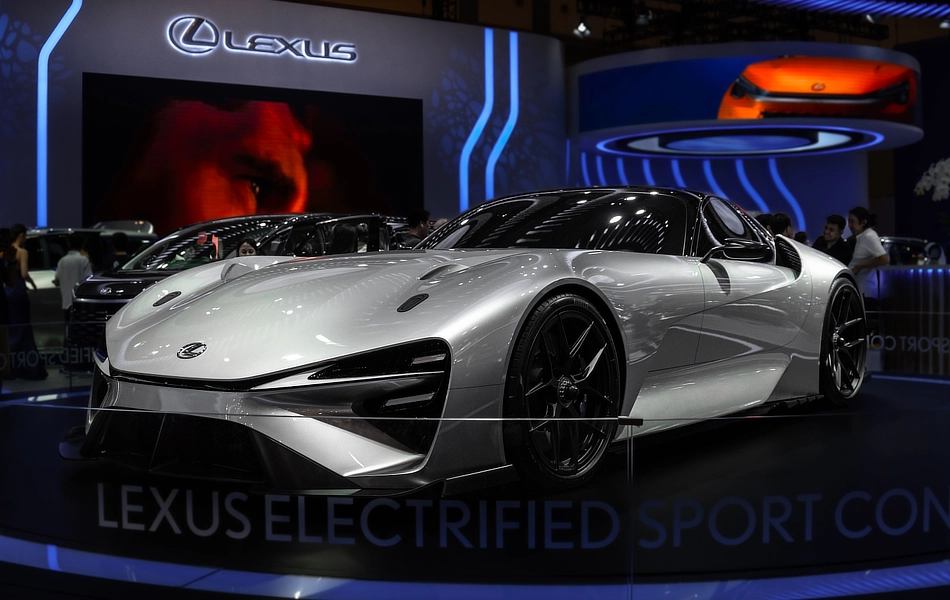
Lexus will launch its first China-made vehicle in 2027, marking a significant shift in the luxury brand’s strategy after nearly three decades of relying exclusively on imports for its mainland Chinese lineup.
The new battery-electric SUV will be manufactured at a Toyota-owned facility in Shanghai’s Jinshan District, where construction began in 2025. The factory will operate independently of Toyota’s existing Chinese joint ventures with FAW and GAC.
The facility will incorporate aluminium gigacasting technology, using large structural castings to reduce component numbers and simplify assembly.
It will also adopt a conveyor-free production layout, with vehicles moving autonomously between workstations. Initial production is reportedly targeted at approximately 1,000 vehicles per month, equivalent to 12,000 annually.
Lexus has yet to reveal the SUV’s name, pricing, battery capacity, powertrain specifications or driving range. Reports have suggested possible LFP or ternary lithium battery technology, although no details have been confirmed.
Local manufacturing will allow Lexus to avoid China’s 15% import duty on passenger cars, potentially improving its competitiveness against domestic premium EV manufacturers, including Nio and Zeekr.
The move comes amid weakening Lexus sales in China, which declined from approximately 227,000 vehicles in 2021 to 182,458 in 2025.
With Chinese manufacturers rapidly advancing their electric vehicle technology, local production represents an important step in Toyota’s efforts to strengthen Lexus’s position in the world’s largest EV market.