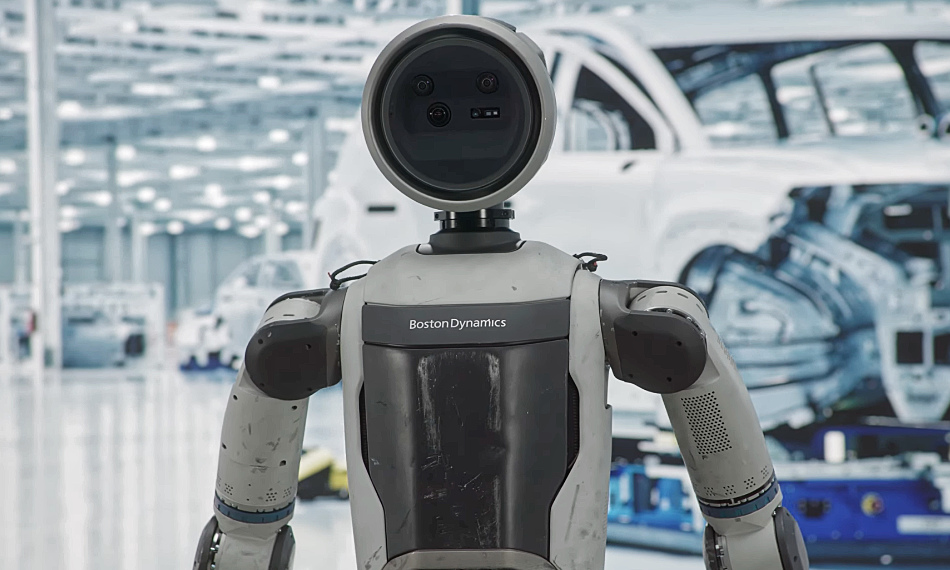
Boston Dynamics is an American engineering and robotics company known for developing highly advanced mobile robots capable of navigating complex environments with exceptional agility and autonomy. They created Atlas, the highly functional—and occasionally dancing—robot.
We’re always fascinated by robotics because of the real-world applications robots can perform. But there’s also a flip side: robots could one day replace humans, far into the future. However, the era of highly advanced and autonomous robots with human-like capabilities has already begun.
Robots are now becoming highly mobile in ways that sometimes surpass human ability, as seen with recent machines from China that can perform acrobatic stunts and even demonstrate Karate moves. But a fully intelligent, sentient robot is, thankfully, still a distant prospect—and no one has found the keys to that future yet.
So while we now have robots that are incredibly agile, that agility remains pre-programmed. When it comes to everyday real-world tasks, robots still struggle to perform mundane activities fully autonomously or with human-level dexterity. The classic example is a robot attempting to fold a towel.
Robots are increasingly being developed to handle a wide variety of labor-intensive tasks, not because companies prefer human-shaped machines, but because humans are highly adaptable generalists—traits current automation lacks.
While traditional industrial robots excel at narrowly defined, repetitive jobs, scaling automation to meet the complexity and variability of real industrial work remains a major challenge.
The discussion highlights insights gained from studying factory environments and argues that achieving generalization in robotic manipulation—through both advanced hardware and AI-driven behavior—is essential for meaningful progress.