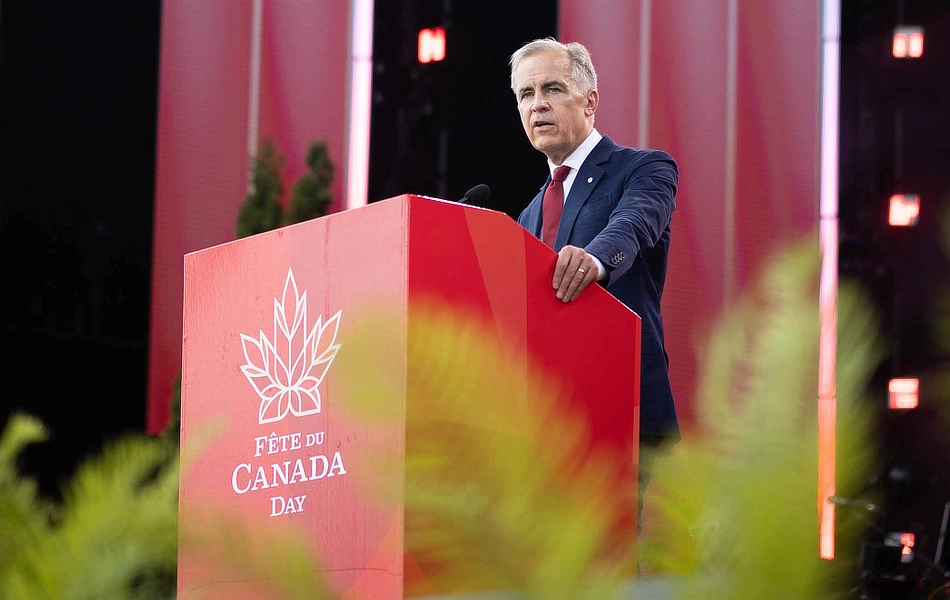
Canada has abandoned its strategy of accommodation and answered Donald Trump’s latest tariffs with retaliation. Prime Minister Mark Carney announced counter-tariffs worth roughly C$20 billion in annual U.S. imports, matching the value of the new American measures and marking a decisive escalation in the trade war.
The tariffs, which take effect September 8, will hit a broad range of American goods. U.S. steel and aluminum will face tariffs of 50 per cent, while furniture, clothing, video-game consoles, smartphones and other electronics will also be subjected to 50 per cent duties. Other products, including appliances, cheese and seafood, will face tariffs of 25 per cent, while machinery, industrial tools and farm equipment will be taxed at 15 per cent.
For Carney, this represents a dramatic reversal.
Only a year ago, Canada was removing many of its retaliatory tariffs in the hope that concessions would bring Washington back to the negotiating table. That strategy has now collapsed. Carney says it has become clear that the Trump administration is seeking to undermine critical Canadian industries, particularly steel, aluminum and automotive manufacturing.
The deeper problem is that tariffs are not simply numbers exchanged between governments. They are costs that eventually work their way through supply chains, businesses and households. Workers and consumers often pay the price for decisions made far above their heads.
Ottawa is attempting to soften that blow with a C$7.5 billion support package for Canadian businesses. The measures include increased liquidity for small and medium-sized companies, grants for investment projects and greater flexibility in employment insurance programs for workers in affected industries.
But government assistance can only cushion the impact. It cannot eliminate the underlying conflict.
The North American economy was built around deeply integrated supply chains. Cars, machinery, metals, electronics and countless other products cross borders repeatedly before reaching consumers. Turning that system into a battlefield risks damaging the very industries both governments claim they are trying to protect.
Canada now faces an uncomfortable choice. It can continue negotiating with an administration that increasingly treats trade as an instrument of economic coercion, or it can retaliate and risk further escalation.
Carney has chosen confrontation.
The question is whether Canada can control what happens next.