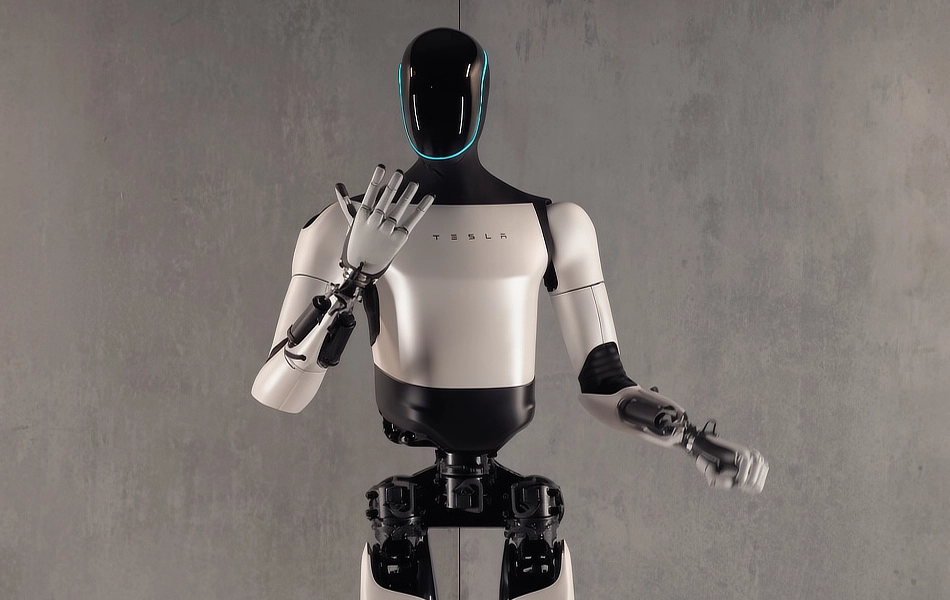
Tesla is rapidly increasing production of its Optimus humanoid robot, with output reportedly reaching hundreds of units — around ten times the level recorded in the second quarter of 2026.
If the current production ramp continues, Tesla expects to reach approximately 1,000 robots per week by the end of the year.
However, building the robots is no longer the company’s biggest challenge. The more difficult task is making Optimus capable of handling unfamiliar situations without extensive retraining.
Tesla’s robots can perform tasks they have been specifically trained for, but relatively simple changes can still require days of additional training.
A useful industrial robot would need to understand broad instructions and adapt to variables such as different box sizes, obstacles or objects being positioned differently.
Tesla is reportedly addressing this by developing a library of fundamental behaviours, including walking, grabbing, lifting, placing and manipulation.
More than 500,000 hours of training data have reportedly been collected, with additional data generated through motion-capture suits and camera-equipped human workers.
Optimus also faces mechanical challenges, particularly with its hands. Replicating the strength, dexterity and sensing capabilities of human hands requires more than 100 components, making assembly complex and time-consuming.
Touch sensors can also suffer durability problems, with Tesla reportedly considering replaceable sensor gloves as a solution.
The company may therefore be overcoming the challenge of producing Optimus in large numbers, but mass production alone will not guarantee commercial success.
For the robot to become genuinely useful in industry, it must combine reliable hardware with AI capable of adapting quickly to new tasks.