Subaru has unveiled plans to independently developed electric vehicle (EV) platform, marking a significant step towards reducing its reliance on Toyota for electric vehicle technology. The Japanese automaker plans to introduce production models based on the new architecture from 2029.
The platform was demonstrated in Japan using a modified Outback wagon test vehicle with an extended wheelbase. Its all-wheel-drive powertrain features two electric motors developed with Aisin, producing 150kW at the front and 230kW at the rear.
The combined 380kW output enables a claimed 0–100km/h acceleration time of less than four seconds.
The prototype also showcases a new battery developed with Panasonic Energy. Featuring 4,000 cylindrical cells, it is claimed to be 25 per cent lighter than Subaru’s previous battery technology.
The company is targeting energy density 20 per cent above the industry average, although capacity and driving range have yet to be disclosed.
Subaru is also developing an integrated electronic control unit in collaboration with US technology company AMD. The system is expected to manage powertrain, chassis and infotainment functions, while supporting artificial intelligence, advanced driver assistance systems and over-the-air software updates.
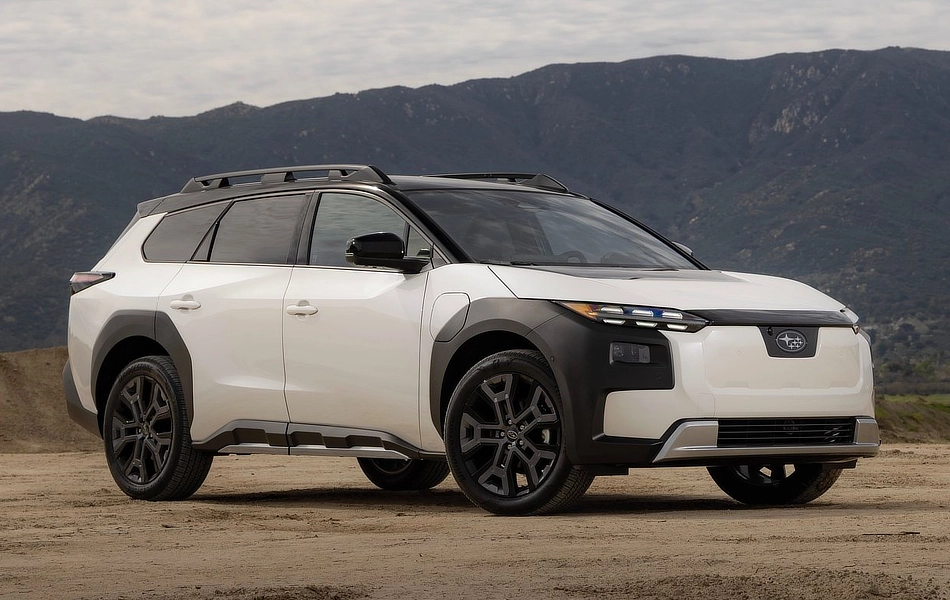
The move towards independent EV development follows three electric SUVs developed with Toyota: the Solterra, Trailseeker and Uncharted.
However, Subaru is taking a more cautious approach to electrification as demand for hybrids and combustion-engine vehicles continues. It has delayed large-scale EV investment and redirected funding towards next-generation petrol and hybrid models.
The company retains its target for EVs to account for 50 per cent of global sales, but now expects to achieve this beyond its original 2030 deadline.