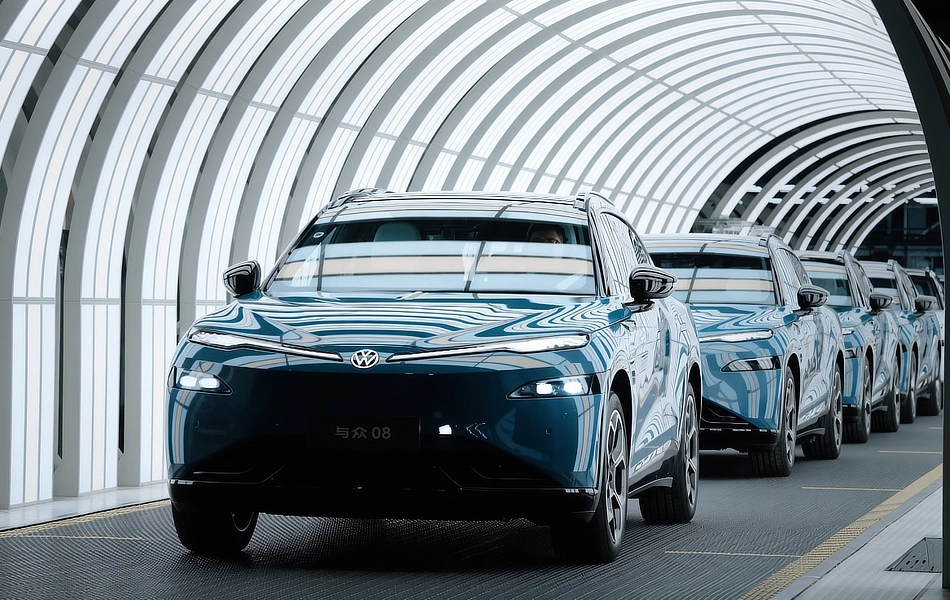
Volkswagen thought partnering with China’s electric vehicle specialists would help it catch up. Instead, the disappointing launch of its ID. UNYX 08 SUV shows just how difficult it has become for the German giant to regain its footing in the world’s biggest car market.
The numbers make uncomfortable reading. Between April and August, the UNYX 08 averaged just 267 sales a month.
Volkswagen had originally targeted 3,622 monthly sales. That is not a minor forecasting error; it is a stark indication that something has gone wrong.
Priced at around US$34,260, the electric SUV faces formidable competition from Chinese rivals such as Xiaomi’s YU7 and Zeekr’s 7X.
These vehicles offer sophisticated technology and compelling features at similar prices. Volkswagen, meanwhile, appears to be discovering that a familiar badge and German engineering heritage are no longer enough to guarantee success.
Distribution has compounded the problem. The UNYX 08 relies largely on Volkswagen Anhui’s relatively small dealership network, leaving it without the reach of the thousands of outlets operated through Volkswagen’s established Chinese joint ventures.
But the bigger issue runs deeper than one underperforming model. Volkswagen’s share of China’s passenger-car market fell from 20 per cent in 2019 to 10 per cent in the first eight months of 2026.
Local manufacturers have become faster, more technologically ambitious and increasingly competitive on price.
Partnering with Xpeng gives Volkswagen access to valuable expertise, but technology cannot automatically fix product positioning, pricing or distribution.
Nor can an 18-month development cycle guarantee that a car will stand out in a market where rivals are constantly raising the bar.
The upcoming UNYX 09 sedan represents another opportunity, but similarly ambitious sales forecasts invite scrutiny.
Volkswagen is not necessarily out of options. However, its recovery depends on more than borrowing Chinese technology.
It must understand Chinese customers, make compelling products and deliver them through effective sales networks. In China’s EV race, yesterday’s reputation is no substitute for tomorrow’s execution.