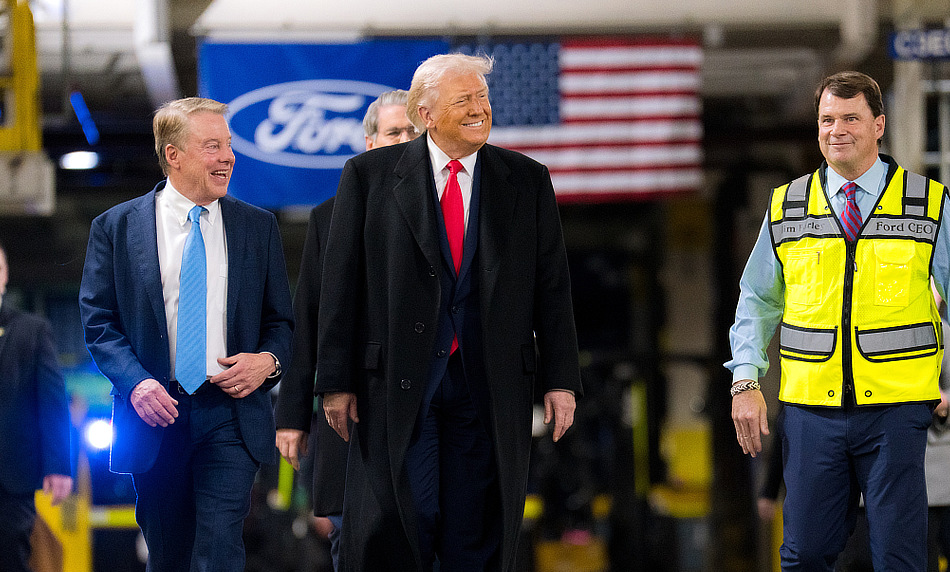
President Donald Trump’s administration will “reset” fuel efficiency standards for passenger cars, a move cloaked in the rhetoric of affordability but aimed squarely at appeasing the corporate auto industry.
The administration claims this rollback will ease the financial burden on consumers, though the real beneficiaries are Detroit’s “Big Three” — Ford, GM, and Stellantis — who stand to regain flexibility in production and profit margins while continuing to sell ever-more expensive vehicles.
The announcement, staged in the Oval Office with automaker executives, reclassifies crossovers and small SUVs as passenger vehicles and rolls back mandates put in place under the Biden administration.
The Department of Transportation predicts $109 billion in consumer savings, though analysts warn any near-term impact on car prices will be minimal. In the meantime, the average new vehicle now costs over $50,000, effectively sidelining the working- and middle-class buyer.
This is a carefully choreographed spectacle of power, portraying corporate-friendly deregulation as a populist victory. The president casts rising prices as the enemy, while the structural forces — tariffs, corporate monopolies, and inflationary pressures baked into the system — go unaddressed.
The administration and automakers speak of “customer choice” and “common sense,” but the reality is stark: policies are written to shield powerful corporations while the majority of Americans are priced out of the very vehicles that dominate the roads.
The formal rule making process will not conclude until 2026, but the message is clear: the political and corporate elite dictate the terms, and the public’s concerns about fairness and sustainability are window dressing.