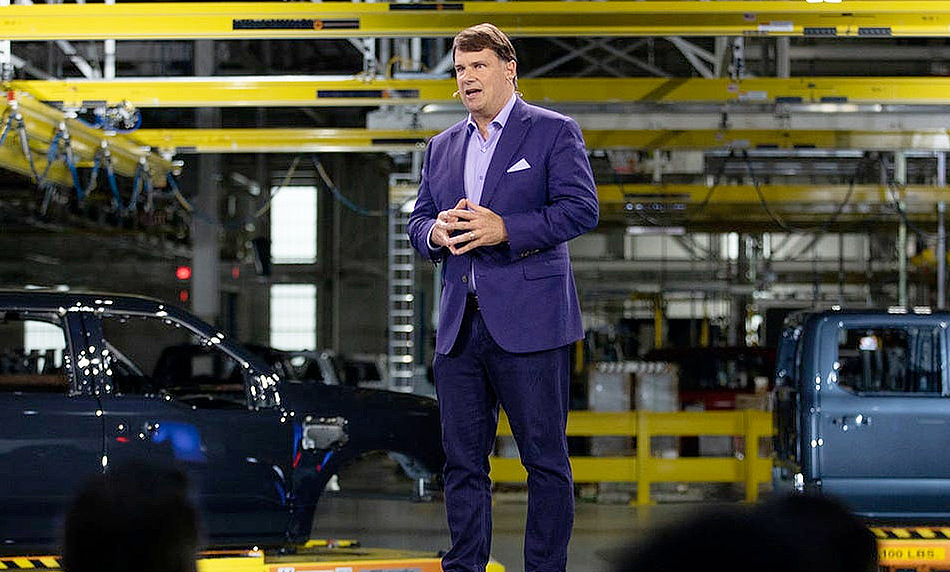
Ford Motor Co. CEO Jim Farley has reportedly discussed with officials in the Trump Administration a potential strategy for handling the eventual arrival of Chinese automakers in the U.S. market.
Although a 100% tariff on Chinese-built vehicles — introduced under Joe Biden and maintained by Donald Trump — currently keeps them out, industry observers believe it’s only a matter of time before Chinese brands find a way in. Chinese EVs are already gaining ground in Mexico, where they account for roughly 20% of new vehicle sales, and Canada is expected to allow some models soon.
According to reports first published by Bloomberg, Farley floated the idea of allowing Chinese automakers to build vehicles in the U.S. through joint ventures with American companies. Under the proposal, U.S. automakers would hold controlling stakes, with profits and technology shared — a structure aimed at protecting domestic interests while managing competitive risk.
Farley discussed the concept with U.S. Trade Representative Jamieson Greer, Transportation Secretary Sean Duffy, and EPA Administrator Lee Zeldin during the Detroit Auto Show. The idea reportedly received a cool response from Trump officials, who believed it would face political opposition in Washington.
Farley has repeatedly warned that Chinese automakers pose an “existential threat” to U.S. carmakers, citing their rapid technological advancement and ability to produce high-quality, low-cost EVs.
Ford executives have intensified their study of Chinese competitors in recent years, frequently traveling to China to evaluate vehicles and market strategies firsthand. Farley himself has driven a Xiaomi SU7, praising its digital experience and quality as part of Ford’s effort to understand — and ultimately compete with — Chinese rivals.
Meanwhile, Chinese companies continue eyeing U.S. expansion. A spokesperson for Geely Group — parent company of Volvo Cars and Polestar — recently indicated the company could announce U.S. plans within the next two to three years.
While national security and economic concerns remain central to the debate, many industry experts believe Chinese automakers’ entry into the U.S. market is ultimately inevitable.