Aston Martin exists today in a familiar condition for much of modern capitalism: a brand sustained less by the steady logic of production than by the continual infusion of financial life support.
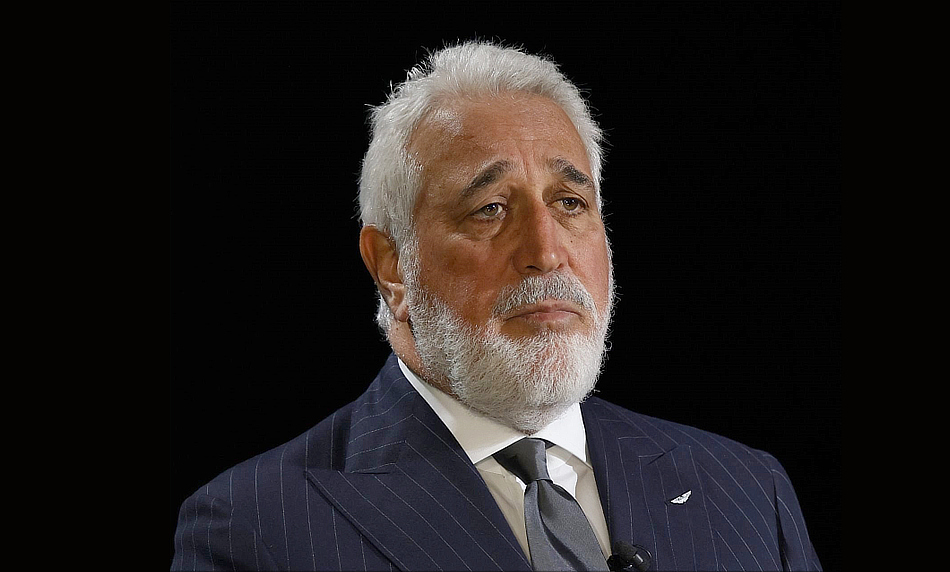
The company has secured a further £50 million funding boost from a consortium led by world’s poorest billionaire Lawrence Stroll, even as it reports another quarterly loss. Its liquidity has been propped up to roughly £230 million, aided by asset-backed financing arrangements and earlier sales of commercial rights. Yet this is not stability—it is managed dependence.
The pattern is now well established. Losses narrow slightly—this time to £56.9 million, helped by one of its higher-end hybrid models—but the underlying fragility remains. Costs are cut, workers are shed, and yet the structural vulnerability persists. The market rewards the illusion of recovery with small rises in share price, even as the company remains far below the valuation of its public debut.
Meanwhile, leadership continues to frame this delusion as resilience. Yet it is closer to managed extraction: a cycle in which capital is repeatedly injected to prevent failure, while long-term structural weakness is neither resolved nor seriously confronted.
The company notes that it has not yet seen direct disruption from geopolitical conflict, though it remains alert to supply chain pressures. But this is the language of institutions that have learned to normalize crisis as background noise.
In the end, Aston Martin’s survival is not a story of recovery. It is a story of continued financial resuscitation—an emblem of an economy in which prestige brands endure not through strength, but through their capacity to absorb repeated injections of debt, credit, and speculative belief.