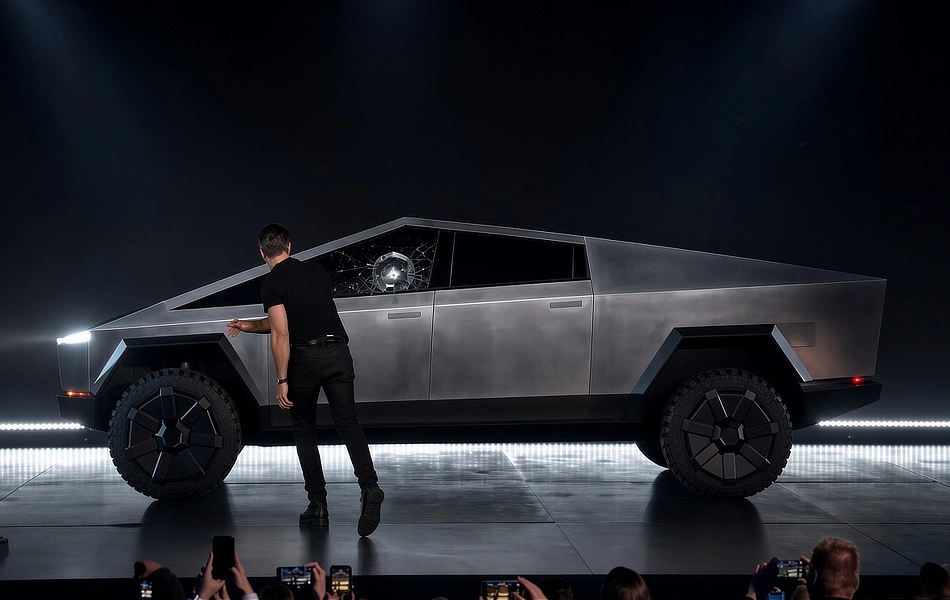
Tesla’s Cybertruck production is being wound down at its Texas factory in 2027, as Elon Musk shifts manufacturing capacity towards the company’s Cybercab robotaxi.
The decision marks a significant setback for Tesla’s ambitions in the electric pickup market and raises questions about whether the futuristic truck ever had genuine mass-market appeal.
Originally unveiled in 2019, the Tesla Cybertruck generated enormous excitement, attracting more than a million reported pre-orders.
Elon Musk predicted annual sales could reach 250,000 vehicles, with an entry-level price of around $40,000.
The reality proved very different
When deliveries finally began in late 2023, the cheapest launch model cost approximately $80,000. The promised driving range of up to 800 kilometres also failed to materialise, with production versions offering roughly 400–550 kilometres depending on specification.
More importantly, customer demand fell dramatically short of expectations. US sales dropped from approximately 39,000 vehicles in 2024 to just 20,237 in 2025, according to Kelley Blue Book figures reported by Reuters.
So why did the Tesla Cybertruck fail to become the electric pickup revolution many expected?
Price, practicality, controversial styling and limited international availability all contributed. The vehicle was never approved for sale in the UK or wider European market, while thousands of right-hand-drive reservations in countries including Australia were ultimately cancelled.
Tesla now intends to prioritise production of its two-seat Cybercab autonomous taxi, freeing up valuable manufacturing space at Gigafactory Texas.
Musk subsequently indicated that Cybertruck production would continue until the end of summer 2027 to help fulfil outstanding orders.
The bigger question is whether Tesla has learned the right lessons
The electric vehicle market needs innovation, but innovation alone does not guarantee commercial success. Customers want affordable vehicles that deliver on their promises, offer practical everyday usability and provide genuine value.
The Cybertruck may go down as one of the most recognisable electric vehicles ever built. However, its production wind-down demonstrates an important distinction: generating extraordinary publicity is not the same as building a successful car business.
Tesla’s Cybertruck was supposed to redefine the pickup market. Instead, it may become a warning about the dangers of believing your own hype.