Rolls-Royce Motor Cars has never really built cars in the conventional sense. It builds statements—machines that sit somewhere between engineering, sculpture, and self-mythology. With Project Nightingale, that philosophy is pushed further still, into territory where the automobile begins to dissolve into art object, architectural gesture, and private theatre.
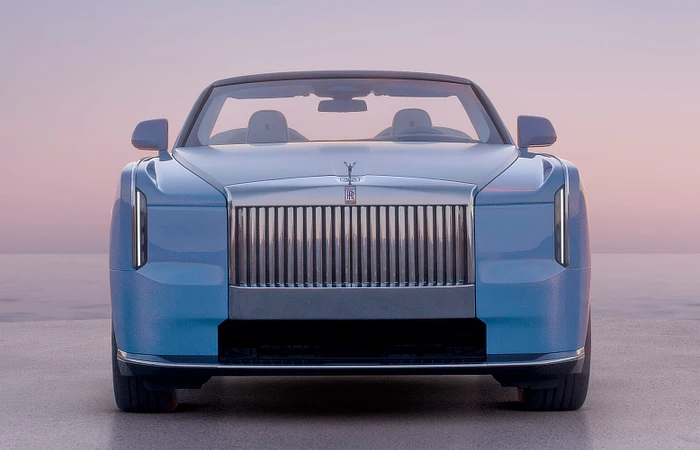
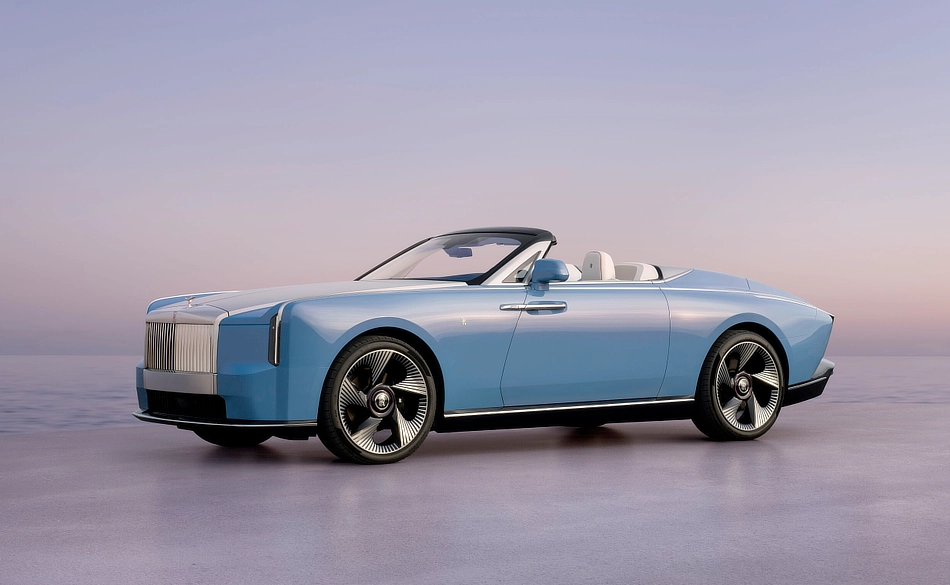
Limited to just 100 examples, Project Nightingale is part of the brand’s Coachbuild programme, a realm reserved for its most bespoke and uncompromising commissions. It is an open two-seat grand tourer, fully electric, and designed less around transportation than around experience. In a world increasingly defined by speed, noise, and replication, this is a machine built around their absence.
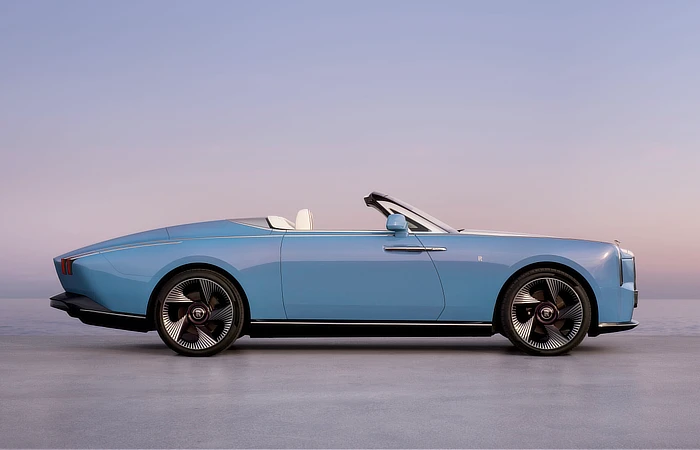
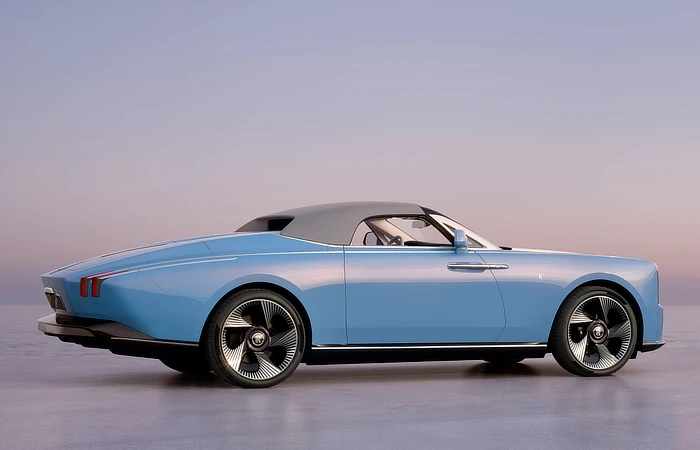
The design language reaches backward and forward at the same time. The long bonnet, tapered cabin, and flowing rear draw from the glamour of 1920s and 1930s Streamline Moderne design, while also referencing the brand’s own experimental “EX” prototypes from the late Jazz Age. Yet this is not nostalgia. The references are filtered through a contemporary obsession with clean surfacing, uninterrupted volume, and aerodynamic inevitability.
The result is a car that appears carved rather than assembled. A single continuous gesture runs through its bodywork, from the commanding verticality of the grille to the low, receding tail. Details are deliberately restrained, almost withheld. Even the lighting is treated less as functional necessity and more as punctuation—slender vertical signatures that read like architectural lines on a facade.
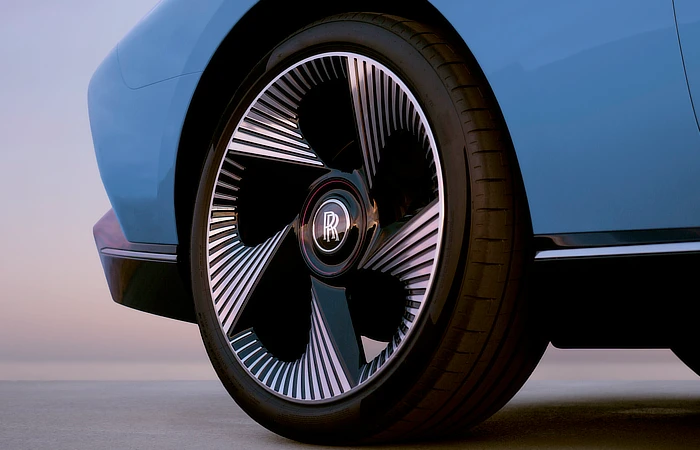
Electric propulsion quietly underpins the entire concept, not as a performance headline but as a design enabler. Without the need for large cooling systems or exhaust architecture, the surfaces can remain uninterrupted, almost monolithic. Silence, in this context, becomes not an absence but a material in itself.
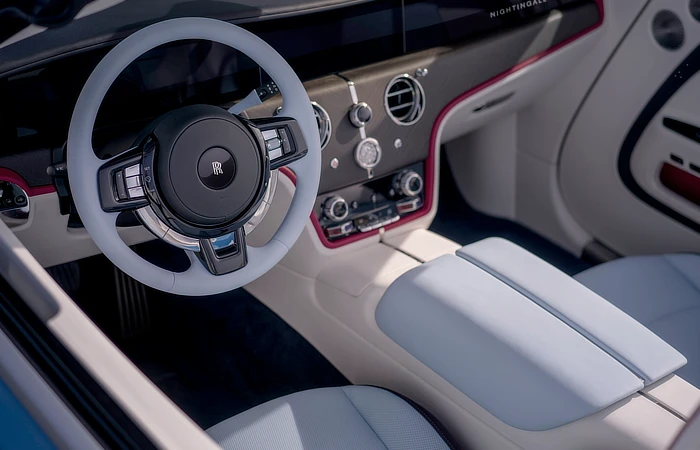
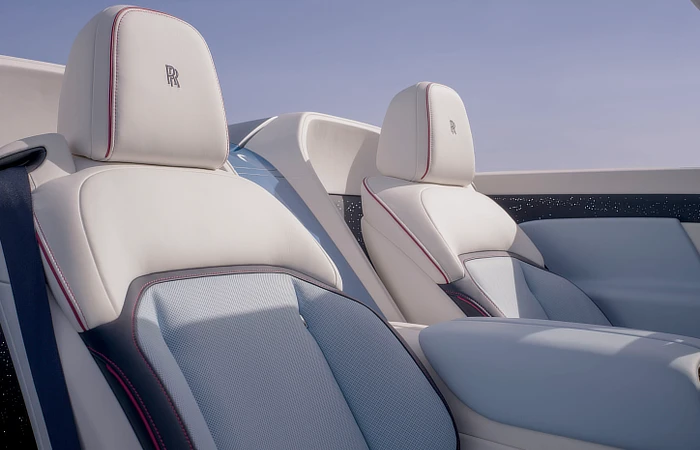
If the exterior is about reduction, the interior is about immersion. The cabin is shaped as a private environment for two occupants, wrapped in sculptural forms and meticulously curated materials. The most striking element is the “Starlight Breeze” system—10,500 points of light embedded within the interior architecture, arranged in patterns derived from recordings of nightingale song. The effect is less dashboard, more celestial environment: a translation of sound into space, rhythm into atmosphere.

Every interaction within the cabin is deliberately slow and tactile. Controls are limited, surfaces are clean, and functional elements are often concealed until needed. It is a space designed to resist distraction, to frame experience rather than compete with it.
Ownership, too, is reframed. Commissioning a Project Nightingale is not a transaction so much as a long-term collaboration. Clients are drawn into curated events and design sessions, becoming participants in the creation of their own vehicle. The result is a car that is not simply configured, but authored.

In the end, Project Nightingale is less about where luxury is going than what it is becoming. It is not trying to democratise aspiration or chase relevance. Instead, it doubles down on rarity, ritual, and control. In doing so, it poses a quieter question beneath its surface gloss: in an age where almost everything is scalable, what is left that cannot be replicated?