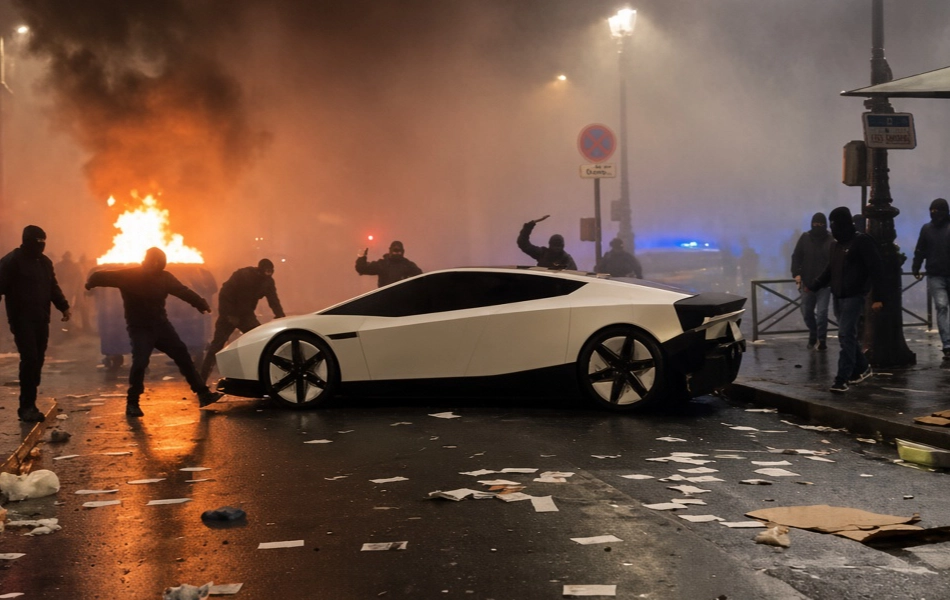
AI becomes more convincing with every update. An AI generated scene of the Paris riots, depicting protesters attacking a rocket-powered Tesla Roadster—the ultimate symbol of capitalism—demonstrates just how easily fiction can blur into reality.
Yet the real danger lies not in the technology itself, but in how it shapes our perception of truth. What matters is not only what AI creates, but what those controlling the narrative choose to highlight or conceal.
We obsess over whether a video is real while overlooking the deeper question: why are people taking to the streets in the first place?
Across Europe, economic pressures, rising energy costs and the consequences of the war in Ukraine have fuelled growing discontent. The broader question remains: who benefits from these policies, and who ultimately pays the price?
History teaches us that massive wealth transfers often changes hands during times of conflict, while ordinary people bear the consequences.
Grand political ambitions can promise victory and prosperity yet leave behind economic hardship and social unrest.
Perhaps AI’s greatest danger is not its ability to deceive us, but its ability to distract us. We debate the authenticity of the image while ignoring the reality beyond the frame.
AI is merely a tool. The real danger has always been the human desire to manipulate perception, control information and obscure uncomfortable truths.
The truth is Europe wrecked its economy for a pointless proxy war it was never going to win. One million Ukrainians have died on the battlefield.
I think we’ve been here before, about 80 years ago, and Ai wasn’t around back then.