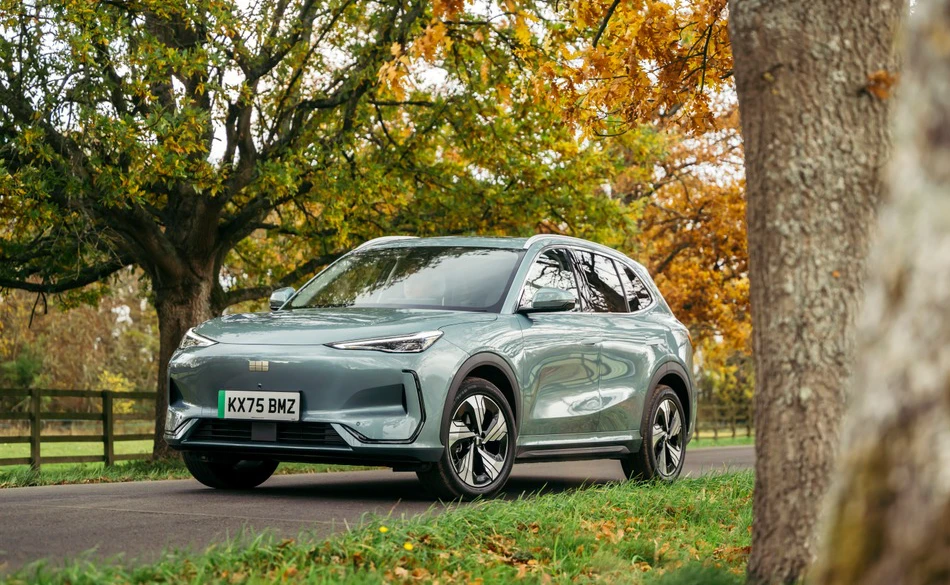
From 2028, Ford’s Valencia factory in Spain will become the unlikely home of a new automotive alliance, producing low- and zero-emission vehicles for Europe. Among them will be a compact member of the Bronco family, alongside two Geely models.
And here’s where things get interesting.
The Ford will apparently use technology developed around Geely’s Global Intelligent New Energy Architecture, or GEA. It’s a clever bit of engineering designed to accommodate electric, plug-in hybrid and range-extender powertrains without requiring an entirely different car underneath each one.
In other words, Ford gets to avoid spending years and vast quantities of money reinventing the wheel.
Geely, meanwhile, gets access to Ford’s European manufacturing operation and the opportunity to put more cars into European driveways. Everybody wins. Probably.
For Ford, the arrangement is also a useful antidote to the rather awkward problem facing much of the Western car industry: Chinese manufacturers have become extremely good at making electrified cars quickly and competitively.
Ford insists the new SUV won’t simply be a Geely wearing a Ford badge and a suspiciously large grille. The company says its vehicles will have their own styling, tuning and software.
Quite right. Nobody wants a Bronco that feels like it was assembled by committee.
The bigger question is what happens to the Kuga. Ford hasn’t said whether the new compact Bronco will replace it or sit alongside it, but with several SUVs fighting for space in the same family, something eventually has to give.
The Valencia plant therefore represents more than a new production deal. It is a glimpse of where the European car industry is heading: Western brands providing the badge, design and character, while Chinese companies increasingly provide the technology underneath.
The automotive world has changed. And if Ford can make a Chinese-developed platform feel convincingly like a Ford, perhaps that isn’t such a strange idea after all.